• Fri frakt över 249 kr
  • •
  • Snabba leveranser
  • •
  • Billiga böcker
Kundservice

Du är på sajten för privatpersoner.

Företag, bibliotek eller offentlig verksamhet?

Du handlar på classic.bokus.com, där alla dina funktioner finns intakta.
Till classic.bokus.com
Bokus logotyp. Gå till startsidan.
  • Erbjudanden
  • Nyheter
  • Student
  • Topplistor
  • Barn & ungdom
  • Bokus Play
  • E-böcker
  • Pocketböcker
  • Spel & pussel

10% rabatt på allt med kod: NYSTART10 →

Sidfot

Mina sidor

    Hjälp

    • Kundservice
    • Vanliga frågor och svar
    • Frakt och leverans
    • Retur vid ångerrätt
    • Reklamera vara
    • Betalning
    • Köpvillkor
    • Allmänna villkor
    • Information om webbplatsens tillgänglighet

    Om Bokus

    • Om oss
    • Pressrum
    • För studenter
    • För företag
    • För bibliotek och offentlig verksamhet
    • För leverantörer
    • Hållbarhet

    Populärt

    • Aktuella erbjudanden
    • Presentkort
    • Studentlitteratur
    • Nya böcker
    • Topplistor
    • Signerade böcker
    • Engelska böcker

    Inspiration

    • Boktips
    • BookTok
    • Populära bokserier
    • Barnbokskaraktärer
    • Populära författare
    Logotyp för Bokus
    Följ oss på Facebook (extern länk)Följ oss på Instagram (extern länk)Följ oss på YouTube (extern länk)Följ oss på TikTok (extern länk)
    bokus @ CookiesAnpassa cookiesIntegritetspolicyKöpvillkor
    Till Citymail hemsida (extern länk)Till Budbee hemsida (extern länk)Till Postnord hemsida (extern länk)Till Schenker hemsida (extern länk)Till Early Bird hemsida (extern länk)Till Walleys hemsida (extern länk)
    1. Historia och arkeologi
    2. Historia
    3. Historia: särskilda händelser och ämnen
    4. Folkmord och etnisk rensning

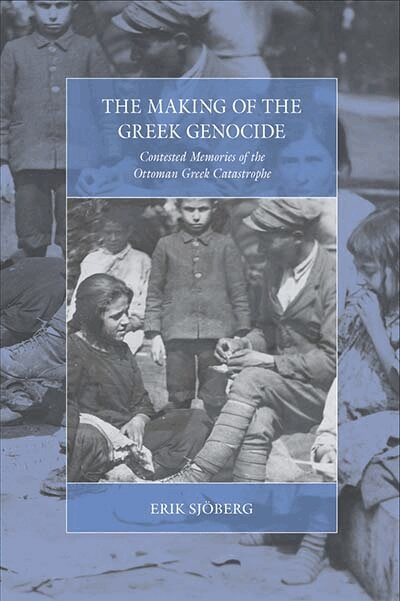
    Making of the Greek Genocide

    Contested Memories of the Ottoman Greek Catastrophe

    AvErik Sjöberg

    Häftad, Engelska, 2018

    Del i serien War and Genocide

    585 kr

    . Fri frakt över 249 kr.

    Fler format och utgåvor

    Inbunden

    1 916 kr

    Beskrivning

    During and after World War I, over one million Ottoman Greeks were expelled from Turkey, a watershed moment in Greek history that resulted in hundreds of thousands of deaths. And while few dispute the expulsion’s tragic scope, it remains the subject of fierce controversy, as activists have fought for international recognition of an atrocity they consider comparable to the Armenian genocide. This book provides a much-needed analysis of the Greek genocide as cultural trauma. Neither taking the genocide narrative for granted nor dismissing it outright, Erik Sjöberg instead recounts how it emerged as a meaningful but contested collective memory with both nationalist and cosmopolitan dimensions.

    Produktinformation

    • Utgivningsdatum:2018-11-23
    • Mått:152 x 229 x 14 mm
    • Vikt:359 g
    • Format:Häftad
    • Språk:Engelska
    • Serie:War and Genocide
    • Antal sidor:266
    • Förlag:Berghahn Books
    • ISBN:9781789200638

    Utforska kategorier

    • Folkmord och etnisk rensning inom Historia och arkeologi

    Mer om författaren

    Erik Sjöberg is Associate Professor of History at Södertörn University, Stockholm. He has previously held positions at Stanford University, Umeå University, and Mid Sweden University.

    Recensioner i media

    “The debates between those who label every massacre and deportation as genocide in solidarity with the suffering victims and the academics who stick to their scholarly values and distinguish meticulously between distinct methods of mass murder are elucidated effectively. Ultimately, the book successfully demonstrates how the concept of genocide, instead of denoting a real event in history, is a product of various political needs, how it creates historical distortions, and how it is used and manipulated. The Greek example illustrates how difficult it still is to construct a memory based on universal values that shares in the pain of all those who suffer around the world.” • Slavic Review“Sjöberg’s book is a must-read for history students inclined to embrace historical knowledge as a definite credo. With much agility, Sjöberg convinces his readership of the liveliness and hence the instability of the way a body politic, at all levels, relates to its past. One can call this postmodern; it is also Heraclitan.” • H-Nationalism“The concluding section, like the chapters that precede it, is meticulous and systematically argued and it summarizes all the findings presented in each chapter. Right at the end Sjöberg allows for a glimmer of optimism and notes that irrespective of whether future research will confirm or dismiss the claims that the Ottoman Greeks experienced a genocide, the dynamics that campaign unleashed may in fact lead away from its explicit ethnocentrism. It is too early to tell, as the controversy continues and more research is required. But the ongoing debates among activists and academics will benefit enormously from Sjöberg’s outstanding scholarly analysis.” • Journal of Social History“Erik Sjöberg has written a dense, varied, and admirable book…a thoughtful, well-written, and original contribution to the scholarship on the politics of memory in the aftermath of mass violence. Sjöberg treats themes as wide-ranging as cultural trauma, diaspora politics, ideology, national identity, etc. His breadth of reading and use of Greek-language sources and critical treatment of the different positions in the (often polarized) debates add significantly to the quality of the book…One can only hope that future publications on the Ottoman Greek catastrophe take Sjöberg’s arguments seriously.” • Hungarian Historical Review“Sjöberg maintains a sober balance between respect for the reality of historical trauma and critical interrogation of historians’ and activists’ methods. This is an excellent study that also offers insightful analysis into how new transnational memory cultures have emerged since the 1980s.” • Hans-Lukas Kieser, University of Zurich

    Innehållsförteckning

    • AcknowledgementsAbbreviationsIntroduction: Cosmopolitan memory and the Greek genocide narrativeChapter 1. Ottoman twilight: The background in AnatoliaChapter 2. “Right to Memory”: From Catastrophe to the politics of identityChapter 3. Nationalizing genocide: The recognition process in GreeceChapter 4. The pain of Others: Empathy and the problematic comparisonChapter 5. Becoming cosmopolitan: The Americanized genocideChapter 6. “Three genocides, one recognition”: The “Christian Holocaust”ConclusionBibliographyIndex