• Fri frakt över 249 kr
  • •
  • Snabba leveranser
  • •
  • Billiga böcker
Kundservice

Du är på sajten för privatpersoner.

Företag, bibliotek eller offentlig verksamhet?

Du handlar på classic.bokus.com, där alla dina funktioner finns intakta.
Till classic.bokus.com
Bokus logotyp. Gå till startsidan.
  • Erbjudanden
  • Nyheter
  • Student
  • Topplistor
  • Barn & ungdom
  • Bokus Play
  • E-böcker
  • Pocketböcker
  • Spel & pussel

10% rabatt på allt med kod: NYSTART10 →

Sidfot

Mina sidor

    Hjälp

    • Kundservice
    • Vanliga frågor och svar
    • Frakt och leverans
    • Retur vid ångerrätt
    • Reklamera vara
    • Betalning
    • Köpvillkor
    • Allmänna villkor
    • Information om webbplatsens tillgänglighet

    Om Bokus

    • Om oss
    • Pressrum
    • För studenter
    • För företag
    • För bibliotek och offentlig verksamhet
    • För leverantörer
    • Hållbarhet

    Populärt

    • Aktuella erbjudanden
    • Presentkort
    • Studentlitteratur
    • Nya böcker
    • Topplistor
    • Signerade böcker
    • Engelska böcker

    Inspiration

    • Boktips
    • BookTok
    • Populära bokserier
    • Barnbokskaraktärer
    • Populära författare
    Logotyp för Bokus
    Följ oss på Facebook (extern länk)Följ oss på Instagram (extern länk)Följ oss på YouTube (extern länk)Följ oss på TikTok (extern länk)
    bokus @ CookiesAnpassa cookiesIntegritetspolicyKöpvillkor
    Till Citymail hemsida (extern länk)Till Budbee hemsida (extern länk)Till Postnord hemsida (extern länk)Till Schenker hemsida (extern länk)Till Early Bird hemsida (extern länk)Till Walleys hemsida (extern länk)
    1. Historia och arkeologi
    2. Historia
    3. Europas historia

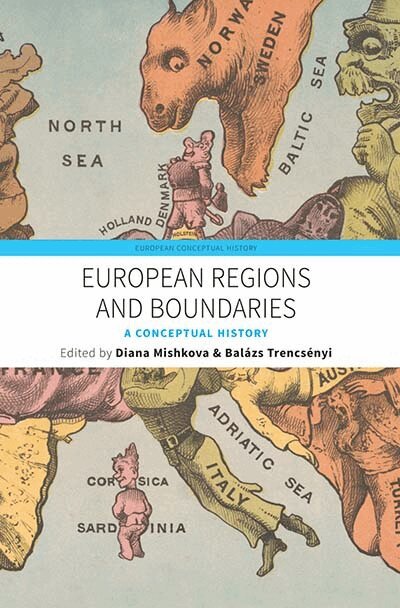
    European Regions and Boundaries

    A Conceptual History

    AvDiana Mishkova,Balázs Trencsényi

    Häftad, Engelska, 2018

    Del i serien European Conceptual History

    307 kr

    Beställningsvara. Skickas inom 5-8 vardagar. Fri frakt över 249 kr.

    Beskrivning

    It is difficult to speak about Europe today without reference to its constitutive regions—supra-national geographical designations such as “Scandinavia,” “Eastern Europe,” and “the Balkans.” Such formulations are so ubiquitous that they are frequently treated as empirical realities rather than a series of shifting, overlapping, and historically constructed concepts. This volume is the first to provide a synthetic account of these concepts and the historical and intellectual contexts in which they emerged. Bringing together prominent international scholars from across multiple disciplines, it systematically and comprehensively explores how such “meso-regions” have been conceptualized throughout modern European history.

    Produktinformation

    • Utgivningsdatum:2018-12-17
    • Mått:152 x 229 x 23 mm
    • Vikt:591 g
    • Format:Häftad
    • Språk:Engelska
    • Serie:European Conceptual History
    • Antal sidor:410
    • Förlag:Berghahn Books
    • ISBN:9781789200669

    Utforska kategorier

    • Europas historia inom Historia och arkeologi
    • Geografi inom Naturvetenskap och teknik

    Mer om författaren

    Diana Mishkova has been the Director, since 2000, of the Center for Advanced Study Sofia. She has published extensively on comparative Balkan history, intellectual history, and historiography. She is the author of Beyond Balkanism: The Scholarly Politics of Region Making (2018), Domestication of Freedom: Modernity and Legitimacy in Serbia and Romania in the Nineteenth Century (2001), and the editor of seven scholarly collections.

    Recensioner i media

    “After reading the individual contributions, the attempt of a Trans-European historiography through the inclusion specifically of the meso-regions proves to be truly successful….But it is not only because of an updated regional history that the volume is very informative and readable; it also offers many fruitful ideas for the various historiographical academic disciplines and an overarching transnational discourse. Hopefully, these concepts will be developed further.” • Historische Zeitschrift“…acquiring this book will undoubtedly help you to get a very good understanding of the spatial turn, its advantages and its shortcomings, not to mention that it will provide you with all the necessary bibliography on matters of conceptual regions.” • EuropeanReview ofHistory:Revue européenne d'histoire“All in all, this volume is a successful and highly recommendable book. It conveys many important insights into European history, as well as into the possibilities of doing a conceptual history which goes beyond basic political-philosophical concepts. And it will provide the reader with a good knowledge-base for answering the question about where Central Europe actually is located.” • Global Intellectual History“Many of the individual chapters are highly readable and insightful…Many [readers] will indulge in the rich intricacies of conceptual history and historical concepts that abound in this book as a whole.” • European History Quarterly“With a roster of authoritative scholars, the chapters of this book chart the construction and use of the key concepts of European space. By focusing on conceptual ‘clusters’, an extraordinary number of subjects are covered, and the complex processes at work are further highlighted by the frequent cross-referencing between chapters and topics, making this compelling book much more than the sum of its individual studies.” • Wendy Bracewell, University College London

    Innehållsförteckning

    • List of Tables and FiguresIntroductionDiana Mishkova and Balázs TrencsényiPART I: EUROPEAN MESO-REGIONSChapter 1. Western EuropeStefan BergerChapter 2. Scandinavia / NordenBo Stråth and Marja JalavaChapter 3. The BalticPärtel PiirimäeChapter 4. The MediterraneanVaso SeirinidouChapter 5. Southern EuropeGuido FranzinettiChapter 6. IberiaXosé-M.Núñez SeixasChapter 7. Balkans / Southeastern EuropeDiana MishkovaChapter 8. Central EuropeBalázs TrencsényiChapter 9. Eastern EuropeFrithjof Benjamin SchenkChapter 10. EurasiaMark BassinPART II: DISCIPLINARY TRADITIONS OF REGIONALIZATIONChapter 11. European HistoryStefan TroebstChapter 12. Political Geography and GeopoliticsVirginie Mamadouh and Martin MüllerChapter 13. EconomicsGeorgi GanevChapter 14. Historical DemographyAttila MeleghChapter 15. LinguisticsUwe HinrichsChapter 16. Literary HistoryAlex Drace-FrancisChapter 17. Art HistoryEric StormIndex