Diana Mishkova – författare
Visar alla böcker från författaren Diana Mishkova. Handla med fri frakt och snabb leverans.
16 produkter
Beyond Balkanism
The Scholarly Politics of Region Making
Häftad, 2020
720 kr
Lägg i varukorg
In recent years, western discourse about the Balkans, or “balkanism,” has risen in prominence. Characteristically, this strand of research sidelines the academic input in the production of western representations and Balkan self-understanding. Looking at the Balkans from the vantage point of …
Beyond Balkanism
The Scholarly Politics of Region Making
Inbunden, 2018
2512 kr
Lägg i varukorg
In recent years, western discourse about the Balkans, or “balkanism,” has risen in prominence. Characteristically, this strand of research sidelines the academic input in the production of western representations and Balkan self-understanding. Looking at the Balkans from the vantage point of …
Rival Byzantiums
Empire and Identity in Southeastern Europe
Inbunden, 2022
1641 kr
Lägg i varukorg
This is a comprehensive comparative view of the way the phenomenon of Byzantium has been treated by the historiographies of the polities that have emerged from its remains - Bulgaria, Greece, Romania, Serbia and Turkey - from the Enlightenment to the present day. Synthesising a sprawling mass of …
Rival Byzantiums
Empire and Identity in Southeastern Europe
Häftad, 2024
435 kr
Lägg i varukorg
This is a comprehensive comparative view of the way the phenomenon of Byzantium has been treated by the historiographies of the polities that have emerged from its remains - Bulgaria, Greece, Romania, Serbia and Turkey - from the Enlightenment to the present day. Synthesising a sprawling mass of …
Beyond Balkanism
The Scholarly Politics of Region Making
E-bok, 2018
855 kr
Lägg i varukorg
In recent years, western discourse about the Balkans, or “balkanism,” has risen in prominence. Characteristically, this strand of research sidelines the academic input in the production of western representations and Balkan self-understanding. Looking at the Balkans from the vantage point of …
Beyond Balkanism
The Scholarly Politics of Region Making
E-bok, 2018
874 kr
Lägg i varukorg
In recent years, western discourse about the Balkans, or “balkanism,” has risen in prominence. Characteristically, this strand of research sidelines the academic input in the production of western representations and Balkan self-understanding. Looking at the Balkans from the vantage point of …
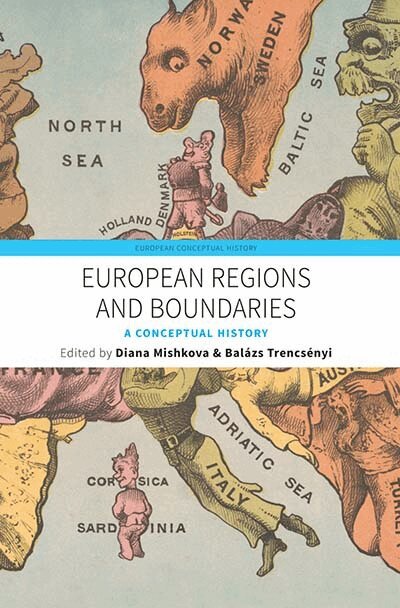
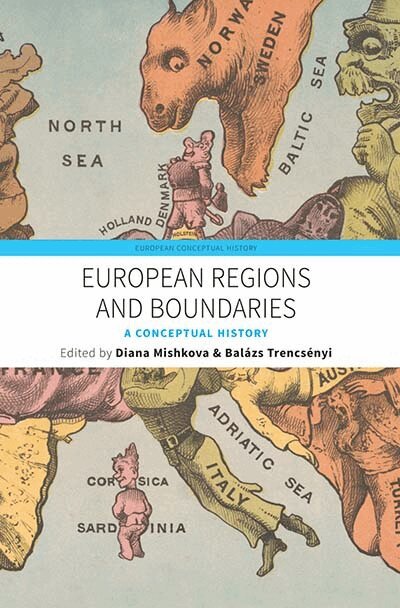
European Regions and Boundaries
A Conceptual History
Av Diana Mishkova, Balázs Trencsényi
Inbunden, 2017
2139 kr
Lägg i varukorg
It is difficult to speak about Europe today without reference to its constitutive regions—supra-national geographical designations such as “Scandinavia,” “Eastern Europe,” and “the Balkans.” Such formulations are so ubiquitous that they are frequently treated as empirical realities rather than a …
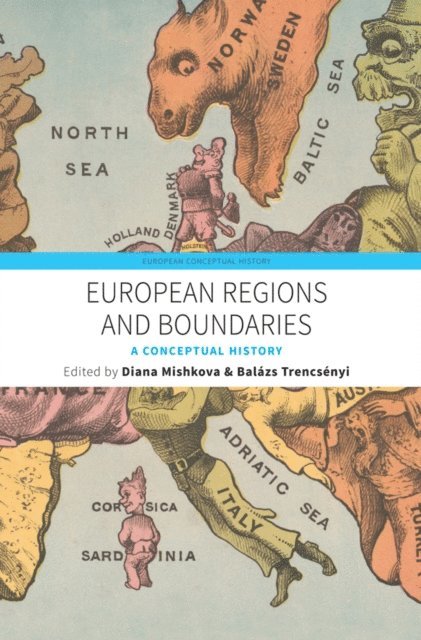
European Regions and Boundaries
A Conceptual History
Av Balazs Trencsenyi, Diana Mishkova
E-bok, 2017
537 kr
Lägg i varukorg
It is difficult to speak about Europe today without reference to its constitutive regions—supra-national geographical designations such as “Scandinavia,” “Eastern Europe,” and “the Balkans.” Such formulations are so ubiquitous that they are frequently treated as empirical realities rather than a …
European Regions and Boundaries
A Conceptual History
Av Diana Mishkova, Balázs Trencsényi
Häftad, 2018
307 kr
Lägg i varukorg
It is difficult to speak about Europe today without reference to its constitutive regions—supra-national geographical designations such as “Scandinavia,” “Eastern Europe,” and “the Balkans.” Such formulations are so ubiquitous that they are frequently treated as empirical realities rather than a …
Balkan Historiographical Wars
The Middle Ages
Av Diana Mishkova, Roumen Daskalov
Inbunden, 2025
1580 kr
Lägg i varukorg
The studies in this volume present some of the major “historiographical wars” over the medieval Balkan past fought by the historians of competing nation states in the region. Еthnic origins and “national” makeup of medieval states and disputed regions; ownership of the historical heritage located …
Balkan Historiographical Wars
The Middle Ages
Av Roumen Daskalov, Diana Mishkova
E-bok, 2025
2006 kr
Lägg i varukorg
The studies in this volume present some of the major “historiographical wars” over the medieval Balkan past fought by the historians of competing nation states in the region. ?thnic origins and “national” makeup of medieval states and disputed regions; ownership of the historical heritage located …
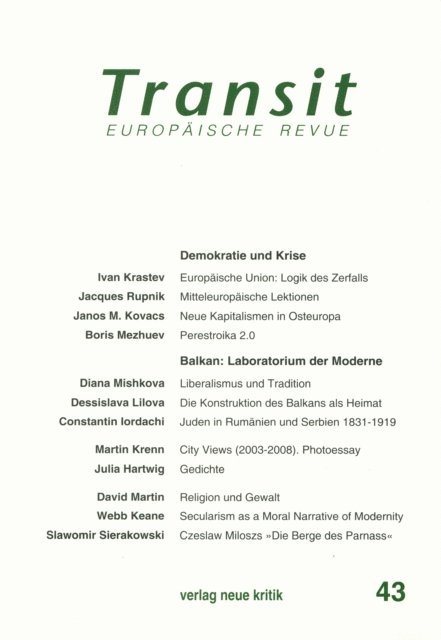
Transit 43. Europäische Revue
Demkoratie und Krise / Balkan: Laboratorium der Moderne
Av Diana Mishkova, Boris Mezhuev m. fl.
E-bok, 2014
128 kr
Lägg i varukorg
Gegenwärtig erlebt die Europäische Union die Erosion ihrer Fundamente: die gemeinsame Erinnerung an den Zweiten Weltkrieg, der geopolitische Pakt in Abgrenzung zur Sowjetunion sind nicht mehr von entscheidender Bedeutung. Mit der Verringerung des allgemeinen Wohlstands verliert die Europäische …
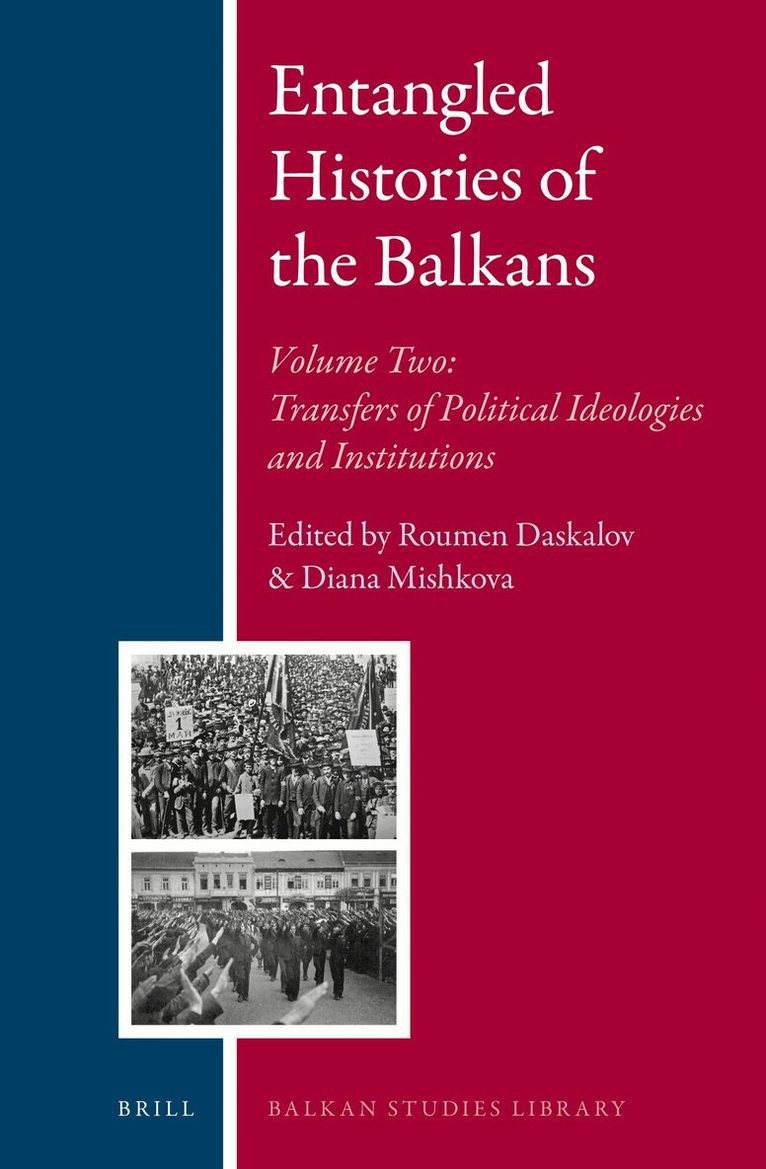
Entangled Histories of the Balkans - Volume Two
Transfers of Political Ideologies and Institutions
Av Roumen Daskalov, Diana Mishkova
Inbunden, 2013
3143 kr
Lägg i varukorg
Modern Balkan history has traditionally been studied by national historians in terms of separate national histories taking place within bounded state territories. The authors in this volume take a different approach. They all seek to treat the modern history of the region from a transnational and …
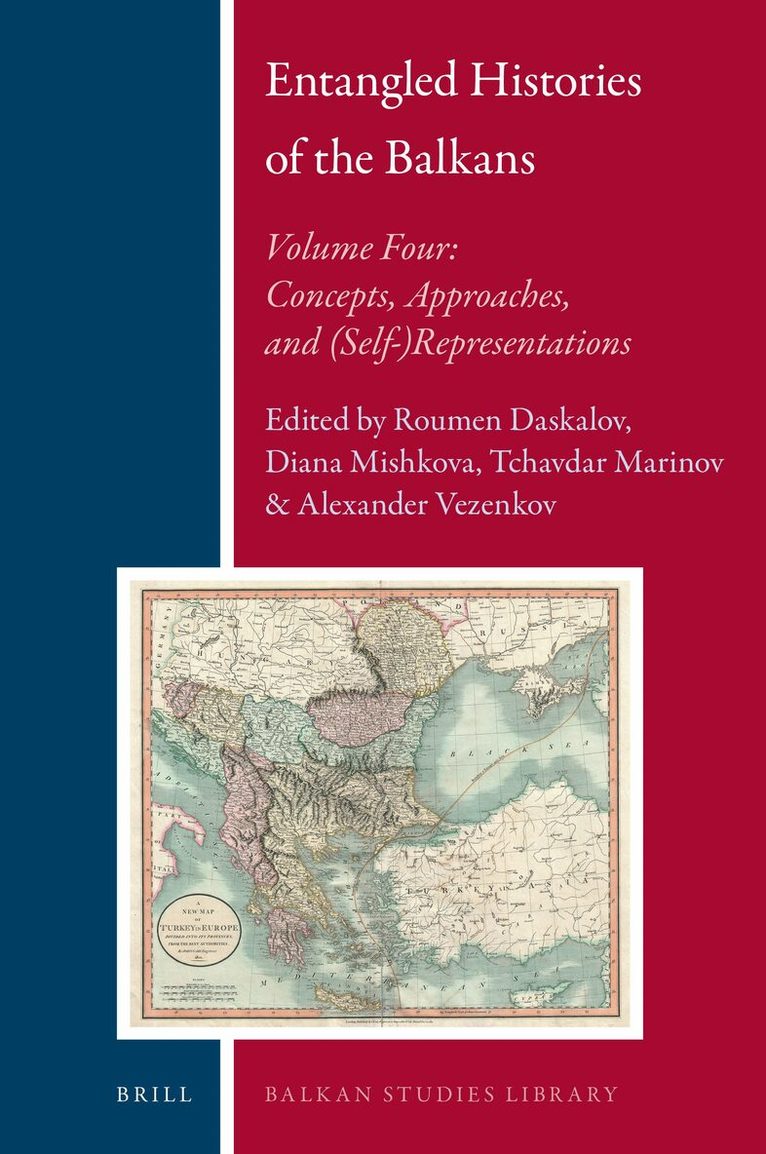
Entangled Histories of the Balkans - Volume Four
Concepts, Approaches, and (Self-)Representations
Av Roumen Dontchev Daskalov, Diana Mishkova m. fl.
Inbunden, 2017
3721 kr
Lägg i varukorg
The present volume is the last in the Entangled Balkans series and marks the end of several years of research guided by the transnational, “entangled history” and histoire croisée approaches. The essays in this volume address theoretical and methodological issues of Balkan or Southeast European …
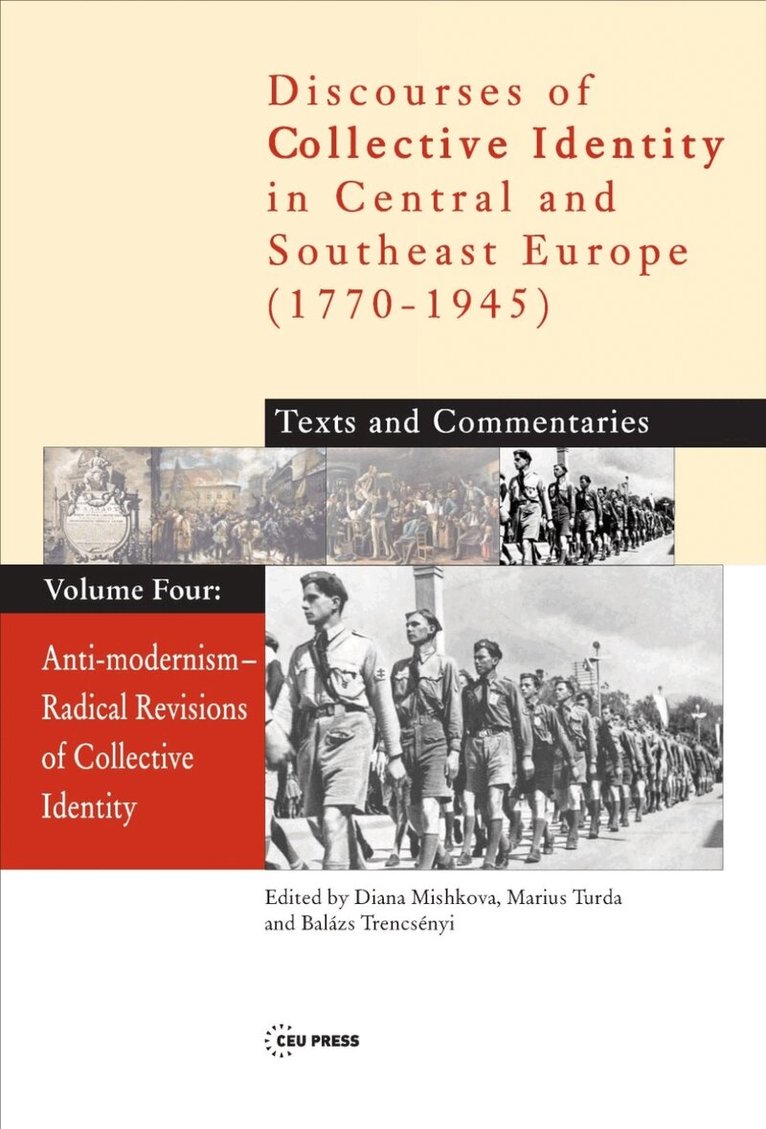
Anti-modernism
Radical Revisions of Collective Identity
Av Ahmet Ersoy, 0 m. fl.
Inbunden, 2014
2272 kr
Lägg i varukorg
The last volume of the Discourses of Collective Identity in Central and Southeast Europe 1770–1945 series presents 46 texts under the heading of "antimodernism". In a dynamic relationship with modernism, from the 1880s to the 1940s, and especially during the interwar period, the antimodernist …
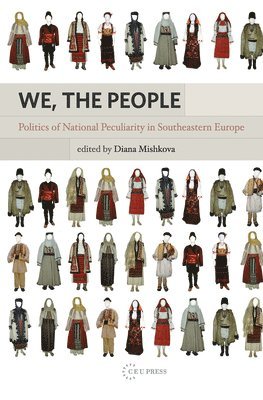
We, the People
Politics of National Peculiarity in Southeastern Europe
Inbunden, 2009
2137 kr
Lägg i varukorg
Analyzes the processes of nation-building in nineteenth and early-twentieth-century south-eastern Europe. A product of transnational comparative teamwork, this collection represents a coordinated interpretation based on ten varied academic cultures and traditions.