Häftad, Engelska, 2019
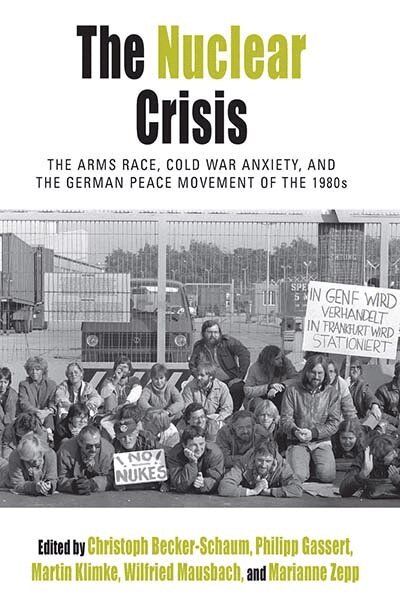
Nuclear Crisis
The Arms Race, Cold War Anxiety, and the German Peace Movement of the 1980s
Av Christoph Becker-Schaum, Philipp Gassert, Martin Klimke, Wilfried Mausbach
Del 19 i serien Protest, Culture & Society
618 kr
Beställningsvara. Skickas inom 5-8 vardagar. Fri frakt över 249 kr.
Beskrivning
Produktinformation
- Utgivningsdatum: 2019-11-25
- Mått: 152 x 229 x 22 mm
- Vikt: 569 g
- Format: Häftad
- Språk: Engelska
- Serie: Protest, Culture & Society
- Antal sidor: 392
- Förlag: Berghahn Books
- ISBN: 9781789205091
Utforska kategorier
Mer om författaren
Christoph Becker-Schaum is the Director of the Green Memory Archive at the Heinrich Böll Foundation in Berlin.
Recensioner i media
“Overall, this work provides an outstanding multidimensional framework of the nuclear crisis and its resulting peace movement. The chapters adequately detail the crisis, the political environment that led to the Double-Track Decision, and the progression of the peace movement throughout Germany and on an international level. I recommend this volume to anyone seeking information on German politics during the Cold War and to researchers or academics with an interest in social movements and their effects on society, morality, and politics.” • H-Net Reviews“[This volume consists] of nineteen erudite and informative contributions by an extraordinary series of contributors -- making it an unreservedly recommended publication for college and university library Nuclear Weapons & Warfare History, War & Peace, and Political Advocacy collections.” • Midwest Book Review“This volume is a well-conceived collection of different approaches to the events of the “Nuclear Crisis” and the reactions of a large, broad and heterogeneous peace movement. It is especially through its multidimensional description also well suited as an introduction to this topic. With the help of this volume is seems possible to ‘learn from history,’ because who considers the arguments and discussion threads of the debates will recognize much in the contemporary themes of the peace movement.” • Forschungsjournal Soziale Bewegungen“This is an important volume on a key phase of the Cold War, one that will be of interest to scholars, but can also be assigned to undergraduate and graduate students. The various chapters build on each other beautifully, forming a coherent whole. Aside from a couple of rough spots, they are beautifully written, though they originally appeared in German. A list of abbreviations and annotated bibliographies at the end of each chapter make this volume highly reader-friendly.” • German History“The breadth and balance of this collection make it an excellent introduction to the strategic challenges and nuclear anxieties of the Second Cold War. In giving such detailed coverage of the 1980s, it represents a kind of milestone in the historicization of peace movements.” • William Glenn Gray, Purdue University“With great conceptual clarity, the contributions to this volume offer innovative perspectives on the connections between international and domestic politics, the renegotiation of ‘peace’ in the political arena, and questions of collective agency. One of its great strengths is its multi-dimensional approach, integrating traditional methods of studying policy and diplomacy with an astute and precise analysis of media, protest actions, grass-roots activism, and the gendering of peace and protest.” • Benjamin Ziemann, University of Sheffield
Betyg & recensioner
0 recensioner
Inga recensioner tillgängliga.