Martin Klimke – författare
Visar alla böcker från författaren Martin Klimke. Handla med fri frakt och snabb leverans.
30 produkter
1968 in Europe
A History of Protest and Activism, 1956–1977
Av M. Klimke, J. Scharloth m. fl.
Häftad, 2008
1241 kr
Lägg i varukorg
A concise reference for researchers on the protest movements of the 1960s and 1970s, this book covers the history of the various national protest movements, the transnational aspects of these movements, and the common narratives and cultures of memory surrounding them.
Routledge Handbook of the Global Sixties
Between Protest and Nation-Building
Av Chen Jian, Martin Klimke m. fl.
Häftad, 2020
787 kr
Lägg i varukorg
‘This extraordinary collection is a game-changer. Featuring the cutting-edge work of over forty scholars from across the globe, The Routledge Handbook of the Global Sixties is breathtaking in its range, incisive in analyses, and revolutionary in method and evidence. Here, fifty years after that …
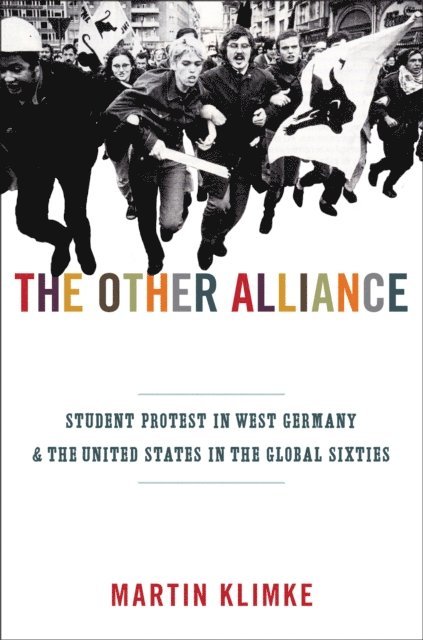
Other Alliance
Student Protest in West Germany and the United States in the Global Sixties
Häftad, 2011
668 kr
Lägg i varukorg
Using previously classified documents and original interviews, The Other Alliance examines the channels of cooperation between American and West German student movements throughout the 1960s and early 1970s, and the reactions these relationships provoked from the U.S. government. Revising the …
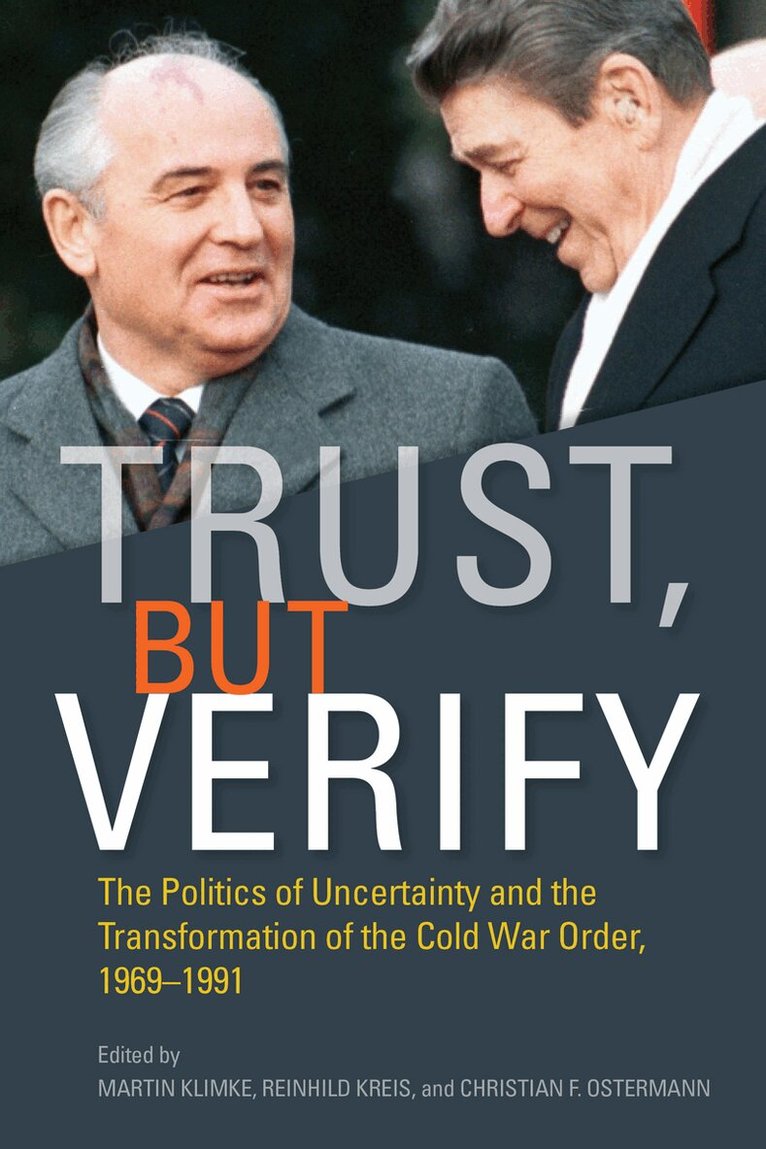
Trust, but Verify
The Politics of Uncertainty and the Transformation of the Cold War Order, 1969-1991
Av Martin Klimke, Reinhild Kreis m. fl.
Inbunden, 2016
880 kr
Lägg i varukorg
Trust, but Verify uses trust—with its emotional and predictive aspects—to explore international relations in the second half of the Cold War, beginning with the late 1960s. The détente of the 1970s led to the development of some limited trust between the United States and the Soviet Union, which …
Between Prague Spring and French May
Opposition and Revolt in Europe, 1960-1980
Av Joachim Scharloth, Jacco Pekelder m. fl.
E-bok, 2011
335 kr
Lägg i varukorg
Abandoning the usual Cold War–oriented narrative of postwar European protest and opposition movements, this volume offers an innovative, interdisciplinary, and comprehensive perspective on two decades of protest and social upheaval in postwar Europe. It examines the mutual influences and …
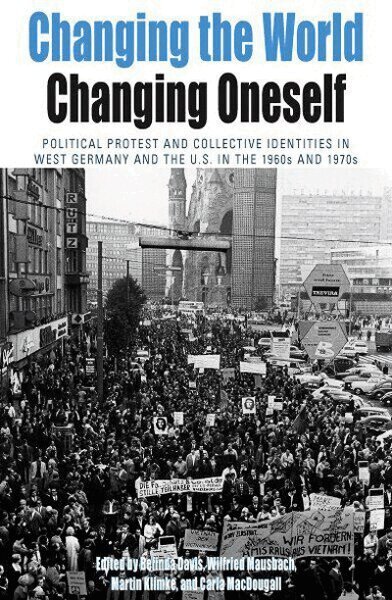
Changing the World, Changing Oneself
Political Protest and Collective Identities in West Germany and the U.S. in the 1960s and 1970s
Av Belinda Davis, Wilfried Mausbach m. fl.
Häftad, 2012
458 kr
Lägg i varukorg
A captivating time, the 60s and 70s now draw more attention than ever. The first substantial work by historians has appeared only in the last few years, and this volume offers an important contribution. These meticulously researched essays offer new perspectives on the Cold War and global relations …
Germany and the Black Diaspora
Points of Contact, 1250-1914
Av Mischa Honeck, Martin Klimke m. fl.
Inbunden, 2013
1936 kr
Lägg i varukorg
The rich history of encounters prior to World War I between people from German-speaking parts of Europe and people of African descent has gone largely unnoticed in the historical literature—not least because Germany became a nation and engaged in colonization much later than other European nations. …
Germany and the Black Diaspora
Points of Contact, 1250-1914
Av Anne Kuhlmann, Martin Klimke m. fl.
E-bok, 2013
335 kr
Lägg i varukorg
The rich history of encounters prior to World War I between people from German-speaking parts of Europe and people of African descent has gone largely unnoticed in the historical literature—not least because Germany became a nation and engaged in colonization much later than other European nations. …
Nuclear Threats, Nuclear Fear and the Cold War of the 1980s
Av Eckart Conze, Martin Klimke m. fl.
Inbunden, 2016
2096 kr
Lägg i varukorg
This book brings together cutting-edge scholarship from the United States and Europe to address political as well as cultural responses to both the arms race of the 1980s and the ascent of nuclear energy as a second, controversial dimension of the nuclear age. Diverse in its topics and disciplinary …
Routledge Handbook of the Global Sixties
Between Protest and Nation-Building
Av Chen Jian, Martin Klimke m. fl.
Inbunden, 2018
3904 kr
Lägg i varukorg
‘This extraordinary collection is a game-changer. Featuring the cutting-edge work of over forty scholars from across the globe, The Routledge Handbook of the Global Sixties is breathtaking in its range, incisive in analyses, and revolutionary in method and evidence. Here, fifty years after that …
Nuclear Threats, Nuclear Fear and the Cold War of the 1980s
Av Eckart Conze, Martin Klimke m. fl.
Häftad, 2020
687 kr
Lägg i varukorg
This book brings together cutting-edge scholarship from the United States and Europe to address political as well as cultural responses to both the arms race of the 1980s and the ascent of nuclear energy as a second, controversial dimension of the nuclear age. Diverse in its topics and disciplinary …
Routledge Handbook of the Global Sixties
Between Protest and Nation-Building
Av Joanna Waley-Cohen, Marilyn Young m. fl.
E-bok, 2018
907 kr
Lägg i varukorg
‘This extraordinary collection is a game-changer. Featuring the cutting-edge work of over forty scholars from across the globe, The Routledge Handbook of the Global Sixties is breathtaking in its range, incisive in analyses, and revolutionary in method and evidence. Here, fifty years after that …
Routledge Handbook of the Global Sixties
Between Protest and Nation-Building
Av Joanna Waley-Cohen, Marilyn Young m. fl.
E-bok, 2018
927 kr
Lägg i varukorg
‘This extraordinary collection is a game-changer. Featuring the cutting-edge work of over forty scholars from across the globe, The Routledge Handbook of the Global Sixties is breathtaking in its range, incisive in analyses, and revolutionary in method and evidence. Here, fifty years after that …
Other Alliance
Student Protest in West Germany and the United States in the Global Sixties
E-bok, 2009
457 kr
Lägg i varukorg
Using previously classified documents and original interviews, The Other Alliance examines the channels of cooperation between American and West German student movements throughout the 1960s and early 1970s, and the reactions these relationships provoked from the U.S. government. Revising the …
Trust, but Verify
The Politics of Uncertainty and the Transformation of the Cold War Order, 1969-1991
Av Martin Klimke, Reinhild Kreis m. fl.
E-bok, 2016
999 kr
Lägg i varukorg
Trust, but Verify uses trust—with its emotional and predictive aspects—to explore international relations in the second half of the Cold War, beginning with the late 1960s. The détente of the 1970s led to the development of some limited trust between the United States and the Soviet Union, which …
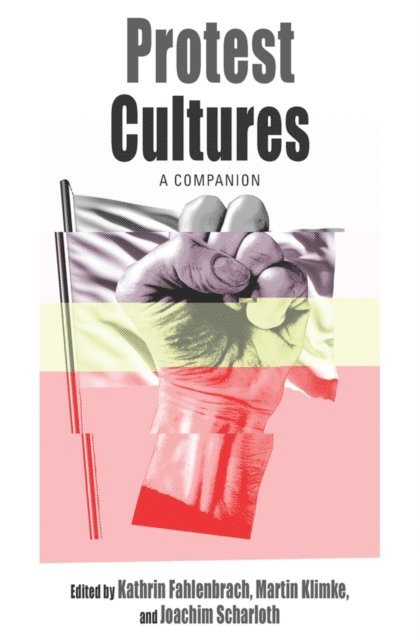
Protest Cultures
A Companion
Av Kathrin Fahlenbrach, Martin Klimke m. fl.
Inbunden, 2016
2545 kr
Lägg i varukorg
Protest is a ubiquitous and richly varied social phenomenon, one that finds expression not only in modern social movements and political organizations but also in grassroots initiatives, individual action, and creative works. It constitutes a distinct cultural domain, one whose symbolic content is …
Protest Cultures
A Companion
Av Joachim Scharloth, Martin Klimke m. fl.
E-bok, 2016
402 kr
Lägg i varukorg
Protest is a ubiquitous and richly varied social phenomenon, one that finds expression not only in modern social movements and political organizations but also in grassroots initiatives, individual action, and creative works. It constitutes a distinct cultural domain, one whose symbolic content is …
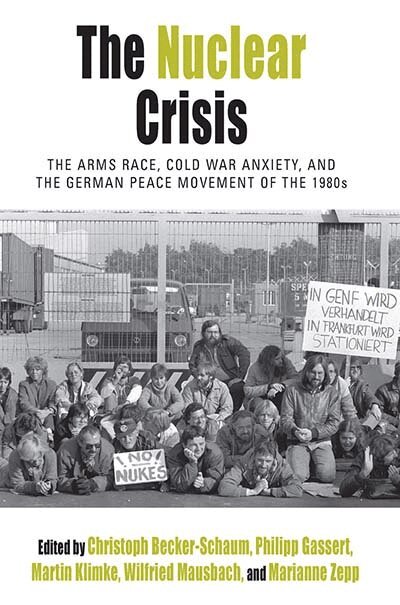
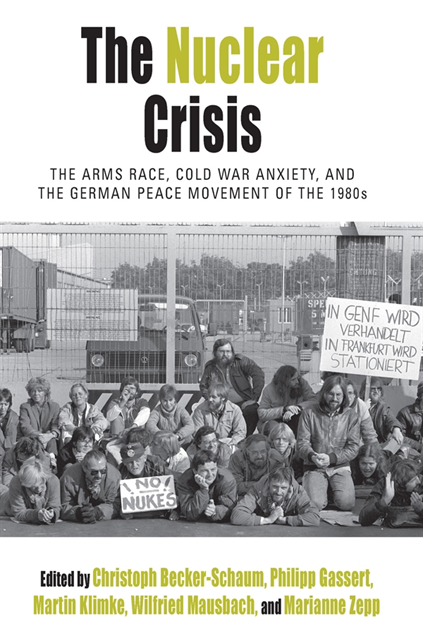
Nuclear Crisis
The Arms Race, Cold War Anxiety, and the German Peace Movement of the 1980s
Av Christoph Becker-Schaum, Philipp Gassert m. fl.
Inbunden, 2016
2186 kr
Lägg i varukorg
In 1983, more than one million Germans joined together to protest NATO's deployment of nuclear missiles in Europe. International media overflowed with images of marches, rallies, and human chains as protesters blockaded depots and agitated for disarmament. Though they failed to halt the deployment, …
Nuclear Crisis
The Arms Race, Cold War Anxiety, and the German Peace Movement of the 1980s
Av Wilfried Mausbach, Martin Klimke m. fl.
E-bok, 2016
386 kr
Lägg i varukorg
In 1983, more than one million Germans joined together to protest NATO’s deployment of nuclear missiles in Europe. International media overflowed with images of marches, rallies, and human chains as protesters blockaded depots and agitated for disarmament. Though they failed to halt the deployment, …
Germany and the Black Diaspora
Points of Contact, 1250-1914
Av Mischa Honeck, Martin Klimke m. fl.
Häftad, 2016
543 kr
Lägg i varukorg
The rich history of encounters prior to World War I between people from German-speaking parts of Europe and people of African descent has gone largely unnoticed in the historical literature—not least because Germany became a nation and engaged in colonization much later than other European nations. …
Nuclear Crisis
The Arms Race, Cold War Anxiety, and the German Peace Movement of the 1980s
Av Christoph Becker-Schaum, Philipp Gassert m. fl.
Häftad, 2019
618 kr
Lägg i varukorg
In 1983, more than one million Germans joined together to protest NATO’s deployment of nuclear missiles in Europe. International media overflowed with images of marches, rallies, and human chains as protesters blockaded depots and agitated for disarmament. Though they failed to halt the deployment, …
Protest Cultures
A Companion
Av Kathrin Fahlenbrach, Martin Klimke m. fl.
Häftad, 2020
675 kr
Lägg i varukorg
Protest is a ubiquitous and richly varied social phenomenon, one that finds expression not only in modern social movements and political organizations but also in grassroots initiatives, individual action, and creative works. It constitutes a distinct cultural domain, one whose symbolic content is …
Changing the World, Changing Oneself
Political Protest and Collective Identities in West Germany and the U.S. in the 1960s and 1970s
Av Belinda J. Davis, Wilfried Mausbach m. fl.
Inbunden, 2010
1916 kr
Lägg i varukorg
"The collection addresses several issues that are currently very important growth areas in scholarship: protest movements, their transnational connections, the question of Americanization/Westernization in Europe, and the 1960s/1970s in general as an important watershed in postwar history...There …
Changing the World, Changing Oneself
Political Protest and Collective Identities in West Germany and the U.S. in the 1960s and 1970s
Av Carla MacDougall, Martin Klimke m. fl.
E-bok, 2010
302 kr
Lägg i varukorg
A captivating time, the 60s and 70s now draw more attention than ever. The first substantial work by historians has appeared only in the last few years, and this volume offers an important contribution. These meticulously researched essays offer new perspectives on the Cold War and global relations …
Media and the Cold War in the 1980s
Between Star Wars and Glasnost
Av Henrik G. Bastiansen, Martin Klimke m. fl.
Inbunden, 2018
1353 kr
Lägg i varukorg
The Cold War was a media phenomenon. It was a daily cultural political struggle for the hearts and minds of ordinary people—and for government leaders, a struggle to undermine their enemies’ ability to control the domestic public sphere. This collection examines how this struggle played out on …
Media and the Cold War in the 1980s
Between Star Wars and Glasnost
Av Rolf Werenskjold, Martin Klimke m. fl.
E-bok, 2018
1838 kr
Lägg i varukorg
The Cold War was a media phenomenon. It was a daily cultural political struggle for the hearts and minds of ordinary people—and for government leaders, a struggle to undermine their enemies’ ability to control the domestic public sphere. This collection examines how this struggle played out on …
1968. Handbuch zur Kultur- und Mediengeschichte der Studentenbewegung
Av Joachim Scharloth, Martin Klimke
E-bok, 2016
739 kr
Lägg i varukorg
Die 68er polarisieren noch heute: Politisch gescheitert, erfolgreich in der Entwicklung neuer Lebensstile? Dabei gingen Kulturrevolution und Medienevolution Hand in Hand. Presse, Rundfunk und Fernsehen stilisierten Rudi Dutschke, die Kommune I, Che Guevara oder Mao neben den Rolling Stones oder …
1968. Handbuch zur Kultur- und Mediengeschichte der Studentenbewegung
Av Martin Klimke, Joachim Scharloth
Inbunden, 2007
719 kr
Lägg i varukorg
Die 68er polarisieren noch heute: Politisch gescheitert, erfolgreich in der Entwicklung neuer Lebensstile? Dabei gingen Kulturrevolution und Medienevolution Hand in Hand. Presse, Rundfunk und Fernsehen stilisierten Rudi Dutschke, die Kommune I, Che Guevara oder Mao neben den Rolling Stones oder …
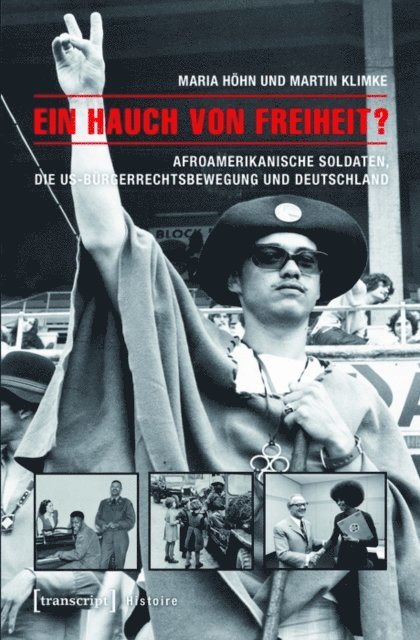
Ein Hauch von Freiheit?
Afroamerikanische Soldaten, die US-Bürgerrechtsbewegung und Deutschland
E-bok
367 kr
Lägg i varukorg
Die Geschichte der in Deutschland stationierten, afroamerikanischen Soldaten ist bislang wenig beachtet worden. Maria Höhn und Martin Klimke zeichnen nach, wie sich das Land im Laufe des 20. Jahrhunderts als wichtiger Bezugspunkt im afroamerikanischen Kampf um die Gleichberechtigung und zur …