• Fri frakt över 249 kr
  • •
  • Snabba leveranser
  • •
  • Billiga böcker
Kundservice

Du är på sajten för privatpersoner.

Företag, bibliotek eller offentlig verksamhet?

Du handlar på classic.bokus.com, där alla dina funktioner finns intakta.
Till classic.bokus.com
Bokus logotyp. Gå till startsidan.
  • Erbjudanden
  • Nyheter
  • Student
  • Topplistor
  • Barn & ungdom
  • Bokus Play
  • E-böcker
  • Pocketböcker
  • Spel & pussel

10% rabatt på allt med kod: NYSTART10 →

Sidfot

Mina sidor

    Hjälp

    • Kundservice
    • Vanliga frågor och svar
    • Frakt och leverans
    • Retur vid ångerrätt
    • Reklamera vara
    • Betalning
    • Köpvillkor
    • Allmänna villkor
    • Information om webbplatsens tillgänglighet

    Om Bokus

    • Om oss
    • Pressrum
    • För studenter
    • För företag
    • För bibliotek och offentlig verksamhet
    • För leverantörer
    • Hållbarhet

    Populärt

    • Aktuella erbjudanden
    • Presentkort
    • Studentlitteratur
    • Nya böcker
    • Topplistor
    • Signerade böcker
    • Engelska böcker

    Inspiration

    • Boktips
    • BookTok
    • Populära bokserier
    • Barnbokskaraktärer
    • Populära författare
    Logotyp för Bokus
    Följ oss på Facebook (extern länk)Följ oss på Instagram (extern länk)Följ oss på YouTube (extern länk)Följ oss på TikTok (extern länk)
    bokus @ CookiesAnpassa cookiesIntegritetspolicyKöpvillkor
    Till Citymail hemsida (extern länk)Till Budbee hemsida (extern länk)Till Postnord hemsida (extern länk)Till Schenker hemsida (extern länk)Till Early Bird hemsida (extern länk)Till Walleys hemsida (extern länk)
    1. Kultur
    2. Arkitektur
    3. Arkitekturhistoria

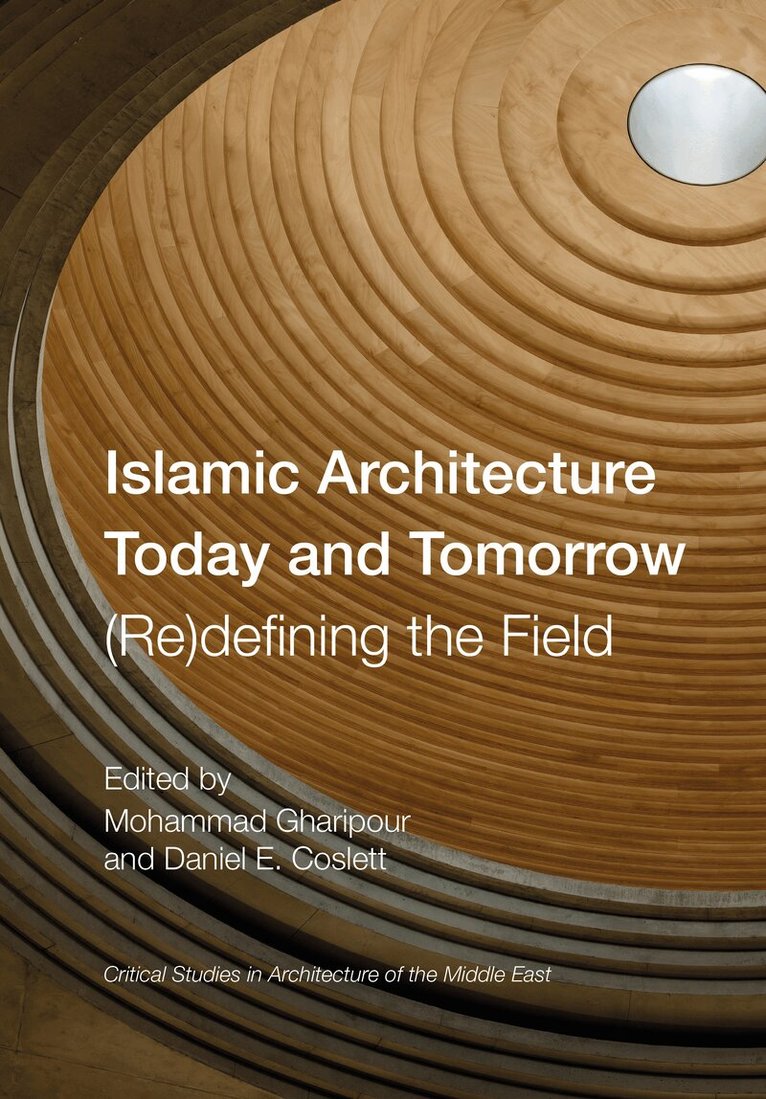
    Islamic Architecture Today and Tomorrow

    (Re)Defining the Field

    AvMohammad Gharipour,Daniel E. Coslett

    Inbunden, Engelska, 2022

    Del 8 i serien Critical Studies in Architecture of the Middle East

    1 696 kr

    Beställningsvara. Skickas inom 5-8 vardagar. Fri frakt över 249 kr.

    Beskrivning

    Through Islamic Architecture Today and Tomorrow, established experts, designers, and newer scholars from the world of ‘Islamic architecture’, broadly conceived, consider the field’s changing nature and continued relevance in our rapidly globalizing context. Reflective essays address the meaning of ‘Islamic’ in built environments, as well as the geographical, chronological, and disciplinary diversity of a dynamic field of study that encompasses far more than mosques and tombs. Essays address the use and interpretation of historic structures and spaces, in addition to contemporary design, conservation, and touristic experience, as well as research, publication, and pedagogical practices.It introduces scholars and practitioners to the state of Islamic architecture as a field of inquiry and provides a snapshot of the issues and challenges facing the field today. Looking forward, it invites readers to consider built environments in Islamic contexts as integral to global systems from an interdisciplinary and inclusive perspective. While this volume offers nuanced perspectives on a host of pressing questions, it ultimately aims to advance a necessarily on-going conversation.The book will have wide appeal among architectural historians, art historians, and other scholars working on material in the traditional Islamic regions of the world (North Africa, the Middle East, and South Asia) and beyond, as well as scholars of religion and society. Practicing architects, landscape architects, planners, preservationists, and heritage managers in the regions addressed may also be interested in the volume. Essays have been written with non-specialist and student readers in mind. Undergraduate, graduate, and design students may use selected essays, or the entire collection, in university or graduate school coursework in architecture and Middle Eastern or Islamic studies.

    Produktinformation

    • Utgivningsdatum:2022-10-14
    • Mått:170 x 230 x 32 mm
    • Vikt:1 044 g
    • Format:Inbunden
    • Språk:Engelska
    • Serie:Critical Studies in Architecture of the Middle East
    • Antal sidor:502
    • Förlag:Intellect
    • ISBN:9781789386042

    Utforska kategorier

    • Arkitekturhistoria inom Kultur

    Mer om författaren

    Mohammad Gharipour is an architectural historian and professor of architecture at Morgan State University in Baltimore, USA. In addition to publishing thirteen books, including Epidemic Urbanism (Intellect, 2021), he is the founding editor of the International Journal of Islamic Architecture.Daniel E. Coslett, is a historian of architecture and urban planning whose work focuses on the intersections of design, heritage management, and tourism in North Africa. He teaches art and architectural history and has published on colonial and postcolonial architecture in Tunisia and beyond.

    Innehållsförteckning

    • List of FiguresAcknowledgementsIntroduction: The Changed and Changing Field of ‘Islamic Architecture’ – Mohammad Gharipour and Daniel E. Coslett Part 1. Research and ScholarshipChapter 1. The Study of Islamic Architecture: Reflections on an Expanding Field – Sheila S. Blair and Jonathan M. BloomChapter 2. Widening the Horizons for the Study of Islamic Architecture – Bernard O’KaneChapter 3. Modern Architecture and Colonialism in the Islamic World 43 – Brian L. McLaren Part 2. Scope and Scale Chapter 4. From Garden to Landscape: Lessons from the Taj and the Alhambra – D. Fairchild RugglesChapter 5. Invisible Geographies in the Study of Islamic Architecture – Abidin KusnoChapter 6. Silencing Palestinian Architectural History in Israel: Reflections on Scholarship and Activism – Alona Nitzan-Shiftan Chapter 7. Islamic Architecture in the Americas: Advancing a Transregional and Hemispheric Approach – Caroline ‘Olivia’ M. Wolf Part 3. Historiography and ContextChapter 8. Cultural Encounters, Local Practice, and Historical Process in the Ancient Middle East – Dell UptonChapter 9. Neo-Eurocentrism and Science: Implications for the Historiography of Islamic Art and Architecture – Samer AkkachChapter 10. Carving an Epistemological Space for Southeast Asia: Historiographical and Critical Engagements – Imran bin Tajudeen Part 4. Fieldwork and Documentation Chapter 11. A Field without Fieldwork: Sustaining the Study of Islamic Architecture in the Twenty-First Century – Nancy UmChapter 12. Architectural History in Turkey: Between Fieldwork and Archival Research – Patricia BlessingChapter 13. Documenting Islamic Architecture: Objectives and Outcomes in a Time of War – Sharon C. Smith Part 5. Education and PedagogyChapter 14. Reorienting Perspectives: Why I Do Not Teach a Course Titled ‘Islamic Architecture’ – Jelena BogdanovićChapter 15. Decolonizing Architectural Knowledge: Situating Middle Eastern Pedagogies in a Globalizing World – Ashraf M. SalamaChapter 16. Educating the Public about Islamic Art and Architecture through Museums – Sheila R. Canby Part 6. Curation and PublicationChapter 17. Displaying Islamic Arts in Global Cities – Jorge CorreiaChapter 18. Curating the ‘Islamic’: The Personal and the Political – Leslee Katrina MichelsenChapter 19. Islamic Architecture on the Move: Publishing Architectural History in the Digital Age – Nancy MicklewrightChapter 20. Illustrating Islamic Architecture: On Visual Presentation and Scholarship – Lorenz Korn Part 7. Globalization and ChangeChapter 21. Uneven Geographies and Neoliberal Urban Transformation in Arab Cities – Rami F. DaherChapter 22. Affection for Nouvel Architecture: On Contemporary (Islamic) Architecture and Affect – Şebnem YücelChapter 23. The ‘Islamic-Modern’ Project in this Age of Uncertainty – Vikramaditya Prakash Part 8. Experience and UseChapter 24. The Tourist Gaze, Visiting Mosques, and the Folds of Architecture – Elif Kalaycıoğlu and Waleed HazbunChapter 25. Decolonizing the Conservation of Islamic Built Heritage in Egypt – Hossam MahdyChapter 26. (Dis)placement and Placemaking: Reconsidering Islamic Architecture through Refugee Agency – Kıvanç Kılınç and Bülent Batuman Part 9. Practice and ProfessionChapter 27. ‘Islamic Architecture’ and the Profession – Nasser RabbatChapter 28. A Trinity of Values in Architecture for Muslim Societies – Rasem BadranChapter 29. Relevance, Tradition, and Practice in Islamic Architecture – Kamil Khan MumtazChapter 30. Architectural Competitions: Creating Dialogues and Promoting Excellence – Hasan-Uddin Khan Contributor BiographiesIndex