• Fri frakt över 249 kr
  • •
  • Snabba leveranser
  • •
  • Billiga böcker
Kundservice

Du är på sajten för privatpersoner.

Företag, bibliotek eller offentlig verksamhet?

Du handlar på classic.bokus.com, där alla dina funktioner finns intakta.
Till classic.bokus.com
Bokus logotyp. Gå till startsidan.
  • Erbjudanden
  • Nyheter
  • Student
  • Topplistor
  • Barn & ungdom
  • Bokus Play
  • E-böcker
  • Pocketböcker
  • Spel & pussel

10% rabatt på allt med kod: NYSTART10 →

Sidfot

Mina sidor

    Hjälp

    • Kundservice
    • Vanliga frågor och svar
    • Frakt och leverans
    • Retur vid ångerrätt
    • Reklamera vara
    • Betalning
    • Köpvillkor
    • Allmänna villkor
    • Information om webbplatsens tillgänglighet

    Om Bokus

    • Om oss
    • Pressrum
    • För studenter
    • För företag
    • För bibliotek och offentlig verksamhet
    • För leverantörer
    • Hållbarhet

    Populärt

    • Aktuella erbjudanden
    • Presentkort
    • Studentlitteratur
    • Nya böcker
    • Topplistor
    • Signerade böcker
    • Engelska böcker

    Inspiration

    • Boktips
    • BookTok
    • Populära bokserier
    • Barnbokskaraktärer
    • Populära författare
    Logotyp för Bokus
    Följ oss på Facebook (extern länk)Följ oss på Instagram (extern länk)Följ oss på YouTube (extern länk)Följ oss på TikTok (extern länk)
    bokus @ CookiesAnpassa cookiesIntegritetspolicyKöpvillkor
    Till Citymail hemsida (extern länk)Till Budbee hemsida (extern länk)Till Postnord hemsida (extern länk)Till Schenker hemsida (extern länk)Till Early Bird hemsida (extern länk)Till Walleys hemsida (extern länk)
    1. Naturvetenskap och teknik
    2. Teknik och industri
    3. Tillverkningsteknik

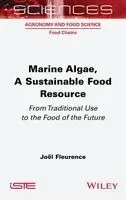
    Marine Algae, A Sustainable Food Resource

    From Traditional Use to the Food of the Future

    AvJoel Fleurence

    Inbunden, Engelska, 2026

    Del i serien ISTE Invoiced

    1 725 kr

    Beställningsvara. Skickas inom 5-8 vardagar. Fri frakt över 249 kr.

    Fler format och utgåvor

    E-bok

    2 244 kr

    E-bok

    2 146 kr

    Beskrivning

    Algae have long been exploited as a marine resource for human and animal consumption. Marine Algae, A Sustainable Food Resource provides an overview of the current uses of this renewable resource, while exploring its development prospects.This book mainly focuses on macroalgae, which account for most of the biomass harvested worldwide, both through algaculture and gathering. It provides an analysis of the main biological and ecological characteristics of these organisms, as well as an in-depth examination of their biochemical composition, which is responsible for their specific nutritional properties.The technological processes involved in transforming algae into food products are described in detail, as are the regulations governing their use in human food. This book also highlights the prospects for exploiting marine algae, particularly in the development of functional foods for human and animal nutrition.Finally, several culinary suggestions are given to illustrate the potential of these products, helping to establish a concrete link between scientific knowledge and the gastronomic value of this resource, which is still relatively unknown in the West.

    Produktinformation

    • Utgivningsdatum:2026-02-20
    • Mått:156 x 234 x 16 mm
    • Vikt:644 g
    • Format:Inbunden
    • Språk:Engelska
    • Serie:ISTE Invoiced
    • Antal sidor:256
    • Förlag:ISTE Ltd
    • ISBN:9781789452297

    Utforska kategorier

    • Tillverkningsteknik inom Naturvetenskap och teknik
    • Agronomi och lantbruk inom Naturvetenskap och teknik

    Mer om författaren

    Joël Fleurence is a professor in the ISOMER laboratory at Nantes University, France. His research focuses on the use of algae in human nutrition. He has contributed to over a hundred international publications and has had several books published.

    Innehållsförteckning

    • Preface ixChapter 1. Algae: Biological and Ecological Characteristics 11.1. The biology of algae 11.1.1. Definition and taxonomy 11.1.2. Development cycles and reproduction 61.1.3. Pigment composition 101.1.4. Size 15 1.2. Ecology of algae 161.3. References 19Chapter 2. Algae Species Used in Human Nutrition 212.1. Phaeophyceae (brown algae) 212.2. Rhodophyceae (red algae) 272.3. Chlorophyceae (green algae) 312.4. Marine microalgae 342.5. References 36Chapter 3. Production Methods 393.1. Context 393.2. Exploitation of natural fields 393.3. Algaculture 443.4. References 56Chapter 4. Biochemical Composition and Nutritional Value of Marine Algae 594.1. Introduction 594.2. Carbohydrates 604.2.1. Carbohydrates in brown algae (Phaeophyceae) 604.2.2. Carbohydrates in red algae (Rhodophyceae) 664.2.3. Carbohydrates in green algae (Chlorophyceae) 704.3. Proteins 714.3.1. Brown algae proteins (Phaeophyceae) 714.3.2. Red algae proteins (Rhodophyceae) 724.3.3. Green algae proteins (Chlorophyceae) 784.4. Lipids and fatty acids 814.4.1. Lipids in brown algae (Phaeophyceae) 824.4.2. Fatty acids and sterols in brown algae (Phaeophyceae) 844.4.3. Lipids in red algae (Rhodophyceae) 874.4.4. Fatty acids and sterols in red algae (Rhodophyceae) 894.4.5. Lipids in green algae (Chlorophyceae) 904.4.6. Fatty acids and sterols in green algae (Chlorophyceae) 914.5. Minerals 924.6. Vitamins 954.6.1. Vitamins in unprocessed algae 954.6.2. Vitamins in processed algae 964.7. Nutritional quality 994.7.1. Dietary fiber 994.7.2. Proteins 1024.7.3. Minerals 1064.7.4. In vivo studies 1084.8. References 112Chapter 5. Processing Methods 1195.1. Introduction 1195.2. Drying 1195.2.1. Sun drying or the traditional method 1205.2.2. Ash drying 1225.2.3. Drying by thermal heating 1245.3. Appertization 1265.4. Salting and brining 1275.5. Fast freezing 1315.6. Freeze-drying 1345.7. Fermentation 1355.8. Enzymatic liquefaction or enzymatic hydrolysis 1415.9. Liquid extraction (maceration) 1485.10. Maturation 1505.11. Preservation in seawater 1555.12. References 156Chapter 6. Applications in Human Nutrition 1616.1. Background. 1616.2. Sea vegetables 1616.3. Ingredients and intermediate food products 1736.4. Dietary supplements 1856.5. Some culinary preparations based on algae 1866.6. Iodine intake from algae consumption 1886.7. Phycocolloids (additives) 1956.8. References 199Chapter 7. Regulations Applicable to Algae and Their Use in Food 2037.1. Background. 2037.2. Regulations on seaweed farming 2047.2.1. French regulations on the harvesting of shore seaweed 2047.2.2. French regulations on the harvesting of algae growing in the sea 2057.2.3. French regulations on the harvesting of stranded algae 2057.2.4. Specific provisions for the Mediterranean 2067.2.5. Foreign regulations 2067.3. Regulations on the use of algae in food 2077.3.1. French regulations 2077.3.2. European regulations 2137.3.3. US regulations (United States) 2147.3.4. Other regulations 2167.4. References 218Chapter 8. Outlook 2218.1. Background. 2218.2. Algae: an alternative source of plant protein in human nutrition 2228.3. Algae as functional foods: the specific case of hypoallergenic foods 2238.4. Other cases 2258.5. Algae: an alternative source of vegetable protein in animal feed 2278.5.1. Feeding aquaculture animals (fish farming, abalone farming, pen farming) 2288.5.2. Feeding livestock 2338.6. References 235Conclusion 239Index 241