• Fri frakt över 249 kr
  • •
  • Snabba leveranser
  • •
  • Billiga böcker
Kundservice

Du är på sajten för privatpersoner.

Företag, bibliotek eller offentlig verksamhet?

Du handlar på classic.bokus.com, där alla dina funktioner finns intakta.
Till classic.bokus.com
Bokus logotyp. Gå till startsidan.
  • Erbjudanden
  • Nyheter
  • Student
  • Topplistor
  • Barn & ungdom
  • Bokus Play
  • E-böcker
  • Pocketböcker
  • Spel & pussel

10% rabatt på allt med kod NYSTART10 →

Sidfot

Mina sidor

    Hjälp

    • Kundservice
    • Vanliga frågor och svar
    • Frakt och leverans
    • Retur vid ångerrätt
    • Reklamera vara
    • Betalning
    • Köpvillkor
    • Allmänna villkor
    • Information om webbplatsens tillgänglighet

    Om Bokus

    • Om oss
    • Pressrum
    • För studenter
    • För företag
    • För bibliotek och offentlig verksamhet
    • För leverantörer
    • Hållbarhet

    Populärt

    • Aktuella erbjudanden
    • Presentkort
    • Studentlitteratur
    • Nya böcker
    • Topplistor
    • Signerade böcker
    • Engelska böcker

    Inspiration

    • Boktips
    • BookTok
    • Populära bokserier
    • Barnbokskaraktärer
    • Populära författare
    Logotyp för Bokus
    Följ oss på Facebook (extern länk)Följ oss på Instagram (extern länk)Följ oss på YouTube (extern länk)Följ oss på TikTok (extern länk)
    bokus @ CookiesAnpassa cookiesIntegritetspolicyKöpvillkor
    Till Citymail hemsida (extern länk)Till Budbee hemsida (extern länk)Till Postnord hemsida (extern länk)Till Schenker hemsida (extern länk)Till Early Bird hemsida (extern länk)Till Walleys hemsida (extern länk)
    1. Naturvetenskap och teknik
    2. Geovetenskap
    3. Geovetenskap

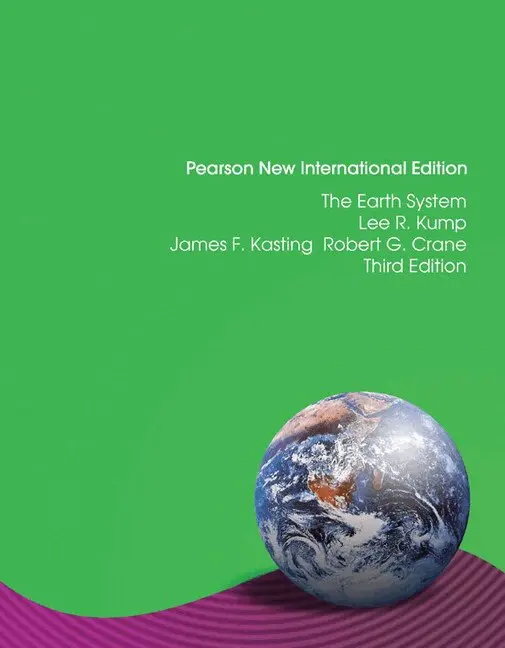
    Earth System

    AvJames Kasting,Lee Kump

    Häftad, Engelska, 1752

    2 944 kr

    Beställningsvara. Skickas inom 5-8 vardagar. Fri frakt över 249 kr.

    Fler format och utgåvor

    Häftad

    2 855 kr

    Beskrivning

    The Earth System is revolutionary in its design because it addresses the issues of global change from a true Earth systems perspective. Lessons from Earth's past allow students to put such modern global change issues in historical context. The book describes how the Earth system "works" and maintains homeostasis, highlighting those events that provide lessons for the future. It describes the effects of humans on the Earth system, emphasizing the global issues of climate change, ozone depletion, and loss of biodiversity. Finally, it concludes by discussing the prospect for life on planets outside the solar system and on Earth in its long-term future.Now available in an accessible and up-to date format through Kendall Hunt Publishing, the NEW 4th edition of The Earth System:Features updated research! The new edition features color images and data / figures based on research through the end of 2021 – including the 2022 IPCC report (which was released in draft form in 2021).Is practical! Students can learn first-hand the impact of environmental changes through the coverage of human heat stress, new technologies for reducing CO2 emissions, such as electric vehicles, small modular nuclear reactors, wind and solar power.Has been reformatted! Chapters have been added / split to discuss the topics of origin and life amid new research, climate stability on Earth-life planets, exoplanets, and on Earth's long-term future and the search for extraterrestrial life.Is student friendly! To aid the learning process, students are presented with Critical-Thinking Problems to encourage students to synthesize concepts to real-life; Useful Concepts, with in-depth presentations of fundamental concepts from the natural sciences essential to our understanding of the Earth system; and Thinking Quantitatively, which emphasizes how mathematics is used to better understand the workings of the Earth system.Is flexible! The new edition includes enough material for two one-semester courses, one of which might focus on the present Earth system and near-term environmental problems; and a second one that might cover longer-term changes in the Earth system and implications for life elsewhere.

    Produktinformation

    • Utgivningsdatum:1752-12-31
    • Format:Häftad
    • Språk:Engelska
    • Antal sidor:578
    • Upplaga:4
    • Förlag:Kendall/Hunt Publishing Co ,U.S.
    • ISBN:9781792404368

    Utforska kategorier

    • Geovetenskap inom Naturvetenskap och teknik
    • Miljövetenskap och miljöpolitik inom Naturvetenskap och teknik
    • Naturvetenskap:allmänt inom Naturvetenskap och teknik

    Innehållsförteckning

    • Dedication  About the Authors  Preface PART I. INTRODUCTIONCHAPTER ONE: GLOBAL CHANGE  Introduction  Global Change on Short Time Scales  A Closer Look: Are Hurricanes Getting Stronger with Time?  A Closer Look: The Discovery of the Antarctic Ozone Hole  Global Change on Long Time Scales  Thinking Quantitatively: Measuring the Isotopes of Hydrogen PART II. COMPONENTS OF THE EARTH SYSTEMCHAPTER TWO: DAISYWORLD: AN INTRODUCTION TO SYSTEMS  The Systems Approach  Thinking Quantitatively: Stability of Positive Feedback Loops  The Daisyworld Climate System  Useful Concepts: Graphs and Graph Making  External Forcing: The Response of Daisyworld to Increasing Solar Luminosity CHAPTER THREE: GLOBAL ENERGY BALANCE: THE GREENHOUSE EFFECT  Introduction  Electromagnetic Radiation  Temperature Scales  Blackbody Radiation  Planetary Energy Balance  A Closer Look: Planetary Energy Balance  Thinking Quantitatively: How the Greenhouse Effect Works: The One-Layer Atmosphere  Atmospheric Composition and Structure  Physical Causes of the Greenhouse Effect  Effect of Clouds on the Atmospheric Radiation Budget  Introduction to Climate Modeling  Climate Feedbacks CHAPTER FOUR: THE ATMOSPHERIC CIRCULATION SYSTEM  The Global Circulatory Subsystems  The Atmospheric Circulation  A Closer Look: The Relationships between Temperature Pressure, ad Volume—The Ideal Gas Law  A Closer Look: How Hurricanes (Tropical Cyclones) Work  Global Distributions of Temperature and Rainfall  Implications for Global Warming CHAPTER FIVE: THE CIRCULATION OF OCEANS  Winds and Surface Currents A Closer Look: Vorticity  The Circulation of the Deep Ocean  A Closer Look: The 1982–1983 and 1997–1998 ENSO Events  A Closer Look: The Salt Content of the Oceans and the Age of Earth  Useful Concepts: Isotopes of Carbon  A Closer Look: Carbon-14—A Radioactive Clock CHAPTER SIX: THE CYROSPHERE  Introduction  River and Lake Ice, Seasonal Snow Cover, and Permafrost  Northern Hemisphere Snow Cover  Permafrost  Glaciers and Ice Sheets  Glacier Flow  Thinking Quantitatively: Movement of Glaciers  Sea Ice and Climate CHAPTER SEVEN: CIRCULATION OF THE SOLID EARTH: PLATE TECTONICS  Introduction  Anatomy of Earth  A Closer Look: The Principle of the Seismograph  The Theory of Plate Tectonics  Plates and Plate Boundaries  A Closer Look: Deep-Sea Life at Mid-Ocean Ridge Vents  The Physiology of the Solid Earth: What Drives Plate Tectonics?  A Closer Look: Radiometric Age Dating of Geological Materials   Recycling of the Lithosphere: The Rock Cycle  Plate Tectonics Through Earth History CHAPTER EIGHT: RECYCLING OF THE ELEMENTS: CARBON AND NUTRIENT CYCLES  Systems Approach to the Carbon Cycle  Useful Concepts: The Concept of the Mole  The Short-Term Organic Carbon Cycle  A Closer Look: Oxygen Minimum Zone  The Long-Term Organic Carbon Cycle  The Inorganic Carbon Cycle  Useful Concepts: pH  The Carbonate-Silicate Geochemical Cycle  A Closer Look: Biological Enhancement of Chemical Weathering  Links Between the Organic and Inorganic Carbon Cycle  Phosphorus and Nitrogen Cycles CHAPTER NINE: FOCUS ON THE BIOTA: METABOLISM, ECOSYSTEMS, AND BIODIVERSITY  Life on Earth  Structure of the Biosphere  Ecosystems  A Closer Look: Physiological versus Ecological Optima for Growth  Biodiversity  Diversity of Interactions PART III. HISTORY OF THE EARTH AND OF LIFE CHAPTER TEN: ORIGIN OF THE EARTH  Introduction  Formation of the Solar System  A Closer Look: Determining the Age of the Earth  Formation of the Atmosphere and Ocean  A Modern View of the Prebiotic Atmosphere  A Closer Look: Oxidation of the Atmosphere by Escape of Hydrogen  A Closer Look: Mantle Redox Evolution CHAPTER ELEVEN: THE ORIGIN OF LIFE  Introduction  A Closer Look: What Does It Mean to be Alive?  The RNA World  A Closer Look: The Compounds of Life CHAPTER TWELVE: EFFECT OF LIFE ON THE ATMOSPHERE: THE RISE OF OXYGEN AND OZONE  Effect of Life on the Early Atmosphere  The Rise of Oxygen  The Great Oxidation Event  A Closer Look: Mass-Independent Sulfur Isotope Ratios and What They Tell Us About the Rise of Atmospheric O2 Oxygen and Ozone Levels During the Proterozoic Eon  Thinking Quantitatively: Carbon Isotopes and Organic Carbon Burial   Variations in Atmospheric O2 During the Phanerozoic  Modern Controls on Atmospheric O2CHAPTER THIRTEEN: LONG-TERM CLIMATE REGULATION  Introduction  The Faint Young Sun Paradox Revisited  The Long-term Climate Record  Thinking Quantitatively: Energy Balance Modeling of the Snowball Earth  A Closer Look: How Did Life Survive the Snowball Earth?  Variations in Atmospheric CO2 and Climate During the Phanerozoic  A Closer Look: The Paleocene-Eocene Thermal Maximum CHAPTER FOURTEEN: BIODIVERSITY THROUGH EARTH’S HISTORY  The Fossil Record of Biodiversity  Useful Concepts: Taxonomy  The Cretaceous-Tertiary Mass Extinction  A Closer Look: Causes of the End-Permian Extinction  Extraterrestrial Influences and Extinction  A Closer Look: The K-T Strangelove Ocean CHAPTER FIFTEEN: PLEISTOCENE GLACIATIONS  Geologic Evidence of Pleistocene Glaciation  Milankovitch Cycles  Thinking Quantitatively: Kepler’s Laws  Thinking Quantitatively: Effect of the Sun and Moon on Earth’s Obliquity and Precession  Glacial Climate Feedbacks  A Closer Look: Stochastic Resonance and Rapid Climate Change PART IV. EFFECT OF HUMANS ON THE EARTH SYSTEMCHAPTER SIXTEEN: GLOBAL WARMING, PART ONE: RECENT CLIMATE AND THE CONCEPT OF RADIATIVE FORCING  Introduction  Holocene Climate Change  Carbon Reservoirs and Fluxes  A Closer Look: Three-Dimensional General Circulation Models  CO2 Removal Processes and Time Scales  Other Trace Gases and Total Radiative Forcing  A Closer Look: The Chemistry of CO2 Uptake CHAPTER SEVENTEEN: GLOBAL WARMING, PART TWO: FUTURE CLIMATE PROJECTIONS AND IMPACTS  Introduction  Projections of Future Radiative Forcing and Climate  Changes in Sea Level  A Closer Look: Measurements of Polar Ice Mass Loss Made by the GRACE Mission  Human Heat Stress  Additional Human Impacts of Global Warming CHAPTER EIGHTEEN: STRATEGIES FOR SLOWING GLOBAL WARMING  Introduction  Past Policies to Slow Global Warming  Electricity Production in the United States  Reducing CO2 Emissions from Transportation  Dealing with Other CO2 Sources  Specific Climate Policies that Might Be Adopted CHAPTER NINETEEN: OZONE DEPLETION  Introduction  Ultraviolet Radiation and Its Biological Effects  Ozone Vertical Distribution and Column Depth  The Chapman Mechanism  Catalytic Cycles of Nitrogen, Chlorine, and Bromine  Sources and Sinks of Ozone Depleting Compounds  The Antarctic Ozone Hole  A Closer Look: How the Link between Freons and Ozone Depletion Was Discovered  Evidence of Midlatitude Ozone Depletion  Mechanisms for Halting Ozone Depletion CHAPTER TWENTY: HUMAN THREATS TO BIODIVERSITY  Introduction  The Modern Extinction  A Closer Look: Other Consequences of Tropical Deforestation  Why We Should Care About Biodiversity APPENDIX A: UNITS AND UNIT CONVERSIONS  APPENDIX B: TEMPERATURE CONVERSIONS  APPENDIX C: PERIODIC TABLE  APPENDIX D: USEFUL FACTS  GLOSSARY  INDEX