Inbunden, Engelska, 2020
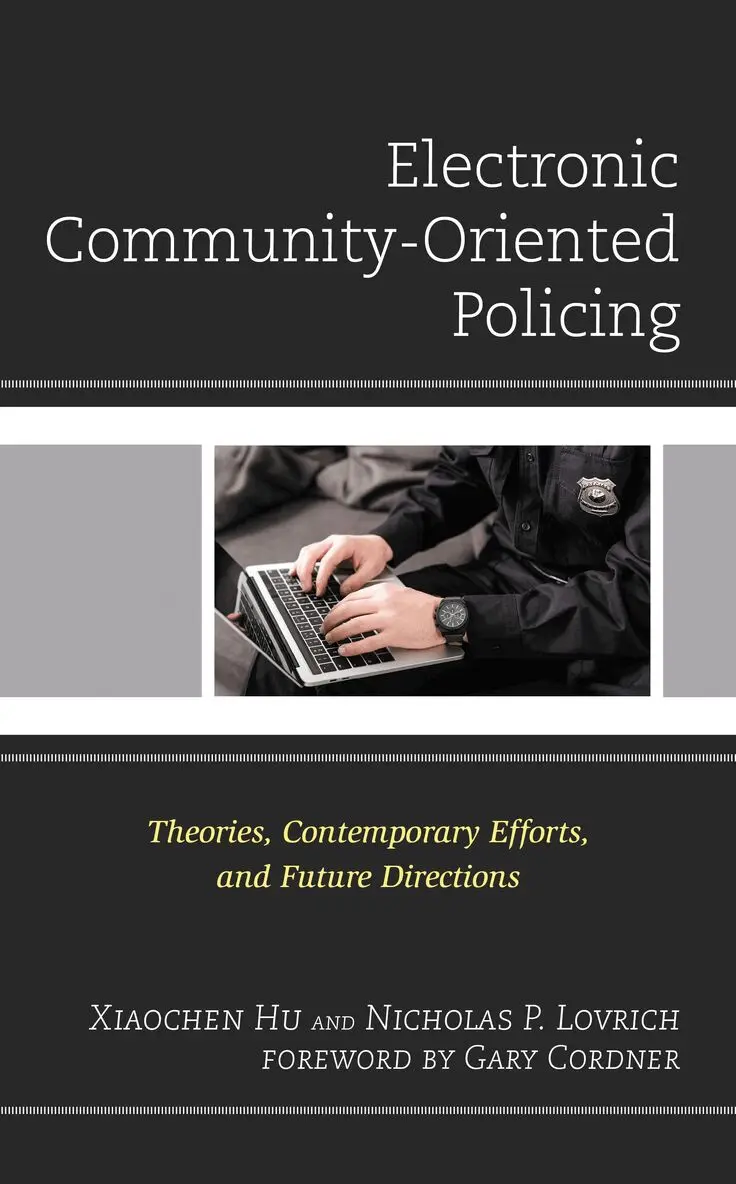
Electronic Community-Oriented Policing
Theories, Contemporary Efforts, and Future Directions
Av Xiaochen Hu, Nicholas P. Lovrich
Del i serien Policing Perspectives and Challenges in the Twenty-First Century
1298 kr
Beställningsvara. Skickas inom 10-15 vardagar. Fri frakt över 249 kr.
Fler format och utgåvor
Beskrivning
Produktinformation
- Utgivningsdatum: 2020-08-05
- Mått: 162 x 232 x 22 mm
- Vikt: 576 g
- Format: Inbunden
- Språk: Engelska
- Serie: Policing Perspectives and Challenges in the Twenty-First Century
- Antal sidor: 250
- Förlag: Bloomsbury Publishing Plc
- Medarbetare: Gary Cordner
- ISBN: 9781793607843
Utforska kategorier
Mer om författaren
Xiaochen Hu is assistant professor in the Department of Criminal Justice at Fayetteville State University.Nicholas P. Lovrich is Regents professor emeritus and Claudius O. and Mary W. Johnson distinguished professor of political science at Washington State University.
Recensioner i media
This book’s main message is that police agencies can, through social media, manage their image, bolster their legitimacy with the public, and foster closer bonds with the communities they serve. They can do so by supplementing traditional community-oriented policing with what the authors call "electronic community-oriented policing," or E-COP. This provides greater opportunity for two-way police-public interactive communication that benefits both sides. While E-COP can be a tool in crime fighting, the authors focus more on identifying best practices the police can employ to communicate more effectively with the people they protect and serve. The authors predict that E-COP will become one of the main policing strategies worldwide. They base their suggestions for improving police use of social media on their own study, which analyzed Facebook posts published by US police departments. . . this book will be of interest to students, scholars, and practitioners in criminal justice and police studies. Summing Up: Recommended. Upper-division undergraduates. Graduate students, faculty, and professionals.
Betyg & recensioner
0 recensioner
Inga recensioner tillgängliga.