• Fri frakt över 249 kr
  • •
  • Snabba leveranser
  • •
  • Billiga böcker
Kundservice

Du är på sajten för privatpersoner.

Företag, bibliotek eller offentlig verksamhet?

Du handlar på classic.bokus.com, där alla dina funktioner finns intakta.
Till classic.bokus.com
Bokus logotyp. Gå till startsidan.
  • Erbjudanden
  • Nyheter
  • Student
  • Topplistor
  • Barn & ungdom
  • Bokus Play
  • E-böcker
  • Pocketböcker
  • Spel & pussel

10% rabatt på allt med kod: NYSTART10 →

Sidfot

Mina sidor

    Hjälp

    • Kundservice
    • Vanliga frågor och svar
    • Frakt och leverans
    • Retur vid ångerrätt
    • Reklamera vara
    • Betalning
    • Köpvillkor
    • Allmänna villkor
    • Information om webbplatsens tillgänglighet

    Om Bokus

    • Om oss
    • Pressrum
    • För studenter
    • För företag
    • För bibliotek och offentlig verksamhet
    • För leverantörer
    • Hållbarhet

    Populärt

    • Aktuella erbjudanden
    • Presentkort
    • Studentlitteratur
    • Nya böcker
    • Topplistor
    • Signerade böcker
    • Engelska böcker

    Inspiration

    • Boktips
    • BookTok
    • Populära bokserier
    • Barnbokskaraktärer
    • Populära författare
    Logotyp för Bokus
    Följ oss på Facebook (extern länk)Följ oss på Instagram (extern länk)Följ oss på YouTube (extern länk)Följ oss på TikTok (extern länk)
    bokus @ CookiesAnpassa cookiesIntegritetspolicyKöpvillkor
    Till Citymail hemsida (extern länk)Till Budbee hemsida (extern länk)Till Postnord hemsida (extern länk)Till Schenker hemsida (extern länk)Till Early Bird hemsida (extern länk)Till Walleys hemsida (extern länk)
    1. Filosofi och religion
    2. Filosofi
    3. Filosofiska discipliner

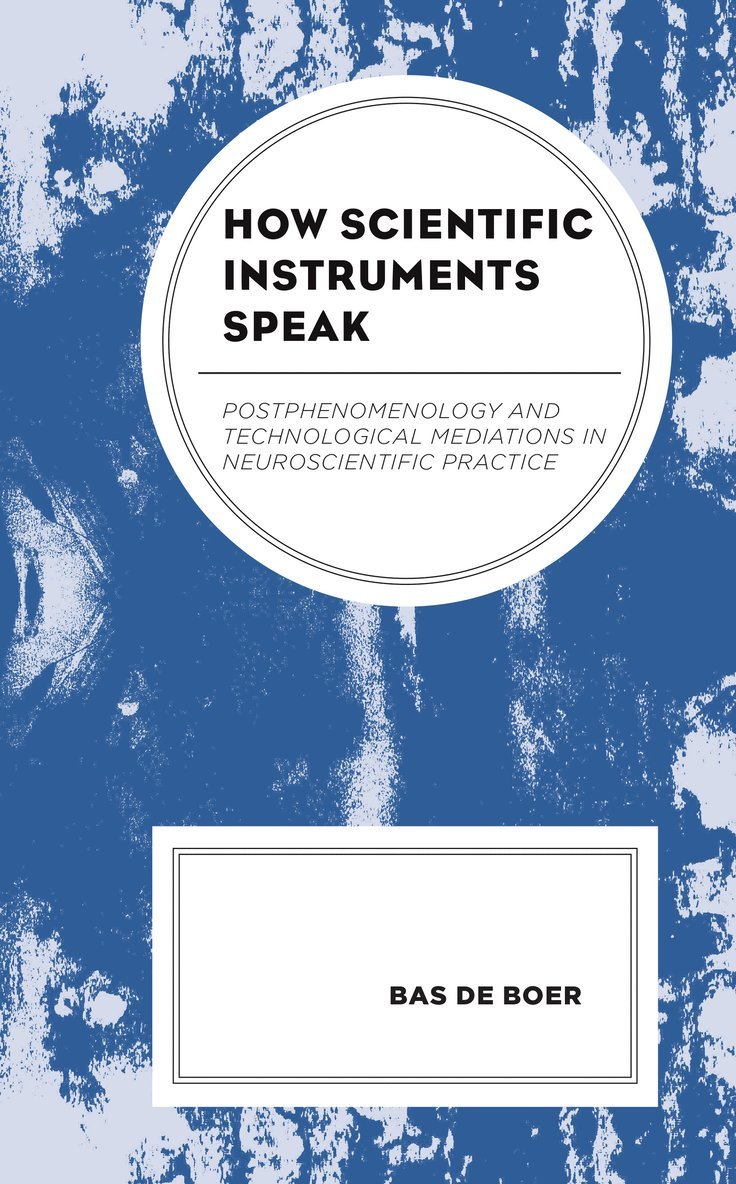
    How Scientific Instruments Speak

    Postphenomenology and Technological Mediations in Neuroscientific Practice

    AvBas de Boer

    Inbunden, Engelska, 2021

    Del i serien Postphenomenology and the Philosophy of Technology

    1 186 kr

    Beställningsvara. Skickas inom 10-15 vardagar. Fri frakt över 249 kr.

    Beskrivning

    Science is highly dependent on technologies to observe scientific objects. For example, astronomers need telescopes to observe planetary movements, and cognitive neuroscience depends on brain imaging technologies to investigate human cognition. But how do such technologies shape scientific practice, and how do new scientific objects come into being when new technologies are used in science?In How Scientific Instruments Speak, Bas de Boer develops a philosophical account of how technologies shape the reality that scientists study, arguing that we should understand scientific instruments as mediating technologies. Rather than mute tools serving pre-existing human goals, scientific instruments play an active role in shaping scientific work. De Boer uses this account to discuss how brain imaging and stimulation technologies mediate the way in which cognitive neuroscientists investigate human cognitive functions. The development of cognitive neuroscience runs parallel with the development of advanced brain imaging technologies, drawing a lot of public attention—sometimes called “neurohype”—because of its alleged capacity to demystify the human mind. By analyzing how the objects that cognitive neuroscientists study are mediated by brain imaging technologies, de Boer explicates the processes by which human cognition is investigated.

    Produktinformation

    • Utgivningsdatum:2021-01-14
    • Mått:160 x 227 x 23 mm
    • Vikt:522 g
    • Format:Inbunden
    • Språk:Engelska
    • Serie:Postphenomenology and the Philosophy of Technology
    • Antal sidor:232
    • Förlag:Bloomsbury Publishing Plc
    • ISBN:9781793627841

    Utforska kategorier

    • Filosofiska discipliner inom Filosofi och religion

    Mer om författaren

    Bas de Boer is a philosopher of technoscience working as a postdoctoral researcher at the University of Twente.

    Recensioner i media

    de Boer attempts to challenge established scientific epistemology. How Scientific Instruments Speak can be read either as a theoretical exploration of the philosophy of science and technology, or as solid empirical research on the routine practice of current neuroscience. In addition, this book can shed light on the potential of interdisciplinary research between humanities and neuroscience regarding the institutionalized methods and theory within scientific collectives. It can also help examine how critical neuroscience can impact the practices of neuroscientists.

    Innehållsförteckning

    • Table of ContentsIntroduction: Technological Mediations and (Neuro-)Scientific PracticePart 1: Towards a Theory of Technological Mediations in Scientific PracticeChapter 1: Scientific Instruments as Mediating Technologies and the Collectivity of Scientific PracticeChapter 2: “Technology” and “Human-Technology Relations”Chapter 3: Science and the Theoretical Disclosure of NatureChapter 4: To the Scientific Objects Themselves: Gaston Bachelard’s PhenomenotechniqueChapter 5: Bruno Latour and the Difference Between Technical and Technological MediationsPart 2: A Postphenomenological Ethnomethodology of Neuroscientific PracticeChapter 6: Postphenomenology as Ethnomethodology: Studying How Reality is Accomplished Through the Appropriation of Technological MediationsChapter 7: Constituting “Visual Attention” in the Cognitive NeurosciencesChapter 8: “Braining” Neuropsychiatric ExperimentsConclusion: A Philosophy of Technological Mediation as a Philosophy of Scientific Practice