• Fri frakt över 249 kr
  • •
  • Snabba leveranser
  • •
  • Billiga böcker
Kundservice

Du är på sajten för privatpersoner.

Företag, bibliotek eller offentlig verksamhet?

Du handlar på classic.bokus.com, där alla dina funktioner finns intakta.
Till classic.bokus.com
Bokus logotyp. Gå till startsidan.
  • Erbjudanden
  • Nyheter
  • Student
  • Topplistor
  • Barn & ungdom
  • Bokus Play
  • E-böcker
  • Pocketböcker
  • Spel & pussel

10% rabatt på allt med kod: NYSTART10 →

Sidfot

Mina sidor

    Hjälp

    • Kundservice
    • Vanliga frågor och svar
    • Frakt och leverans
    • Retur vid ångerrätt
    • Reklamera vara
    • Betalning
    • Köpvillkor
    • Allmänna villkor
    • Information om webbplatsens tillgänglighet

    Om Bokus

    • Om oss
    • Pressrum
    • För studenter
    • För företag
    • För bibliotek och offentlig verksamhet
    • För leverantörer
    • Hållbarhet

    Populärt

    • Aktuella erbjudanden
    • Presentkort
    • Studentlitteratur
    • Nya böcker
    • Topplistor
    • Signerade böcker
    • Engelska böcker

    Inspiration

    • Boktips
    • BookTok
    • Populära bokserier
    • Barnbokskaraktärer
    • Populära författare
    Logotyp för Bokus
    Följ oss på Facebook (extern länk)Följ oss på Instagram (extern länk)Följ oss på YouTube (extern länk)Följ oss på TikTok (extern länk)
    bokus @ CookiesAnpassa cookiesIntegritetspolicyKöpvillkor
    Till Citymail hemsida (extern länk)Till Budbee hemsida (extern länk)Till Postnord hemsida (extern länk)Till Schenker hemsida (extern länk)Till Early Bird hemsida (extern länk)Till Walleys hemsida (extern länk)
    1. Psykologi och pedagogik
    2. Psykologi
    3. Psykologiska teorier och skolor
    4. Jungiansk psykologi

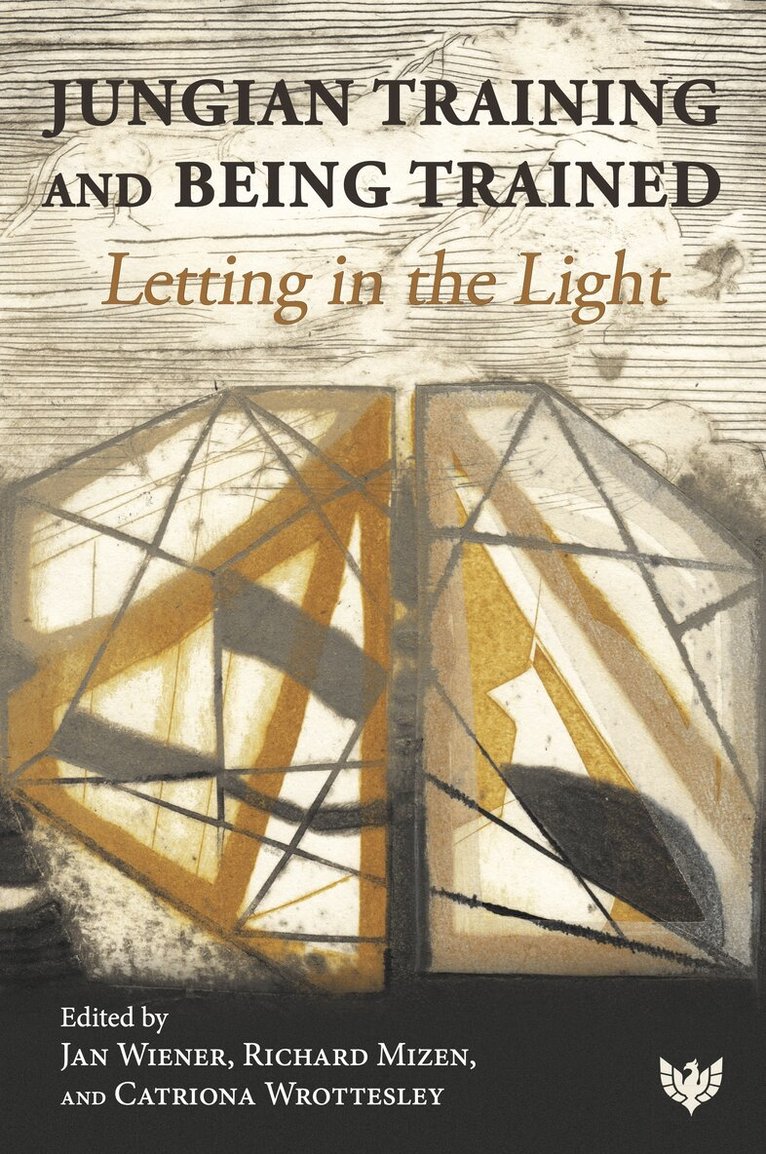
    Jungian Training and Being Trained

    Letting in the Light

    AvJan Wiener,Richard Mizen

    Häftad, Engelska, 2026

    463 kr

    Kommande

    Beskrivning

    Jungian Training and Being Trained lets in the light on the unconscious forces that shape the training experience of trainees and trainers. It explores and challenges many of the implicit assumptions that influence and fashion the trainings on offer. International contributors, each engaged in the development and delivery of training, examine the various conscious and unconscious beliefs and processes that not only creatively inform, support, and structure the training process, but also undermine or contaminate it. The aim of training candidates is to enable them to develop into authentic analysts who have learned the competences they need, have developed personally, can use their imagination, and will be safe to work with a range of patients in different environments. While Jungian trainings in different parts of the world will vary in their structures, content, and processes, most will involve a gatekeeping process for admissions, requirements for personal analysis, the study of theory, working with patients in supervision, and to have in place a process of assessment during training until qualification. The book includes chapters devoted to contemporary training values, the dynamics of selection for training, the role of a training analysis, cross-cultural challenges in trainings, the role of theory in training, diversity, and inclusion, and the personal stories of recently qualified candidates about the pleasures and challenges of their training experiences. Themes running through the book are the potential damage that unaccountable power among the analysts and those who organise training can exercise in our trainings, resistances to change within our training institutes, failures to appreciate cultural differences, and questions of how diverse and inclusive we really are when it comes to our candidates. This book is essential reading for all those training or trained in analysis. It raises important ideas for the psychoanalytic community to consider and implement to ensure analytic training institutions achieve their aims and offer best practice for trainees and trainers.

    Produktinformation

    • Utgivningsdatum:2026-10-15
    • Mått:152 x 229 x undefined mm
    • Format:Häftad
    • Språk:Engelska
    • Antal sidor:288
    • Förlag:Karnac Books
    • ISBN:9781800134744

    Utforska kategorier

    • Jungiansk psykologi inom Psykologi och pedagogik

    Mer om författaren

    Richard Mizen has worked as a psychotherapist for forty years and qualified as an analyst over thirty years ago. He trained with the Society of Analytical Psychology (SAP) where he is a training analyst and a past member and Chair of the Training Committee. At the SAP he contributed to the design and delivery of various forms of training. He is in private practice as an analyst at Exeter in the southwest of England. For the last eighteen years he has worked at the University of Exeter as Director of the Studies in Psychoanalytic Psychotherapy portfolio of programmes, part of the Psychology School in the Faculty of Health and Life Sciences, where he is an Associate Professor. He designed and leads a doctoral training programme that enables clinicians to become researchers and a second doctoral programme that provides British Psychoanalytic Council accredited clinical trainings to become either a Psychodynamic Psychotherapist or a Psychoanalytic Psychotherapist. This programme allows access to training from across the UK and internationally. He has published widely and works as a consultant and clinical supervisor to trainees, qualified analysts and psychotherapists and to organisations. He supervises postgraduate research at doctoral and master’s level and has acted as an External Examiner to both academic and clinical programmes. He has taught nationally and internationally including in Italy, the US and Pakistan.  Jan Wiener is a training analyst and supervisor for the Society of Analytical Psychology (SAP) and a previous director of training. She continues in the role of internal consultant to the training at the SAP. She was vice president of the International Association of Analytical Psychology (IAAP) from 2010 until 2013 and a member of the IAAP Executive Committee for six years before that where she had responsibility for the development of the IAAP Router Programmes in different parts of the world. Post-perestroika, together with a group of UK colleagues from different Institutes, she visited different cities in Russia several times a year for more than twenty-five years to provide a programme of teaching, supervision and personal analysis for those wishing to become Jungian analysts who until then had no access to qualified analysts and teachers. Since then, she has taught and supervised extensively in many different parts of the world and is a member of the Training Committee for the Danish Institute (DSAP). She is an external examiner for the Association of Jungian Analysts (AJA) and she has recently completed terms of office as external examiner for the Institute of Psychoanalysis in London and the University of Exeter. She is the author of many papers and chapters on themes such as the analytic relationship, transference and countertransference, unconscious identity, training, supervision and ethics and author/editor of four books. Her book TheTherapeutic Relationship: Transference, Countertransference and the Making ofMeaning was published by Texas A and M University Press in 2009 and has recently been republished by Jungianeum in 2024 as part of a project to republish classic texts in analytical psychology. Her most recent book, JungianAnalysts Working Across Cultures: From Tradition to Innovation (Crowther and Wiener, Eds.) was published by Routledge in 2021.  Catriona Wrottesley is a training analyst for the Society of Analytical Psychology (SAP) and the Independent Psychoanalytic Child and Adolescent Psychotherapy Association (IPCAPA), and senior couple psychoanalytic psychotherapist at Tavistock Relationships, London. She supervises therapists from the UK and abroad, including Germany, Ukraine, and China and is external examiner for the West Midlands Institute of Psychotherapy. She joined Tavistock Relationships’ (TR) faculty staff as a clinical lecturer in 2012, where she was later appointed head of the MA in couple and individual psychodynamic counselling and psychotherapy and MSc in psychosexual and relationship therapy before taking up the position of head of psychoanalytic training until 2020. Catriona writes and reviews for a range of journals and is an editorial board member of the Journal of Analytical Psychology, reviewer for Couple and FamilyPsychoanalysis journal, and a member of the review committee for the InternationalReview of Couple and Family Psychoanalysis. Her interests are in atmospheres, early states of mind, transgenerational transmission, narcissistic and authoritarian power relationships, and the nature of psychic reality and subjectivity.

    Innehållsförteckning

    • Table of Contents Acknowledgements Introduction About the editors and contributors1. Methods of training and their relevance in a contemporary world Evy Tausky, Pia Skogemann, and Jay BarlowUnderlying assumptions about training, obstacle or resource?Evy Tausky, C. G. JungInstitute, ZurichHow should we train analysts today?Pia Skogemann, Danish Societyof Analytical PsychologyManaging the balance between tradition and progressionJay Barlow, Society ofAnalytical Psychology, London2. The selection and acceptance of candidates for training: Do we get it right? Jan Wiener and Carolyn BatesThe selection of applicants for training Jan Wiener, Society ofAnalytical Psychology, LondonThe acceptance of applicants for training Carolyn Bates, Inter-RegionalSociety of Jungian Analysts, USA3. Training analysis: Squaring the circle Richard Mizen, Society of Analytical Psychology, London4. The role and teaching of theory David Hewison and Nora Swan-FosterThe role of theory in training David Hewison, Society ofAnalytical Psychology, LondonFor the love of theory Nora Swan-Foster,Inter-Regional Society of Jungian Analysts, USA5. Training at the International Association of Analytical PsychologyMisser Berg and Grazina GudaitėThe challenges of organising a worldwide trainingMisser Berg, Danish Societyfor Analytical PsychologyThe cross-cultural aspects of trainingGražina Gudaitė, LithuanianAssociation for Analytical Psychology6. Assessing progress: What do we expect trainees to know? Jan McGregor Hepburn, British Psychotherapy Foundationand Richard Mizen, Society of Analytical Psychology, London7. Unaccountable power and prejudice in our institutesCatriona Wrottesley and François Martin-VallasIn a dark time, the eye begins to see Catriona Wrottesley, Societyof Analytical Psychology, LondonEmpowerment and trainingFrançois Martin-Vallas,Société Française de Psychologie Analytique8. Diversity and inclusionJay Barlow, Hellen Mabhikwa,Kathrine Quiller, and Kate PalmerDeveloping a diversity and inclusion programme within an analytic/therapeutic trainingJay Barlow, Society ofAnalytical Psychology, LondonJung’s reconciling symbol—re-imagining racismHellen Mabhikwa, AnalyticalPsychotherapy Training:Birmingham, UKClass, and its intersection with psychoanalytic training Kathrine Quiller, Society ofAnalytical Psychology, London“Queer subjectivity” as analytic attitudeKate Palmer, Society ofAnalytical Psychology, London9. Fifteen-minute stories about training in the UK Laura Chaisty, Urvashi Chand, Richard Jenkins, and SueTylerTaking shape Laura Chaisty, AnalyticalPsychotherapy Training:Birmingham, UKThe challenges of belongingUrvashi Chand, BritishJungian Analytic Association,LondonLabhraím beagán (“I speak a little”) Richard Jenkins, Associationof Jungian Analysts, LondonTranscending the shadow of training Sue Tyler, Society ofAnalytical Psychology, London10. Fifteen-minute stories about training from around the world Shiva Avital, ValentynaSamus, Jelena Sladojević Matić, and Monika SrebroA process of individuation in Kleinian and Jungian supervisionShira Avital, BritishPsychotherapy Foundation, LondonMy analytic training at the crossroads of cultures in crisis Valentyna Samus, UkraineAssociation of Analytical Psychology and Lithuanian Association of Analytical PsychologyJungian analysis in SerbiaJelena Sladojević Matić,International Association of Analytical PsychologyEast of the sun, west of the moon—a story of reconciliationMonika Srebro, Polish Societyof Jungian PsychoanalystsIndex