Häftad, Engelska, 2022
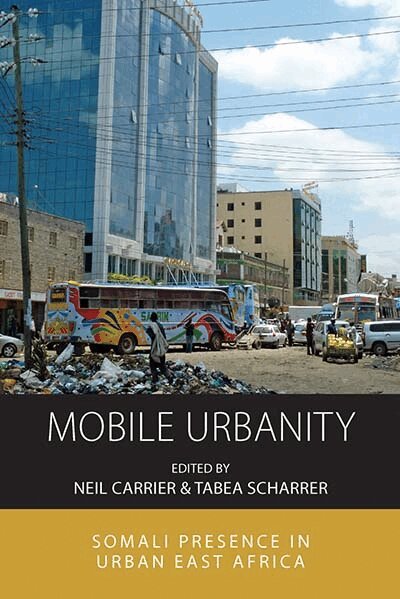
Mobile Urbanity
Somali Presence in Urban East Africa
Av Neil Carrier, Tabea Scharrer
Del 20 i serien Integration and Conflict Studies
298 kr
Beställningsvara. Skickas inom 7-10 vardagar. Fri frakt över 249 kr.
Beskrivning
Produktinformation
- Utgivningsdatum: 2022-08-12
- Mått: 152 x 229 x 14 mm
- Vikt: 390 g
- Format: Häftad
- Språk: Engelska
- Serie: Integration and Conflict Studies
- Antal sidor: 264
- Förlag: Berghahn Books
- ISBN: 9781800734432
Utforska kategorier
Mer om författaren
Neil Carrier is an Associate Professor in Social Anthropology at the University of Bristol. He has worked on a number of themes related to transnational trade and commodities, and to the impact of migration on East Africa. His most recent book is an ethnography of Nairobi’s Eastleigh estate, home to a large proportion of Kenya’s urban Somali population.
Recensioner i media
“Despite its theoretical understatement, the work develops significant ethnographic insights into the ways in which migrants and cities constantly remake each other in conjunction with the circulation of goods, discourses, and ideas. The volume’s focus on eastern Africa makes it a must-read for regionally focused urbanists. It also raises questions for further research on how eastern Africa’s mobile urbanity might be connecting in new ways to urban lives beyond Africa.” • JRAI“This book is a microcosm of the broader processes that reinforce urban mobilities at the local levels…[It] contributes to a better understanding of these dynamics and reveals the constant state of mobility within urban areas.” • City and Society“This book is a vital resource to Anthropologists, Historians, Tourists, Educators and Students, Economists and Business enthusiasts…Overall, a detailed story of Somali mobile urbanity in East Africa is well written and presented in a readable, scholarly, and entertaining style.” • Ethnic & Racial Studies“This is an important book and one that is sorely needed… it corrects a misperception that Somalis are mainly pastoralists, when in fact they have a long tradition of living in towns and engaging in non-pastoral livelihoods, such as commerce.” • Peter D. Little, Emory University
Betyg & recensioner
0 recensioner
Inga recensioner tillgängliga.