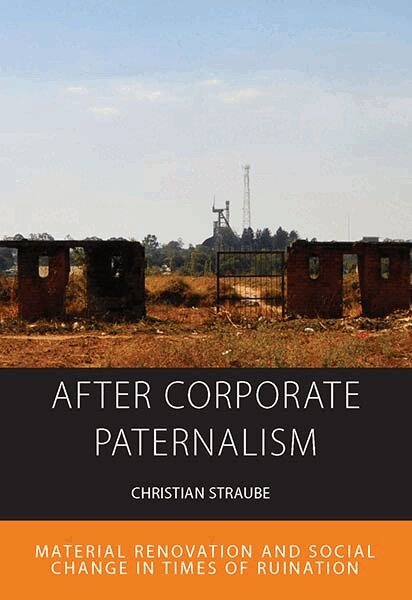
Häftad, Engelska, 2023
After Corporate Paternalism
Material Renovation and Social Change in Times of Ruination
Del 24 i serien Integration and Conflict Studies
307 kr
Beställningsvara. Skickas inom 5-8 vardagar. Fri frakt över 249 kr.
Fler format och utgåvor
Beskrivning
Produktinformation
- Utgivningsdatum: 2023-05-12
- Mått: 152 x 229 x 9 mm
- Vikt: 232 g
- Format: Häftad
- Språk: Engelska
- Serie: Integration and Conflict Studies
- Antal sidor: 178
- Förlag: Berghahn Books
- ISBN: 9781800739321
Utforska kategorier
Mer om författaren
Christian Straube was a PhD candidate at the Max Planck Institute for Social Anthropology in Halle (Saale), Germany, from 2014 to 2018. From 2019 to 2022, he managed the China Programme at Stiftung Asienhaus. Currently, he is a project manager at the Centre for Europe in the World of Stiftung Mercator in Essen.
Recensioner i media
“Straube’s book offers a valuable approach to capture social aspects of the material dimensions of infrastructure and the process of ruination.” • Journal of the Royal Anthropological Institute (JRAI)“Christian Straube’s book is a fine-grained ethnography of dynamic living amidst the infrastructural remains of corporate paternalism in present day Zambia. It is less a story of how ‘things fall apart’ but rather one of things ‘getting reassembled’ in Mpatamatu. The author offers a bold conceptual framing of renovation within ruination and insights on built environments becoming sites for creative opportunity on the part of township residents—its men, women, former miners-turned-teachers, and preachers.” • Pamila Gupta, University of the Witwatersrand
Betyg & recensioner
0 recensioner
Inga recensioner tillgängliga.