• Fri frakt över 249 kr
  • •
  • Snabba leveranser
  • •
  • Billiga böcker
Kundservice

Du är på sajten för privatpersoner.

Företag, bibliotek eller offentlig verksamhet?

Du handlar på classic.bokus.com, där alla dina funktioner finns intakta.
Till classic.bokus.com
Bokus logotyp. Gå till startsidan.
  • Erbjudanden
  • Nyheter
  • Student
  • Topplistor
  • Barn & ungdom
  • Bokus Play
  • E-böcker
  • Pocketböcker
  • Spel & pussel

10% rabatt på allt med kod: NYSTART10 →

Sidfot

Mina sidor

    Hjälp

    • Kundservice
    • Vanliga frågor och svar
    • Frakt och leverans
    • Retur vid ångerrätt
    • Reklamera vara
    • Betalning
    • Köpvillkor
    • Allmänna villkor
    • Information om webbplatsens tillgänglighet

    Om Bokus

    • Om oss
    • Pressrum
    • För studenter
    • För företag
    • För bibliotek och offentlig verksamhet
    • För leverantörer
    • Hållbarhet

    Populärt

    • Aktuella erbjudanden
    • Presentkort
    • Studentlitteratur
    • Nya böcker
    • Topplistor
    • Signerade böcker
    • Engelska böcker

    Inspiration

    • Boktips
    • BookTok
    • Populära bokserier
    • Barnbokskaraktärer
    • Populära författare
    Logotyp för Bokus
    Följ oss på Facebook (extern länk)Följ oss på Instagram (extern länk)Följ oss på YouTube (extern länk)Följ oss på TikTok (extern länk)
    bokus @ CookiesAnpassa cookiesIntegritetspolicyKöpvillkor
    Till Citymail hemsida (extern länk)Till Budbee hemsida (extern länk)Till Postnord hemsida (extern länk)Till Schenker hemsida (extern länk)Till Early Bird hemsida (extern länk)Till Walleys hemsida (extern länk)
    1. Samhälle och politik
    2. Samhälle och kultur
    3. Kultur och medier
    4. Kulturvetenskap

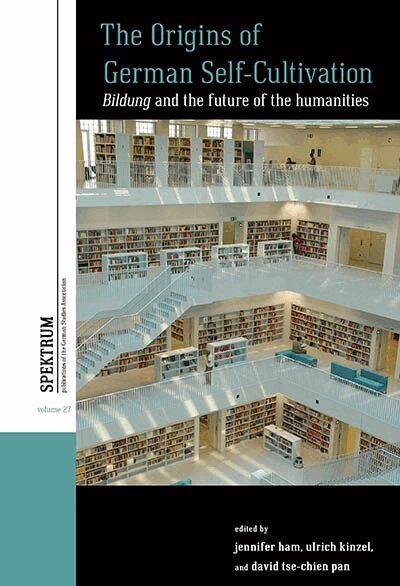
    Origins of German Self-Cultivation

    Bildung and the Future of the Humanities

    AvJennifer Ham,Ulrich Kinzel

    Inbunden, Engelska, 2023

    Del i serien Spektrum: Publications of the German Studies Association

    1 148 kr

    Skickas . Fri frakt över 249 kr.

    Beskrivning

    Recent devaluations of a liberal arts education call the formative concept of Bildung, a defining model of self-cultivation rooted in 18th and 19th century German philosophy and culture, into question and force us to reconsider what it once meant and now means to be an “educated” individual. This volume uses an arc of interdisciplinary scholarship to map both the epistemological origins and cultural expressions of the pivotal notion of Bildung at the heart of pursuit in the humanities. From its intriguing original historical manifestations to its continuing resonance in current ongoing debates surrounding the humanities, the editors urge us to ask and discover how the classical concept of Bildung, so central to humanistic inquiry, was historically imagined and applied in its original German context.

    Produktinformation

    • Utgivningsdatum:2023-02-10
    • Mått:152 x 229 x 18 mm
    • Vikt:400 g
    • Format:Inbunden
    • Språk:Engelska
    • Serie:Spektrum: Publications of the German Studies Association
    • Antal sidor:168
    • Förlag:Berghahn Books
    • ISBN:9781800738591

    Utforska kategorier

    • Kulturvetenskap inom Samhälle och politik
    • Referensverk och tvärvetenskap inom Samhälle och politik

    Mer om författaren

    Jennifer Ham is Professor of German and Humanities at the University of Wisconsin-Green Bay, where she teaches courses on German literature, culture and language and serves as division Chair of Humanities. Jennifer has also published and presented on subjects such as animal studies, Nietzsche, femininity, cabaret, Frank Wedekind and German cinema, and is also coeditor of Animal Acts: Configuring the Human in Western History (Routledge, 1997).

    Innehållsförteckning

    • List of IllustrationsAcknowledgmentsIntroductionJennifer Ham, Ulrich Kinzel, and David Tse-chien PanChapter 1. Self-cultivation and the Police State: The Political Context of Wilhelm von Humboldt’s Concept of BildungUlrich KinzelChapter 2. Fichte’s Conception of Bildung and German National IdentityDavid Tse-chien PanChapter 3. Becoming Solid: Bildung and Storage Media in Moritz’s and Goethe’s Italian TravelsSean FranzelChapter 4. Schinkel’s Altes Museum as “Bildungsmuseum”:  The Aesthetic Education of a National Community and the Makings of the Modern MuseumAndrea MeyertholenChapter 5. From Bildungsmaschine to Willenserziehung:  Nietzsche’s Project of “Heroic Minds”Jennifer HamChapter 6. The Self-Formation of Poetic Expression: Wilhelm Dilthey’s GeistesgeschichteAnna GuilleminChapter 7. Bildung as Dialectical and Theological Hermeneutics in the Service of the HumanitiesJohn SmithConclusionIndex