• Fri frakt över 249 kr
  • •
  • Snabba leveranser
  • •
  • Billiga böcker
Kundservice

Du är på sajten för privatpersoner.

Företag, bibliotek eller offentlig verksamhet?

Du handlar på classic.bokus.com, där alla dina funktioner finns intakta.
Till classic.bokus.com
Bokus logotyp. Gå till startsidan.
  • Erbjudanden
  • Nyheter
  • Student
  • Topplistor
  • Barn & ungdom
  • Bokus Play
  • E-böcker
  • Pocketböcker
  • Spel & pussel

10% rabatt på allt med kod: NYSTART10 →

Sidfot

Mina sidor

    Hjälp

    • Kundservice
    • Vanliga frågor och svar
    • Frakt och leverans
    • Retur vid ångerrätt
    • Reklamera vara
    • Betalning
    • Köpvillkor
    • Allmänna villkor
    • Information om webbplatsens tillgänglighet

    Om Bokus

    • Om oss
    • Pressrum
    • För studenter
    • För företag
    • För bibliotek och offentlig verksamhet
    • För leverantörer
    • Hållbarhet

    Populärt

    • Aktuella erbjudanden
    • Presentkort
    • Studentlitteratur
    • Nya böcker
    • Topplistor
    • Signerade böcker
    • Engelska böcker

    Inspiration

    • Boktips
    • BookTok
    • Populära bokserier
    • Barnbokskaraktärer
    • Populära författare
    Logotyp för Bokus
    Följ oss på Facebook (extern länk)Följ oss på Instagram (extern länk)Följ oss på YouTube (extern länk)Följ oss på TikTok (extern länk)
    bokus @ CookiesAnpassa cookiesIntegritetspolicyKöpvillkor
    Till Citymail hemsida (extern länk)Till Budbee hemsida (extern länk)Till Postnord hemsida (extern länk)Till Schenker hemsida (extern länk)Till Early Bird hemsida (extern länk)Till Walleys hemsida (extern länk)
    1. Historia och arkeologi
    2. Historia
    3. Historia: teori och metod

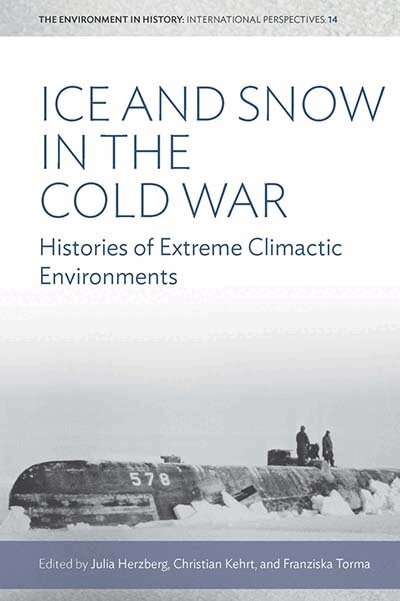
    Ice and Snow in the Cold War

    Histories of Extreme Climatic Environments

    AvJulia Herzberg,Christian Kehrt

    Häftad, Engelska, 2025

    Del i serien Environment in History: International Perspectives

    393 kr

    Skickas . Fri frakt över 249 kr.

    Beskrivning

    The history of the Cold War has focused overwhelmingly on statecraft and military power, an approach that has naturally placed Moscow and Washington center stage. Meanwhile, regions such as Alaska, the polar landscapes, and the cold areas of the Soviet periphery have received little attention. However, such environments were of no small importance during the Cold War: in addition to their symbolic significance, they also had direct implications for everything from military strategy to natural resource management. Through histories of these extremely cold environments, this volume makes a novel intervention in Cold War historiography, one whose global and transnational approach undermines the simple opposition of “East” and “West.”

    Produktinformation

    • Utgivningsdatum:2025-08-01
    • Mått:152 x 229 x 20 mm
    • Vikt:488 g
    • Format:Häftad
    • Språk:Engelska
    • Serie:Environment in History: International Perspectives
    • Antal sidor:330
    • Förlag:Berghahn Books
    • ISBN:9781836950738

    Utforska kategorier

    • Historia: teori och metod inom Historia och arkeologi
    • Miljöteknik inom Naturvetenskap och teknik

    Mer om författaren

    Julia Herzberg is Professor for the Cultural History of Eastern Europe at the University of Leipzig and Deputy Director of the Leibniz Institute for the History and Culture of Eastern Europe (GWZO).

    Recensioner i media

    “These histories of cold places provide valuable contributions to environmental history, the history of science, and Cold War history. For scholars of Russia and the Soviet Union, it is worth pointing out that the three chapters concentrating on this region are especially rich and insightful.” • Jahrbücher für Geschichte Osteuropas“The advantage of the volume is that it transcends the geographical boundaries of the circumpolar areas, which are often associated with cold and extreme. As can be seen from the description, apart from Antarctica, Greenland and the Soviet Arctic, the geography of the collection covers the European Alps and mountain systems of Central Asia. The extended geographic focus allows to see the links between polar and non-polar regions in the history of science and technology and, therefore, to ‘detach’ extreme cold environment from the poles.” • Karaseva“A strong feature of this collection is its detailed research, which serves as the basis for the narratives: several chapters use a microhistorical (as well as a microgeographical) approach and tell us about largely unknown places… Hopefully, this innovative book will invigorate other researchers, including those who study Russian and east European history to further develop a genre of “cryo-history”that is so relevant in today’s world of accelerated Arctic melting.” • Slavic Review“The focus of this very well written volumes, which in parts reads like single-authored, is in most contributions on the systemic competition, be it in the military, winter sports, technology or especially in research.” • H-Soz-Kult“Collectively, the geographically diverse case studies in Ice and Snow in the Cold War address a topic that is important but relatively understudied. The book moves both environmental history and Cold War studies in intriguing new directions.” • Matthew Farish, University of Toronto

    Innehållsförteckning

    • List of IllustrationsINTRODUCTIONSExploring Ice and Snow in the Cold WarJulia Herzberg, Christian Kehrt, and Franziska TormaCryo-history: Ice, Snow, and the Great AccelerationSverker SörlinPART I: SCIENCE: SITES OF KNOWLEDGEChapter 1. Snow and Avalanche Research as Patriotic Duty? The Institutionalization of a Scientific Discipline in SwitzerlandDania AchermannChapter 2. “An Orgy of Hypothesizing”: The Construction of Glaciological Knowledge in Cold War AmericaJanet Martin-NielsenChapter 3. “Camp Century” and “Project Iceworm”: Greenland as a Stage for US Military Service RivalriesIngo HeidbrinkChapter 4. Inuit Responses to Arctic Militarization: Examples from East GreenlandSophie ElixhauserPART II: POLITICS OF CONFRONTATION AND COOPERATIONChapter 5. Creating Open Territorial Rights in Cold and Icy Places: Cold War Rivalries and the Antarctic and Outer Space TreatiesRoger D. LauniusChapter 6. An Environment Too Extreme? The Case of BouvetøyaPeder Roberts and Lize-Marié van der WattChapter 7. Managing the “White Death” in Cold War Soviet Union: Snow Avalanches, Ice Science, and Winter Sports in Kazakhstan, 1960s–1980sMarc EliePART III: CULTURES AND NARRATIVES OF ICE AND SNOWChapter 8. Laboratory Metaphors in Antarctic History: From Nature to SpaceSebastian Vincent GrevsmühlChapter 9. Cold War Creatures: Soviet Science and the Problem of the Abominable SnowmanCarolin F. Roeder and Gregory AfinogenovChapter 10. Negotiating “Coldness”: The Natural Environment and Community Cohesion in Cold War Molotovsk-SeverodvinskEkaterina Emeliantseva KollerChapter 11. An Exploration of the Self: Reinhold Messner’s Trans-Antarctic Expedition of 1989Pascal SchillingsConclusion: Histories of Extreme Environments beyond the Cold WarJulia Herzberg, Christian Kehrt, and Franziska TormaIndex