Häftad, Engelska, 2026
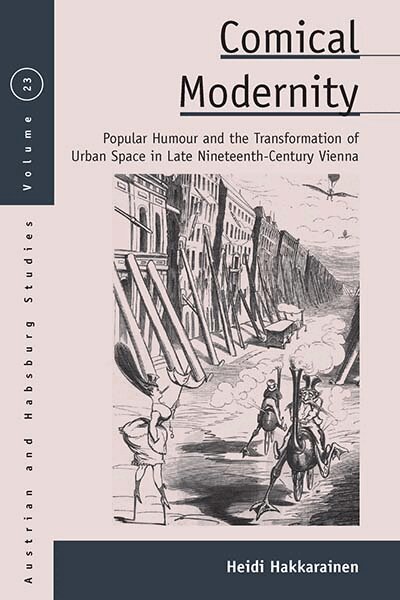
Comical Modernity
Popular Humour and the Transformation of Urban Space in Late Nineteenth Century Vienna
Del 23 i serien Austrian and Habsburg Studies
406 kr
Skickas torsdag 26/11. Fri frakt över 249 kr.
Fler format och utgåvor
Beskrivning
Produktinformation
- Utgivningsdatum: 2026-01-01
- Mått: 152 x 229 x 17 mm
- Vikt: 422 g
- Format: Häftad
- Språk: Engelska
- Serie: Austrian and Habsburg Studies
- Antal sidor: 288
- Förlag: Berghahn Books
- ISBN: 9781836953821
Utforska kategorier
Mer om författaren
Heidi Hakkarainen is a postdoctoral researcher at the University of Turku, Finland. She has recently contributed to a research project on “Viral Culture in Early Nineteenth-Century Europe”.
Recensioner i media
“Hakkarainen’s study is grounded in a solid knowledge of the secondary literature on modernity and theories of humor. One of her important claims is that… while humorists poked fun at various aspects of the Viennese urban modernity in the making, humor itself was a product of this early modernity.” • H-Habsburg“This book makes an important contribution in demonstrating the deep roots of Vienna’s modernist culture outside of the high culture that has heretofore received so much attention. The author’s analysis of humor journals’ female readership, which she does by way of their pseudonymous participation in the readers’ columns, is also much appreciated. Hakkarainen’s book will be of great interest to gender, Habsburg, Jewish, and urban historians, as well as those interested in Vienna more generally.” • Central European History“Through her penetrating and compelling analysis of humor in connection with the physical expansion of Vienna as a city and the shifting identity models based on gender, class, religion and ethnicity, Heidi Hakkarainen identifies a blend of elements that produced a specifically Viennese humor.” • Dagmar C. G. Lorenz, University of Illinois at Chicago“This impressive and illuminating book represents thoughtful engagement in a wide range of discourses about what it means to be modern, but also opens up questions about what is particularly “Viennese.” It helps us learn about the city through senses that are often ignored—smells, tastes, slights and frustrations, but also moments of levity.” • Britta McEwen, Creighton University
Betyg & recensioner
0 recensioner
Inga recensioner tillgängliga.