• Fri frakt över 249 kr
  • •
  • Snabba leveranser
  • •
  • Billiga böcker
Kundservice

Du är på sajten för privatpersoner.

Företag, bibliotek eller offentlig verksamhet?

Du handlar på classic.bokus.com, där alla dina funktioner finns intakta.
Till classic.bokus.com
Bokus logotyp. Gå till startsidan.
  • Erbjudanden
  • Nyheter
  • Student
  • Topplistor
  • Barn & ungdom
  • Bokus Play
  • E-böcker
  • Pocketböcker
  • Spel & pussel

10% rabatt på allt med kod: NYSTART10 →

Sidfot

Mina sidor

    Hjälp

    • Kundservice
    • Vanliga frågor och svar
    • Frakt och leverans
    • Retur vid ångerrätt
    • Reklamera vara
    • Betalning
    • Köpvillkor
    • Allmänna villkor
    • Information om webbplatsens tillgänglighet

    Om Bokus

    • Om oss
    • Pressrum
    • För studenter
    • För företag
    • För bibliotek och offentlig verksamhet
    • För leverantörer
    • Hållbarhet

    Populärt

    • Aktuella erbjudanden
    • Presentkort
    • Studentlitteratur
    • Nya böcker
    • Topplistor
    • Signerade böcker
    • Engelska böcker

    Inspiration

    • Boktips
    • BookTok
    • Populära bokserier
    • Barnbokskaraktärer
    • Populära författare
    Logotyp för Bokus
    Följ oss på Facebook (extern länk)Följ oss på Instagram (extern länk)Följ oss på YouTube (extern länk)Följ oss på TikTok (extern länk)
    bokus @ CookiesAnpassa cookiesIntegritetspolicyKöpvillkor
    Till Citymail hemsida (extern länk)Till Budbee hemsida (extern länk)Till Postnord hemsida (extern länk)Till Schenker hemsida (extern länk)Till Early Bird hemsida (extern länk)Till Walleys hemsida (extern länk)
    1. Naturvetenskap och teknik
    2. Teknik och industri
    3. Energiteknik

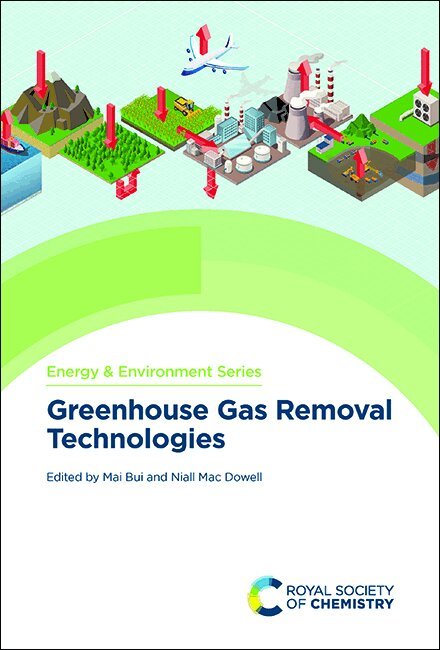
    Greenhouse Gas Removal Technologies

    AvMai Bui,Niall Mac Dowell

    Inbunden, Engelska, 2022

    Del i serien Energy and Environment Series

    3 192 kr

    Beställningsvara. Skickas inom 5-8 vardagar. Fri frakt över 249 kr.

    Beskrivning

    Greenhouse gas removal (GGR) technologies can remove greenhouse gases such as carbon dioxide from the atmosphere. Most of the current GGR technologies focus on carbon dioxide removal, these include afforestation and reforestation, bioenergy with carbon capture and storage, direct air capture, enhanced weathering, soil carbon sequestration and biochar, ocean fertilisation and coastal blue carbon. GGR technologies will be essential in limiting global warning to temperatures below 1.5°C (targets by the IPCC and COP21) and will be required to achieve deep reductions in atmospheric CO2 concentration. In the context of recent legally binding legislation requiring the transition to a net zero emissions economy by 2050, GGR technologies are broadly recognised as being indispensable.This book provides the most up-to-date information on GGR technologies that provide removal of atmosphere CO2, giving insight into their role and value in achieving climate change mitigation targets. Chapters discuss the issues associated with commercial development and deployment of GGRs, providing potential approaches to overcome these hurdles through a combination of political, economic and R&D strategies.With contributions from leaders in the field, this title is an indispensable resource for graduate students and researchers in academia and industry, working in chemical engineering, mechanical engineering and energy policy.

    Produktinformation

    • Utgivningsdatum:2022-08-22
    • Mått:156 x 234 x 38 mm
    • Vikt:1 187 g
    • Format:Inbunden
    • Språk:Engelska
    • Serie:Energy and Environment Series
    • Antal sidor:502
    • Förlag:Royal Society of Chemistry
    • ISBN:9781839161995

    Utforska kategorier

    • Energiteknik inom Naturvetenskap och teknik
    • Miljövetenskap och miljöpolitik inom Naturvetenskap och teknik
    • Energiindustri inom Ekonomi och Ledarskap

    Mer om författaren

    Niall is a Reader in Energy Systems at Imperial College London. He is a Chartered Engineer, a Fellow of both the IChemE and the Royal Society of Chemistry. His research is focused on understanding the transition to a low carbon economy. Since 2010, he has published more than 100 peer-reviewed scientific papers in this context. Niall has more than a decade’s experience as a consultant to the public and private sectors. He has worked with a range of private sector energy companies and has provided evidence to members of the Select Committee on Energy and Climate Change. He has given advice to DECC/BEIS, the IEA, the IEAGHG the ETI and the JRC. Niall is a member of Total’s Scientific Committee, was also the only non-US member of the US National Petroleum Council (NPC) CCUS Roadmap Team. Niall has been a member of the technical working group of the Zero Emissions Platform (ZEP), the Carbon Capture and Storage Association (CCSA) and from 2015 – 2019 served as the Secretary of the IChemE's Energy Centre. Finally, Niall was awarded the Qatar Petroleum Prize for his work on Clean Fossil Fuels in 2010 and the IChemE’s Nicklin medal for his work on low carbon energy in 2015.Mai is a Research Associate in the Centre for Environmental Policy at Imperial College London. Her current research is on the topics of CCS, negative emissions technologies (BECCS & DAC), and grid-scale clean energy storage solutions. Mai has first-hand experience in designing pilot plant test campaigns to demonstrate dynamic/flexible operation, including CSIRO’s pilot plant (AGL Loy Yang power station, Australia) and the CO2 capture facility at TCM (Mongstad, Norway). Mai has expertise in developing dynamic process models and surrogate models of CO2 capture processes in different applications. Since completing her PhD (end of 2015), Mai has published 14 peer-reviewed journal papers, a book, book chapter and reports on CCS and NETs for IChemE and Imperial College.

    Innehållsförteckning

    • Introduction;Greenhouse Gas Removal: Overview and Current Status of Deployment;Negative Emissions: The Role and Response of the Climate System;Accounting Negative Emissions. How Difficult Could It Be?;Bioenergy with Carbon Capture and Storage (BECCS);Direct Air Capture;Geochemical Negative Emission Technologies;Soil Carbon Sequestration and Biochar;Afforestation/Reforestation (AR);Feasibility of Using Biologically-based Processes in the Open Ocean and Coastal Seas for Atmospheric CO2 Removal;Comparison of Technologies and Practices for Removing Carbon Dioxide from the Atmosphere;Global Distribution of Negative Emissions;Political and Socio-economic Challenges of Greenhouse Gas Removal Technologies;Priorities for Policy Design;Socially Equitable Energy Transitions: Analytical Challenges and Policy Implications