• Fri frakt över 249 kr
  • •
  • Snabba leveranser
  • •
  • Billiga böcker
Kundservice

Du är på sajten för privatpersoner.

Företag, bibliotek eller offentlig verksamhet?

Du handlar på classic.bokus.com, där alla dina funktioner finns intakta.
Till classic.bokus.com
Bokus logotyp. Gå till startsidan.
  • Erbjudanden
  • Nyheter
  • Student
  • Topplistor
  • Barn & ungdom
  • Bokus Play
  • E-böcker
  • Pocketböcker
  • Spel & pussel

10% rabatt på allt med kod: NYSTART10 →

Sidfot

Mina sidor

    Hjälp

    • Kundservice
    • Vanliga frågor och svar
    • Frakt och leverans
    • Retur vid ångerrätt
    • Reklamera vara
    • Betalning
    • Köpvillkor
    • Allmänna villkor
    • Information om webbplatsens tillgänglighet

    Om Bokus

    • Om oss
    • Pressrum
    • För studenter
    • För företag
    • För bibliotek och offentlig verksamhet
    • För leverantörer
    • Hållbarhet

    Populärt

    • Aktuella erbjudanden
    • Presentkort
    • Studentlitteratur
    • Nya böcker
    • Topplistor
    • Signerade böcker
    • Engelska böcker

    Inspiration

    • Boktips
    • BookTok
    • Populära bokserier
    • Barnbokskaraktärer
    • Populära författare
    Logotyp för Bokus
    Följ oss på Facebook (extern länk)Följ oss på Instagram (extern länk)Följ oss på YouTube (extern länk)Följ oss på TikTok (extern länk)
    bokus @ CookiesAnpassa cookiesIntegritetspolicyKöpvillkor
    Till Citymail hemsida (extern länk)Till Budbee hemsida (extern länk)Till Postnord hemsida (extern länk)Till Schenker hemsida (extern länk)Till Early Bird hemsida (extern länk)Till Walleys hemsida (extern länk)
    1. Kultur
    2. Arkitektur
    3. Arkitekturhistoria

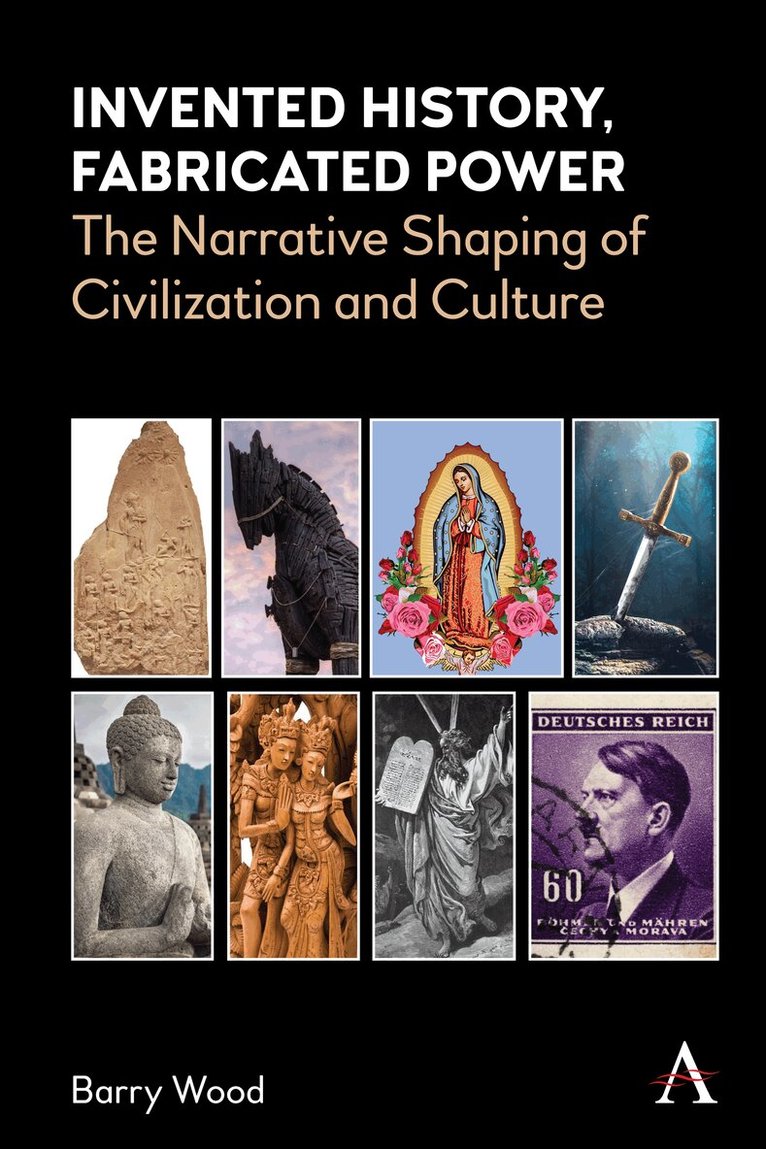
    Invented History, Fabricated Power

    The Narrative Shaping of Civilization and Culture

    AvBarry Wood

    Häftad, Engelska, 2026

    978 kr

    Kommande

    Fler format och utgåvor

    Inbunden

    1 831 kr

    E-bok

    1 543 kr

    Beskrivning

    Invented History, Fabricated Power begins with an examination of prehistoric beliefs (in spirits, souls, mana, orenda) that provided personal explanation and power through ritual and shamanism among tribal peoples. On this foundation, spiritual power evolved into various kinds of divine sanction for kings and emperors (Sumerian, Egyptian, Greek, Roman, Indian, Chinese and Japanese). As kingships expanded into empires, fictional histories and millennia-long genealogies developed that portrayed imperial superiority and greatness. Supernatural events and miracles were attached to religious founders (Hebrew, Hindu, Buddhist, Christian, Islamic). A unique variation developed in the Roman Church which fabricated papal power through forgeries in the first millennium CE and the later “doctrine of discovery” which authorized European domination and conquest around the world during the Age of Exploration. Elaborate fabrications continued with epic histories and literary cycles from the Persians, Ethiopians, Franks, British, Portuguese, and Iroquois Indians. Both Marxists and Nazis created doctrinal texts which passed for economic or political explanations but were in fact self-aggrandizing narratives that eventually collapsed. The book ends with the idealistic goals of the current liberal democratic way of life, pointing to its limitations as a sustaining narrative, along with numerous problems threatening its viability over the long term.

    Produktinformation

    • Utgivningsdatum:2026-12-31
    • Mått:153 x 229 x 26 mm
    • Vikt:454 g
    • Format:Häftad
    • Språk:Engelska
    • Antal sidor:402
    • Förlag:Anthem Press
    • ISBN:9781839986130

    Utforska kategorier

    • Arkitekturhistoria inom Kultur
    • Allmän historia och världshistoria inom Historia och arkeologi
    • Litteraturvetenskap inom Skönlitteratur

    Mer om författaren

    Barry Wood has degrees from the universities of Toronto and British Columbia, and an interdisciplinary doctorate in English and American literature, humanities and religious studies from Stanford University. He teaches British and American literature at the University of Houston. His previous books include Malcolm Lowry: The Writer and His Critics.

    Recensioner i media

    By focusing on the way political elites have used constructed narrative as a way of validating their claims to power, the author offers a fresh and convincing analytical framework for understanding the emergence of powerful leaders from ancient times to the present.The author offers a convincing argument that power needs to be considered as something less tangible than mere control of economies or military systems. Historians should also consider power as an invention of elites who for millennia have used artists and story tellers to weave narratives to ‘convince’ people of the legitimacy of claims to power being made by political elites.In Invented History, the author reminds us that for millennia history has essentially been a narrative shaped by legions of storytellers and artists, who have used their narrative skills to offer explicit validation for the claims to authority and leadership made by political elites.By providing a comprehensive overview of the role of narrative in the invention and maintenance of power, the author has provided historians who work in larger scales a new approach to the psychology of power, and the sociology of nationalist and imperialist thinking by entire populations. — Dr. Craig Benjamin, PhD, Professor of History, Frederik J. Meijer Honors College, Grand Valley State University

    Innehållsförteckning

    • Introduction; Prologue: Prehistoric Spirits and Personal Power; Part One, Divine Kings, Devarajas, and Sons of Heaven; 1, Divine kingship in Mesopotamia; 2, Pharaohs among the Indestructibles; 3, Kingship among the Hebrews; 4, The Deification of Roman Emperors; 5, The Deva-rajas of India and Southeast Asia; 6, The Chinese Mandate from Heaven; 7, The Japanese Imperial Cult; Part Two, Kings and Empires Before the Common Era (BCE); 8, The Legendary Prehistory of the Sumerians; 9, Legendary Kings and Empires of Pre-Classical Greece; 10, Patriarchs, Exodus, and the Epic of Israel; 11, Legendary Kings and Empires of India; 12, The Aeneid and the Legendary Founding of Rome; Part Three, Narratives of Spiritual Founders; 13, Moses: Lawgiver and Founder of Israel; 14, Buddha and Legends of Previous Buddhas; 15, The Teacher of Righteousness and Savior Narratives; 16, Muhammad, the Qur’an, and Islamic Legends; 17, The Virgin Mary through the Centuries; 18, Tonantzin and Our Lady of Guadalupe; Part Four, Kings and Empires in the Common Era (CE); 19, Narrative Forgeries of the Holy Roman Empire; 20, Shahnameh: The Epic of Kings and Alexander the Great; 21, Charlemagne: Ancestral and Campaign Fictions; 22, The Fictional Kingdom of King Arthur; 23, Kebra Negast: Ethiopian Kings and the Ark of the Covenant; 24, Elizabeth I: Narratives of the Virgin Queen; Part Five, Social and Political Order since 1450; 25, Epics of the Portuguese Seaborne Empire; 26, Discovery: The European Narrative: of Power; 27 Dekanawida and the Iroquois Federation; 28, The New England Canaan of the Puritans; 39, Marx, Capitalism, and the Classless Society; 30, Adolf Hitler’s Narratives of Aryans and Jews; Epilogue: The Endangered Narrative of Liberal Democracy; Bibliography of Works Cited; Index.