• Fri frakt över 249 kr
  • •
  • Snabba leveranser
  • •
  • Billiga böcker
Kundservice

Du är på sajten för privatpersoner.

Företag, bibliotek eller offentlig verksamhet?

Du handlar på classic.bokus.com, där alla dina funktioner finns intakta.
Till classic.bokus.com
Bokus logotyp. Gå till startsidan.
  • Erbjudanden
  • Nyheter
  • Student
  • Topplistor
  • Barn & ungdom
  • Bokus Play
  • E-böcker
  • Pocketböcker
  • Spel & pussel

10% rabatt på allt med kod NYSTART10 →

Sidfot

Mina sidor

    Hjälp

    • Kundservice
    • Vanliga frågor och svar
    • Frakt och leverans
    • Retur vid ångerrätt
    • Reklamera vara
    • Betalning
    • Köpvillkor
    • Allmänna villkor
    • Information om webbplatsens tillgänglighet

    Om Bokus

    • Om oss
    • Pressrum
    • För studenter
    • För företag
    • För bibliotek och offentlig verksamhet
    • För leverantörer
    • Hållbarhet

    Populärt

    • Aktuella erbjudanden
    • Presentkort
    • Studentlitteratur
    • Nya böcker
    • Topplistor
    • Signerade böcker
    • Engelska böcker

    Inspiration

    • Boktips
    • BookTok
    • Populära bokserier
    • Barnbokskaraktärer
    • Populära författare
    Logotyp för Bokus
    Följ oss på Facebook (extern länk)Följ oss på Instagram (extern länk)Följ oss på YouTube (extern länk)Följ oss på TikTok (extern länk)
    bokus @ CookiesAnpassa cookiesIntegritetspolicyKöpvillkor
    Till Citymail hemsida (extern länk)Till Budbee hemsida (extern länk)Till Postnord hemsida (extern länk)Till Schenker hemsida (extern länk)Till Early Bird hemsida (extern länk)Till Walleys hemsida (extern länk)
    1. Juridik
    2. Internationell rätt
    3. Folkrätt

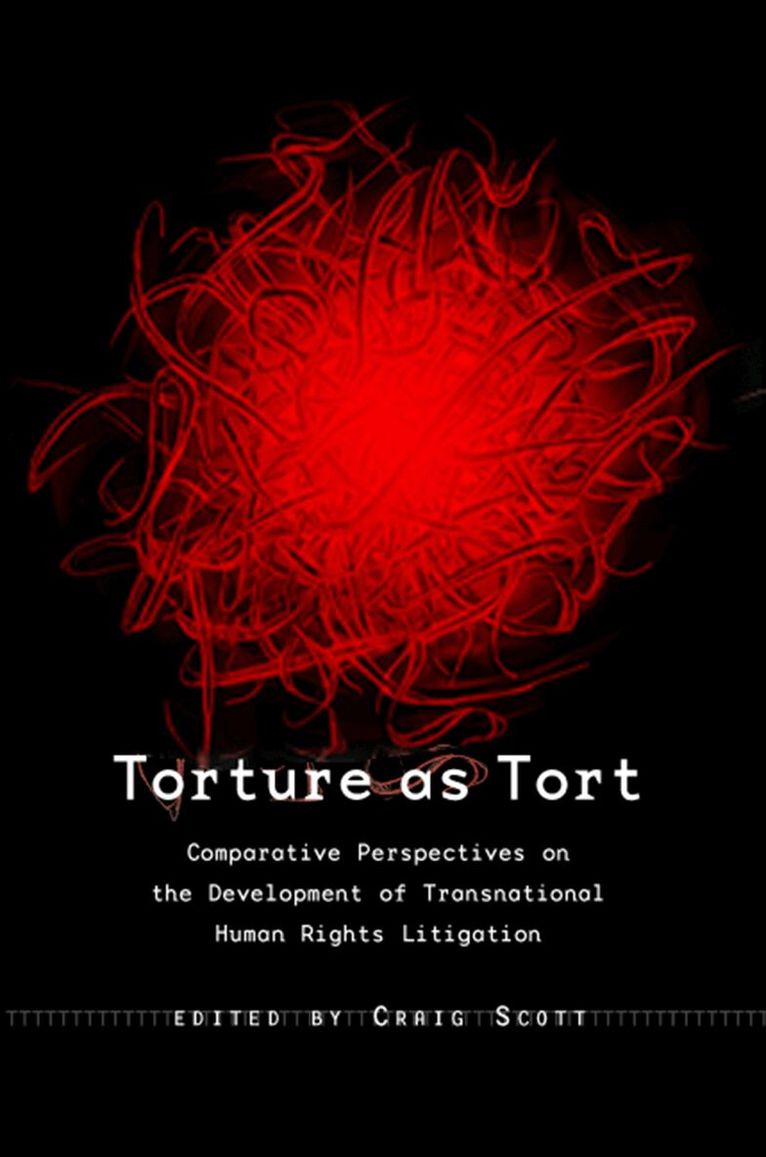
    Torture as Tort

    Comparative Perspectives on the Development of Transnational Human Rights Litigation

    AvCraig Martin Scott

    Inbunden, Engelska, 2001

    2 434 kr

    Beställningsvara. Skickas inom 10-15 vardagar. Fri frakt över 249 kr.

    Beskrivning

    The controversial nature of seeking globalised justice through national courts has become starkly apparent in the wake of the Pinochet case in which the Spanish legal system sought to bring to account under international criminal law the former President of Chile,for violations in Chile of human rights of non-Spaniards. Some have reacted to the involvement of Spanish and British judges in sanctioning a former head of state as nothing more than legal imperialism while others have termed it positive globalisation. While the international legal and associated statutory bases for such criminal prosecutions are firm, the same cannot be said of the enterprise of imposing civil liability for the same human-rights-violating conduct that gives rise to criminal responsibility. In this work leading scholars from around the world address the host of complex issues raised by transnational human rights litigation. There has been, to date, little treatment, let alone a comprehensive assessment, of the merits and demerits of US-style transnational human rights litigation by non-American legal scholars and practitioners.The book seeks not so much to fill this gap as to start the process of doing so, with a view to stimulating debate amongst scholars and policy-makers. The book's doctrinal coverage and analytical inquiries will also be extremely relevant to the world of transnational legal practice beyond the specific question of human rights litigation.

    Produktinformation

    • Utgivningsdatum:2001-05-22
    • Mått:156 x 234 x 60 mm
    • Vikt:1 331 g
    • Format:Inbunden
    • Språk:Engelska
    • Antal sidor:776
    • Förlag:Bloomsbury Publishing PLC
    • ISBN:9781841130606

    Utforska kategorier

    • Folkrätt inom Juridik
    • Politiskt förtryck inom Samhälle och politik

    Mer om författaren

    Craig Scott is Professor of Law, Osgoode Hall Law School, and Director of the Nathanson Centre on Transnational Human Rights, Crime and Security of York University, Toronto

    Recensioner i media

    !an invaluable contribution to the international legal literature. The value of the book is not solely in the novelty of its subject matter, but also in the thought-provoking, lucid and (sometimes) critical manner in which it deals with the myriad of issues raised by transnational human rights litigation. It is no exaggeration to state that Torture as Tort is now THE reference point of any inquiry by a non-American common-law lawyer seeking to make sense of the explosion of transnational tort litigation in the United States. Professor Scott is to be congratulated for his Herculean accomplishment Franois Larocque and Mark C. Power Osgoode Hall Law Journal August 2003 This book is a great starting point for those interested in th eemerging field of transnational human rights limitation, and also those working in the area of internationalized criminal and human rights justice. It provides necessary and timely insight into a still emerging field ridden with philosophical, procedural, and substantive minefields. Susan Matthews Human Rights Quarterly 2003 Torture as Tort is ... a good book and, above all, a necessary book. Christoph J.M. Safferling European Journal of International Law 2003 the volume might be thought of as a massive, brilliant firework whose sparks may fall who knows where and result perhaps in a huge conflagration of activity. Ralph Beddard British Yearbook of International Law

    Innehållsförteckning

    • Part 1 Frames and foundations: introduction to "Torture as Tort" - from Sudan to Canada to Somalia, Craig Scott; translating torture into transnational tort - conceptual divides in the debate on corporate accountability for human rights harms, Craig Scott; international human rights tort claims and the experience of United States courts - an introduction to the US case law, key statutes and doctrines, Michael Swan; taking "filartiga" on the road - why courts outside the United States should accept jurisdiction over actions involving torture committed abroad, John Terry; torture - prevention versus punishment, Malcolm Evans and Rod Morgan. Part II Jurisdiction and immunity: taking jurisdiction in transnational human rights tort litigation - universality jurisdiction's relationship to "ex juris service, forum non conveniens" and the presumption of territoriality, Ann C. McConville; geographies of injustice - human rights at the altar of convenience, Upendra Baxi; the commercial activity exception to sovereign immunity and the boundaries of contemporary international legalism, Robert Wai; in search of a defence of the transnational human rights paradigm - may "jus cogens" norms be invoked to create implied exceptions in domestic state immunity statutes?, Wendy Adams; impunity and the United Nations convention against torture - a shadow play without an ending?, Peter Burns and Sean McBurney. Part III Characterisation, choice of law and causes of action: torture, tort choice of law and "tolofson", Jennifer A. Orange; characterisation, choice of law and human rights, Graham Virgo; the emperor's new clothes - defabricating the myth of "Act of State" in Anglo-Canadian law, martin Buhler; grounding a cause for action for torture in transnational law, Sandra Raponi; international human rights law and the tort of torture - what possibility for Canada?, Edward M. Hyland. Part IV Evolving international law on civil recourse against non-state actors: holding leaders liable for torture by others - command responsibility and "respondeat superior" as frameworks for derivative civil liability, Valerie Oosterveld and Alejandra Flah; responsibility and liability for violations of human rights in the course of UN field operations, Chanaka Wickremasinghe and Guglielmo Verdirame; linking state responsibility for certain harms caused by corporate nationals abroad to civil recourse in the legal systems of home states, Muthucumaraswamy Sornarajah; revising "Human Rights in the Private Sphere" - using the European Convention on Human Rights to protect the right of access to the civil courts, Andrew Clapham; civil remedies for torture committed abroad - an obligation under the convention against torture, Andrew Byrnes. Part V legitimacy, intervention and the forging of national histories: doing the right thing? - foreign tort law and human rights, Jan Klabbers; just amnesty and private international law, Jennifer Llewellyn; (Part Contents).