• Fri frakt över 249 kr
  • •
  • Snabba leveranser
  • •
  • Billiga böcker
Kundservice

Du är på sajten för privatpersoner.

Företag, bibliotek eller offentlig verksamhet?

Du handlar på classic.bokus.com, där alla dina funktioner finns intakta.
Till classic.bokus.com
Bokus logotyp. Gå till startsidan.
  • Erbjudanden
  • Nyheter
  • Student
  • Topplistor
  • Barn & ungdom
  • Bokus Play
  • E-böcker
  • Pocketböcker
  • Spel & pussel

10% rabatt på allt med kod: NYSTART10 →

Sidfot

Mina sidor

    Hjälp

    • Kundservice
    • Vanliga frågor och svar
    • Frakt och leverans
    • Retur vid ångerrätt
    • Reklamera vara
    • Betalning
    • Köpvillkor
    • Allmänna villkor
    • Information om webbplatsens tillgänglighet

    Om Bokus

    • Om oss
    • Pressrum
    • För studenter
    • För företag
    • För bibliotek och offentlig verksamhet
    • För leverantörer
    • Hållbarhet

    Populärt

    • Aktuella erbjudanden
    • Presentkort
    • Studentlitteratur
    • Nya böcker
    • Topplistor
    • Signerade böcker
    • Engelska böcker

    Inspiration

    • Boktips
    • BookTok
    • Populära bokserier
    • Barnbokskaraktärer
    • Populära författare
    Logotyp för Bokus
    Följ oss på Facebook (extern länk)Följ oss på Instagram (extern länk)Följ oss på YouTube (extern länk)Följ oss på TikTok (extern länk)
    bokus @ CookiesAnpassa cookiesIntegritetspolicyKöpvillkor
    Till Citymail hemsida (extern länk)Till Budbee hemsida (extern länk)Till Postnord hemsida (extern länk)Till Schenker hemsida (extern länk)Till Early Bird hemsida (extern länk)Till Walleys hemsida (extern länk)
    1. Juridik
    2. Särskilda rättsområden
    3. Straffrätt: process och brott
    4. Straffprocessrätt

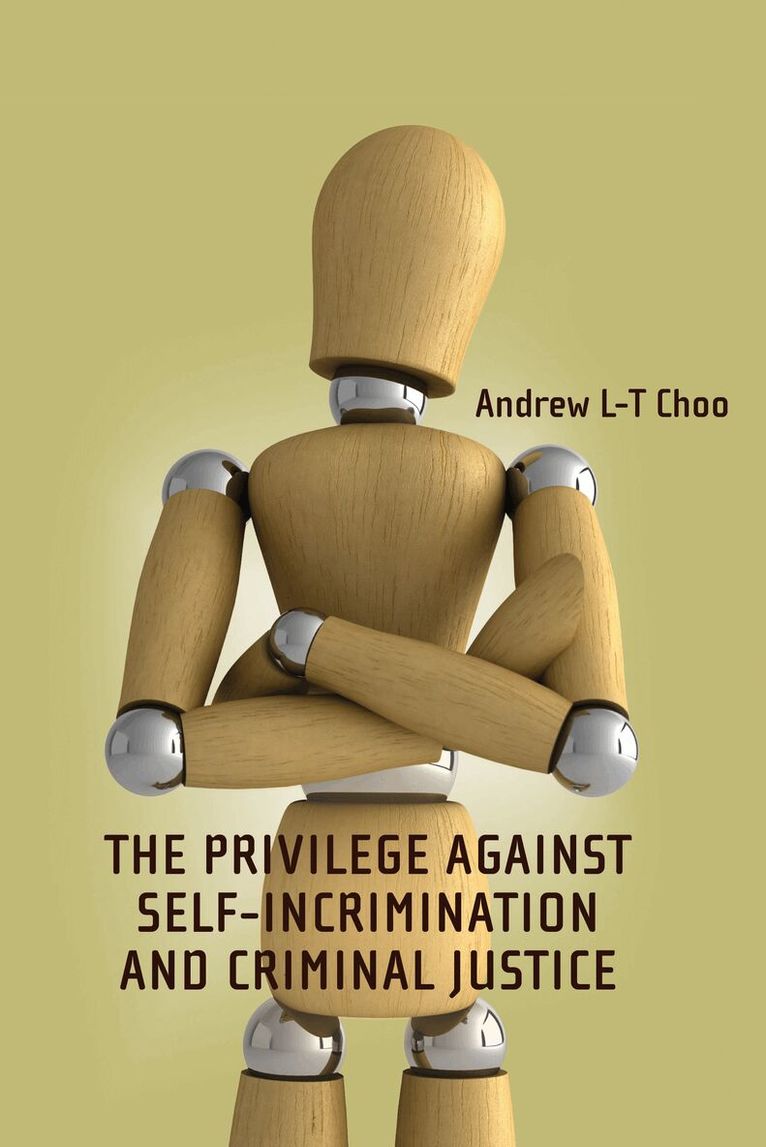
    Privilege Against Self-Incrimination and Criminal Justice

    AvAndrew Choo

    Inbunden, Engelska, 2013

    Del i serien Criminal Law Library

    1 155 kr

    Beställningsvara. Skickas inom 10-15 vardagar. Fri frakt över 249 kr.

    Fler format och utgåvor

    E-bok

    1 250 kr

    E-bok

    1 250 kr

    Beskrivning

    The privilege against self-incrimination is often represented in the case law of England and Wales as a principle of fundamental importance in the law of criminal procedure and evidence. A logical implication of recognising a privilege against self-incrimination should be that a person is not compellable, on pain of a criminal sanction, to provide information that could reasonably lead to, or increase the likelihood of, her or his prosecution for a criminal offence. Yet there are statutory provisions in England and Wales making it a criminal offence not to provide particular information that, if provided, could be used in a subsequent prosecution of the person providing it. This book examines the operation of the privilege against self-incrimination in criminal proceedings in England and Wales, paying particular attention to the influence of the European Convention on Human Rights and the Human Rights Act 1998. Among the questions addressed are how the privilege might be justified, and whether its scope is clarified sufficiently in the relevant case law (does the privilege apply, for example, to pre-existing material?). Consideration is given where appropriate to the treatment of aspects of the privilege in Australia, Canada, India, New Zealand, the USA and elsewhere.

    Produktinformation

    • Utgivningsdatum:2013-11-28
    • Mått:154 x 232 x 14 mm
    • Vikt:440 g
    • Format:Inbunden
    • Språk:Engelska
    • Serie:Criminal Law Library
    • Antal sidor:180
    • Förlag:Bloomsbury Publishing PLC
    • ISBN:9781841133171

    Utforska kategorier

    • Straffprocessrätt inom Juridik

    Mer om författaren

    Andrew Choo is a Professor of Law at City University London and a barrister at Matrix Chambers.

    Recensioner i media

    The first book to be devoted to the operation of the privilege against self-incrimination in criminal procedings in England and Wales ... Professor Choo's book provides an excellent and timely analysis of this important subject

    Innehållsförteckning

    • 1. Introduction: Origins, Rationales and the Relevant Legal Framework 1. Origins and Rationales 1.1 Epistemic Considerations 1.2 Non-Epistemic Considerations 2. The Relevant Legal Framework 2.1 The Context: A 'Social' or 'Moral' Duty of Co-operation 2.2 Some General Principles 3. Organisation of the Book 2. The Jurisprudence of the European Court of Human Rights and the Response of the Law of England and Wales 1. Funke v France2. Saunders v UK3. Prosecutions for Failure to Provide (Accurate) Information3.1 The Jurisprudence of the European Court of Human Rights Post-Funke v France3.2 The Case Law in England and Wales4. Use of 'Compelled Information'4.1 'Use Immunity' 4.2 Is There a Principle of 'Derivative-Use Immunity'? 4.3 Is the Information 'Compelled Information'? 5. Concluding Comments 3. What Is 'Information'? 1. The Jurisprudence of the European Court of Human Rights 2. The Case Law in England and Wales 3. US Constitutional Law 3.1 Voice 3.2 Handwriting 3.3 Sobriety Testing 4. Australia 5. New Zealand 6. Canada 7. India 8. International Criminal Law: The ICTY 9. Concluding Comments 4. Identifying the 'Essence' of the Privilege 1. An 'Absolute' Right? 2. The Jurisprudence of the European Court of Human Rights 3. The Case Law in England and Wales 4. Canada 5. Concluding Comments 5. 'Indirect' Compulsion: Confessions and Inferences From Silence 1. Questioning Suspects 1.1 Mandatory Exclusion and Mandatory Directions 1.2 Legal Advice 1.3 Cautioning Suspects 1.4 Alternatives to Judicial Discretion 1.5 Police Informants 1.6 'Safety Interviews' 2. Adverse Inferences From Silence 2.1 Pre-Trial Silence 2.2 Silence at Trial 3. Concluding Comments 6. Concluding Thoughts