• Fri frakt över 249 kr
  • •
  • Snabba leveranser
  • •
  • Billiga böcker
Kundservice

Du är på sajten för privatpersoner.

Företag, bibliotek eller offentlig verksamhet?

Du handlar på classic.bokus.com, där alla dina funktioner finns intakta.
Till classic.bokus.com
Bokus logotyp. Gå till startsidan.
  • Erbjudanden
  • Nyheter
  • Student
  • Topplistor
  • Barn & ungdom
  • Bokus Play
  • E-böcker
  • Pocketböcker
  • Spel & pussel

10% rabatt på allt med kod NYSTART10 →

Sidfot

Mina sidor

    Hjälp

    • Kundservice
    • Vanliga frågor och svar
    • Frakt och leverans
    • Retur vid ångerrätt
    • Reklamera vara
    • Betalning
    • Köpvillkor
    • Allmänna villkor
    • Information om webbplatsens tillgänglighet

    Om Bokus

    • Om oss
    • Pressrum
    • För studenter
    • För företag
    • För bibliotek och offentlig verksamhet
    • För leverantörer
    • Hållbarhet

    Populärt

    • Aktuella erbjudanden
    • Presentkort
    • Studentlitteratur
    • Nya böcker
    • Topplistor
    • Signerade böcker
    • Engelska böcker

    Inspiration

    • Boktips
    • BookTok
    • Populära bokserier
    • Barnbokskaraktärer
    • Populära författare
    Logotyp för Bokus
    Följ oss på Facebook (extern länk)Följ oss på Instagram (extern länk)Följ oss på YouTube (extern länk)Följ oss på TikTok (extern länk)
    bokus @ CookiesAnpassa cookiesIntegritetspolicyKöpvillkor
    Till Citymail hemsida (extern länk)Till Budbee hemsida (extern länk)Till Postnord hemsida (extern länk)Till Schenker hemsida (extern länk)Till Early Bird hemsida (extern länk)Till Walleys hemsida (extern länk)
    1. Juridik
    2. Rättsvetenskap
    3. Lag och samhälle

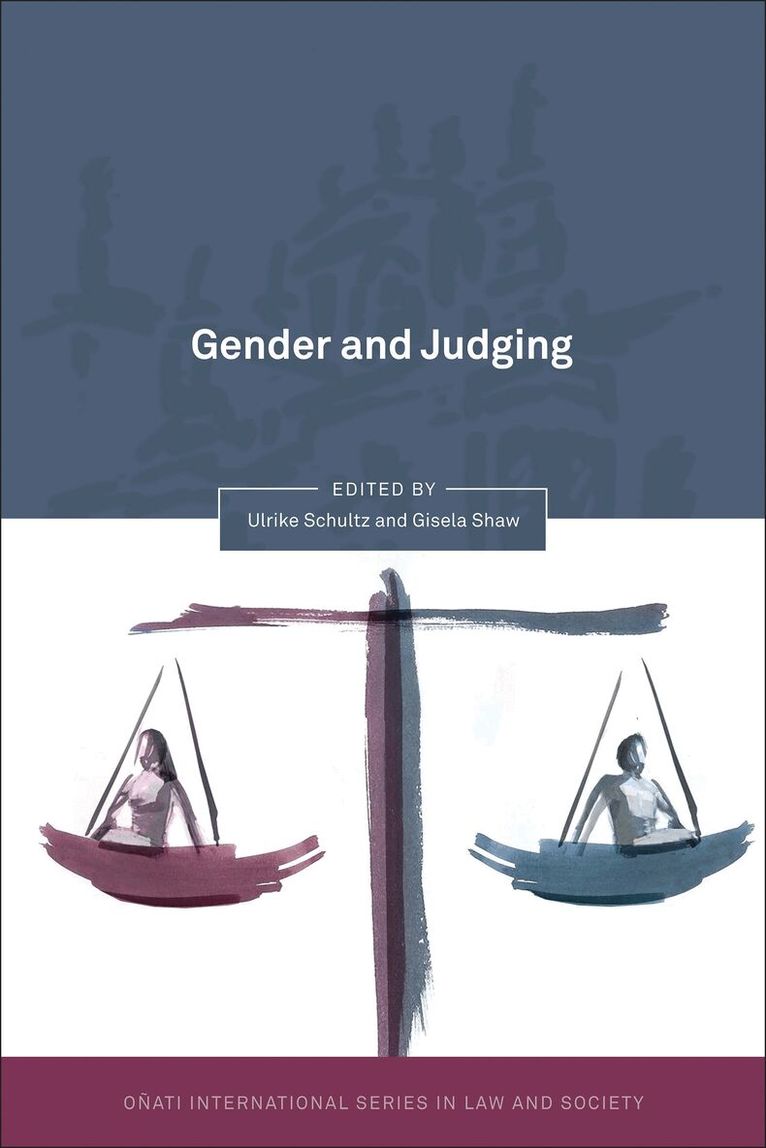
    Gender and Judging

    AvUlrike Schultz,Gisela Shaw

    Inbunden, Engelska, 2013

    Del i serien Oñati International Series in Law and Society

    1 220 kr

    Beställningsvara. Skickas inom 10-15 vardagar. Fri frakt över 249 kr.

    Beskrivning

    Does gender make a difference to the way the judiciary works and should work? Or is gender-blindness a built-in prerequisite of judicial objectivity? If gender does make a difference, how might this be defined? These are the key questions posed in this collection of essays, by some 30 authors from the following countries; Argentina, Cambodia, Canada, England, France, Germany, India, Israel, Italy, Ivory Coast, Japan, Kenya, the Netherlands, the Philippines, South Africa, Switzerland, Syria and the United States. The contributions draw on various theoretical approaches, including gender, feminist and sociological theories.The book's pressing topicality is underlined by the fact that well into the modern era male opposition to women's admission to, and progress within, the judicial profession has been largely based on the argument that their very gender programmes women to show empathy, partiality and gendered prejudice - in short essential qualities running directly counter to the need for judicial objectivity. It took until the last century for women to begin to break down such seemingly insurmountable barriers. And even now, there are a number of countries where even this first step is still waiting to happen. In all of them, there remains a more or less pronounced glass ceiling to women's judicial careers.

    Produktinformation

    • Utgivningsdatum:2013-07-10
    • Mått:164 x 238 x 40 mm
    • Vikt:1 100 g
    • Format:Inbunden
    • Språk:Engelska
    • Serie:Oñati International Series in Law and Society
    • Antal sidor:640
    • Förlag:Bloomsbury Publishing PLC
    • ISBN:9781841136400

    Utforska kategorier

    • Lag och samhälle inom Juridik
    • Författningsrätt och förvaltningsrätt inom Juridik

    Mer om författaren

    Ulrike Schultz is a senior academic in law at the FernUniversität in Hagen, Germany. She heads the International Working Group on the Comparative Study of Legal Professions and has been a member of the Oñati International Institute for the Sociology of Law Governing Board since 2006. Gisela Shaw, Emeritus Professor of German Studies at the University of the West of England, Bristol, UK, has worked and published in philosophy, literature and legal sociology.

    Recensioner i media

    The strength of this book lies in its wealth of empirical data and stories told. Readers learn a great deal about the workings of organisations and professions as well as of the very different legal systems in the world. A must for scholars of the sociology of law. (Translation of the German original)

    Innehållsförteckning

    • Introduction: Gender and Judging: Overview and Synthesis Ulrike Schultz and Gisela ShawPART 1: PIONEERS AND EMINENT WOMEN JUDGES1.1. Becoming the First Women Judges in Ontario: Women Lawyers, Gender and the Politics of Judicial Appointment Mary Jane Mossman1.2. Profiles in Leadership: Eminent Women Judges in the United States Elaine Martin1.3. The Entry and Integration of Women into Judicial Positions in Israel Eyal Katvan1.4. First Female Judges in the Weimar Republic in Germany: Reflections on Difference Marion RöwekampPART 2: WOMEN JUDGES' WORK AND CAREERS2.1. Feminisation of the French 'Magistrature': Gender and Judging in a Feminised Context Anne Boigeol2.2. 'I was noticed and I was asked …' Women's Careers in the Judiciary. Results of an empirical study for the Ministry of Justice in Northrhine-Westfalia, Germany Ulrike Schultz2.3. Women Judges and Magistrates in Kenya: Challenges, Opportunities and Contributions Winifred Kamau2.4. The Impact of Women on the Administration of Justice in Syria and the Judicial Selection Process Monique C Cardinal2.5. Skills for Judicial Work: Comparing Women Judges and Women Magistrates Kathy Mack and Sharyn Roach Anleu2.6. Professional Stress, Discrimination and Coping Strategies: Similarities and Differences between Femaleand Male Judges in Switzerland Revital Ludewig and Juan LaLlavePART 3: GENDER PERSPECTIVES IN JUDGING3.1. Gendered Experiences of a Judge in Germany Ruth Herz3.2. Women Judges in the Netherlands Bregje Dijksterhuis3.3. Gender and Judging in Traditional and Modern Societies: A Comparison of Two Case Studies (Ivory Coast and Italy) Maria Rita Bartolomei3.4. Gender Arguments and Gender Perspective in Legal Judgments in Argentina Andrea L Gastron, M Angela Amante and Rubén Rodriguez3.5. Do Women on South Africa's Courts Make a Difference? Ruth B CowanPART 4: GENDERED CONSTRUCTION OF JUDGES4.1. 'May it Please the Court'. Forming Sexualities as Judicial Virtues in Judicial Swearing-in Ceremonies Leslie J Moran4.2. Let History Judge? Gender, Race, Class and Performative Identity: A Study of Women Judges in England and Wales Hilary SommerladPART 5: FEMINIST JUDGES AND FEMINIST ADJUDICATION5.1. Must Feminist Judges Self-identify as Feminists? Beverley Baines5.2. Justice Marcia Neave: Case Study of a Feminist Judge Rosemary Hunter5.3. What's in a Label? Argentine Judges' Reluctance to Call Themselves Feminists Beatriz Kohen5.4. A Feminist Adjudication Process: Is There Such a Thing? Reg GraycarPART 6: QUOTAS AND DIVERSITY6.1. Which Judicial Selection Systems Generate the most Women Judges? Lessons from the United States Sally J Kenney6.2. Gender Quotas for the Judiciary in England and Wales Kate Malleson6.3. Rethinking Judicial Diversity Erika RackleyPART 7: GENDER AND JUDICIAL EDUCATION7.1. Gender and Judicial Education in India Ann Stewart7.2. Gender and Judicial Education in Japan Kayo Minamino7.3. Engendering the Judiciary—Lessons from the Philippines Atsuko Miwa7.4. Gender Training for the Judiciary in Cambodia Keiko Sawa7.5. Do German Judges Need Gender Education? Ulrike Schultz