• Fri frakt över 249 kr
  • •
  • Snabba leveranser
  • •
  • Billiga böcker
Kundservice

Du är på sajten för privatpersoner.

Företag, bibliotek eller offentlig verksamhet?

Du handlar på classic.bokus.com, där alla dina funktioner finns intakta.
Till classic.bokus.com
Bokus logotyp. Gå till startsidan.
  • Erbjudanden
  • Nyheter
  • Student
  • Topplistor
  • Barn & ungdom
  • Bokus Play
  • E-böcker
  • Pocketböcker
  • Spel & pussel

10% rabatt på allt med kod: NYSTART10 →

Sidfot

Mina sidor

    Hjälp

    • Kundservice
    • Vanliga frågor och svar
    • Frakt och leverans
    • Retur vid ångerrätt
    • Reklamera vara
    • Betalning
    • Köpvillkor
    • Allmänna villkor
    • Information om webbplatsens tillgänglighet

    Om Bokus

    • Om oss
    • Pressrum
    • För studenter
    • För företag
    • För bibliotek och offentlig verksamhet
    • För leverantörer
    • Hållbarhet

    Populärt

    • Aktuella erbjudanden
    • Presentkort
    • Studentlitteratur
    • Nya böcker
    • Topplistor
    • Signerade böcker
    • Engelska böcker

    Inspiration

    • Boktips
    • BookTok
    • Populära bokserier
    • Barnbokskaraktärer
    • Populära författare
    Logotyp för Bokus
    Följ oss på Facebook (extern länk)Följ oss på Instagram (extern länk)Följ oss på YouTube (extern länk)Följ oss på TikTok (extern länk)
    bokus @ CookiesAnpassa cookiesIntegritetspolicyKöpvillkor
    Till Citymail hemsida (extern länk)Till Budbee hemsida (extern länk)Till Postnord hemsida (extern länk)Till Schenker hemsida (extern länk)Till Early Bird hemsida (extern länk)Till Walleys hemsida (extern länk)
    1. Juridik
    2. Rättsvetenskap
    3. Juridik: metod och teori
    4. Rättssystem

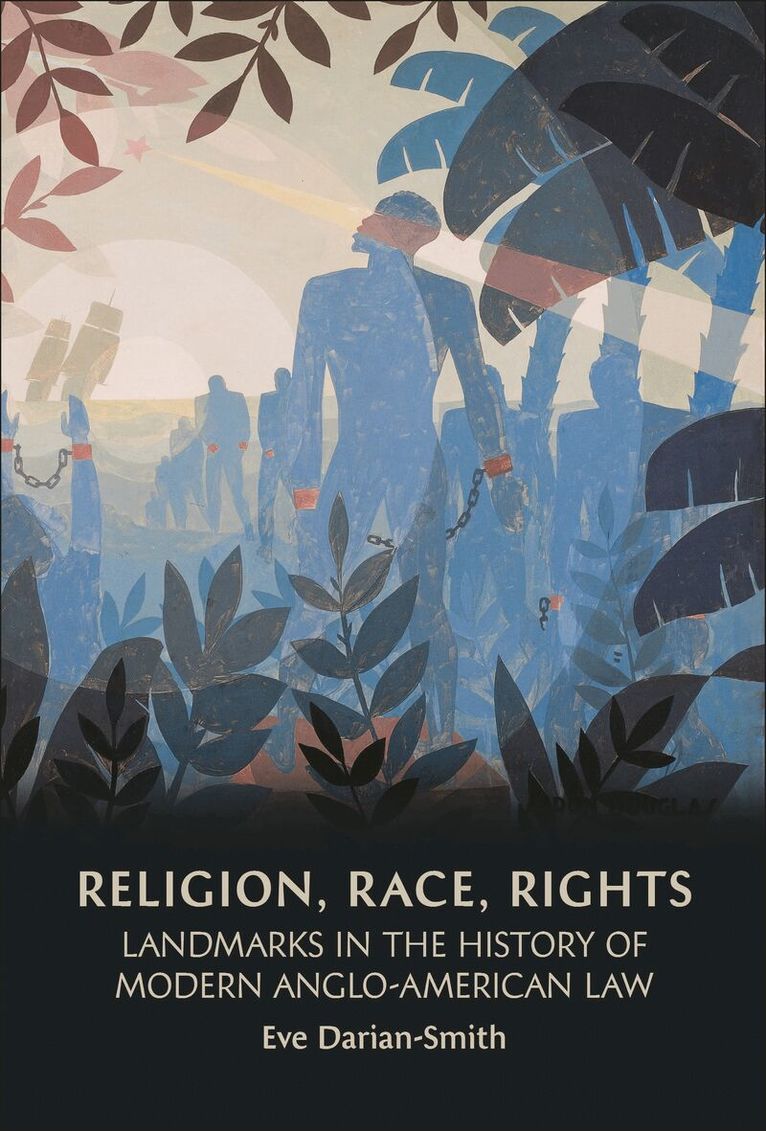
    Religion, Race, Rights

    Landmarks in the History of Modern Anglo-American Law

    AvEve Darian-Smith

    Häftad, Engelska, 2010

    428 kr

    Beställningsvara. Skickas inom 10-15 vardagar. Fri frakt över 249 kr.

    Fler format och utgåvor

    E-bok

    458 kr

    Beskrivning

    The book highlights the interconnections between three framing concepts in the development of modern western law: religion, race, and rights. The author challenges the assumption that law is an objective, rational and secular enterprise by showing that the rule of law is historically grounded and linked to the particularities of Christian morality, the forces of capitalism dependent upon exploitation of minorities, and specific conceptions of individualism that surfaced with the Reformation in the sixteenth century, and rapidly developed in the Enlightenment in the seventeenth and eighteenth centuries. Drawing upon landmark legal decisions and historical events, the book emphasizes that justice is not blind because our concept of justice changes over time and is linked to economic power, social values, and moral sensibilities that are neither universal nor apolitical. Highlighting the historical interconnections between religion, race and rights aids our understanding of contemporary socio-legal issues. In the twenty-first century, the economic might of the USA and the west often leads toward a myopic vision of law and a belief in its universal application.This ignores the cultural specificity of western legal concepts, and prevents us from appreciating that, analogous to past colonial periods, in a global political economy Anglo-American law is not always transportable, transferable, or translatable across political landscapes and religious communities. 'Darian-Smith's new book is an example of what is most exciting about new scholarship in the humanities. It works across disciplinary and methodological boundaries in its attempt to deal with one of our most pressing current social problems - determining the consequences of the sometimes violent interaction of race, religion and law in times of social crisis. Darian-Smith explodes the myth of secularism in modern society, and the illusion of post-racialism, in her unblinking analysis of present dilemmas. Once you read this book you will never again think that the western concept of individual rights is sufficient to resolve the contradictions of modern existence. This is a genuinely important step forward in western scholarship' - Stanley Katz, President Emeritus of the American Council of Learned Societies and Professor, Woodrow Wilson School, Princeton University.'Eve Darian-Smith takes us on an amazing journey covering four centuries that brilliantly illuminates the continuously evolving interplay of law, religion, and race in the Anglo-American experience. This wonderfully readable book is imaginatively organized around a series of eight landmark 'law moments' that ingeniously show how legal rights are always being subtly shaped by culturally prevailing ideas about religion and race, a process that still goes on in our supposedly 21st century secular world that claims to be free of racism' - Richard Falk, Albert G. Milbank Professor of International Law Emeritus, Princeton University. 'In this volume, Eve Darian-Smith offers a passionate, wide-ranging analysis of the complex, historically-vexed relations among religion, race, and rights over the past four plus centuries. The book begins, in 1571, with Martin Luther and ends, at the dawn of the new century, with the discriminatory labor practices of Walmart, the recent crusades of George Bush and his theocons, and the resurgence of religious faith.By way of a well-chosen sequence of 'legal landmarks' - each an historical drama in its own right, each a piece of theater in which judicial processes take center stage - Darian-Smith develops a compelling, complex critique of the law, of its inherent ambiguities, its violence, its possibilities. And its historical entailment in political, economic, social and ethical forces well beyond itself, forces that, repeatedly, have opened up a yawning gap between its ideological (self)representation and the realities of its everyday practice. This is an ambitious work of scholarship, one which, by virtue of brush strokes at once deft and broad, challenges us to understand the legal underpinnings of our world in new ways' - Jon Comaroff, University of Chicago.

    Produktinformation

    • Utgivningsdatum:2010-05-20
    • Mått:156 x 234 x 17 mm
    • Vikt:524 g
    • Format:Häftad
    • Språk:Engelska
    • Antal sidor:332
    • Förlag:Bloomsbury Publishing PLC
    • ISBN:9781841137292

    Utforska kategorier

    • Rättssystem inom Juridik
    • Rättshistoria inom Juridik

    Mer om författaren

    Eve Darian-Smith practiced law in Australia before obtaining her MA degree (Harvard) and her PhD degree (Chicago) in cultural anthropology. She has published a number of books and articles including Bridging Divides: The Channel Tunnel and English Legal Identity in the New Europe (1999) which won the Law & Society Association Herbert Jacob Book Prize, as well as New Capitalists: Law, Politics and Identity Surrounding Casino Gaming on Native American Land (2003) and Ethnography and Law (2006).

    Recensioner i media

    I recently finished reading your book and liked it a lot. I got to learn some new stuff and remember stuff I had forgotten. I also think your argument is very timely. Most importantly, this a great teaching book, as it is easy to read and understand. Congrats. I have already recommended the book to one colleague/friend at Berkeley and will continue to recommend it to others. Jane Collier, emeritus from anthropology department at Stanford 'Little torques public policy in modern America quite like race, rights, and religion. The mix is explosive, fodder for shock-jocks of all political stripes. Few however appreciate the historical forces that gave shape to contemporary culture wars. Fewer still perceive that vehemently opposed positions share common roots in the religious history of Europe and its cultural offspring. Brilliantly and concisely canvassing five hundred years of the history of the west, Darian-Smith accounts for the lineage of complex ideas that inform contemporary America. She does so with clarity, insight, and sensitivity. This outstanding work is essential reading for those who would understand our shared present.' W. Wesley Pue, Professor of Law and Nathan Nemetz Professor of Legal History, University of British Columbia 'Darian-Smith's new book is an example of what is most exciting about new scholarship in the humanities. It works across disciplinary and methodological boundaries in its attempt to deal with one of our most pressing current social problems - determining the consequences of the sometimes violent interaction of race, religion and law in times of social crisis. Darian-Smith explodes the myth of secularism in modern society, and the illusion of post-racialism, in her unblinking analysis of present dilemmas. Once you read this book you will never again think that the western concept of individual rights is sufficient to resolve the contradictions of modern existence. This is a genuinely important step forward in western scholarship.' Stanley Katz, President Emeritus of the American Council of Learned Societies and Professor, Woodrow Wilson School, Princeton University. 'Eve Darian-Smith takes us on an amazing journey covering four centuries that brilliantly illuminates the continuously evolving interplay of law, religion, and race in the Anglo-American experience. This wonderfully readable book is imaginatively organized around a series of eight landmark 'law moments' that ingeniously show how legal rights are always being subtly shaped by culturally prevailing ideas about religion and race, a process that still goes on in our supposedly 21st century secular world that claims to be free of racism.' Richard Falk, Albert G. Milbank Professor of International Law Emeritus, Princeton University. 'In this volume, Eve Darian-Smith offers a passionate, wide- ranging analysis of the complex, historically-vexed relations among religion, race, and rights over the past four plus centuries. The book begins, in 1517, with Martin Luther and ends, at the dawn of the new century, with the discriminatory labor practices of Walmart, the recent crusades of George Bush and his theocons, and the resurgence of religious faith. By way of a well-chosen sequence of 'legal landmarks' - each an historical drama in its own right, each a piece of theater in which judicial processes take center stage - Darian-Smith develops a compelling, complex critique of the law, of its inherent ambiguities, its violence, its possibilities. And its historical entailment in political, economic, social and ethical forces well beyond itself, forces that, repeatedly, have opened up a yawning gap between its ideological (self-)representation and the realities of its everyday practice. This is an ambitious work of scholarship, one which, by virtue of brush strokes at once deft and broad, challenges us to understand the legal underpinnings of our world in new ways.' John Comaroff, University of Chicago. It is a book worth reading for anyone whose academic work even remotely touches in the issues of religion, race, and rights. And it would be an invaluable reference for any others interested in the last five hundred years of Anglo-American law. Christopher Malone Law and Politics Book Review Feb 2011

    Innehållsförteckning

    • Introduction: Connecting Religion, Race and Rights I: Moving toward Separation of Church and State Chapter 1: Martin Luther and the Challenge to the Catholic Church (1517) Religion: Protest and Reform Race: The Infidel Turk Rights: Demanding Secular Law Conclusion Chapter 2: Executing the King: The Trial of Charles I (1649) Religion: Protestant and Catholic Violence Race: Religious Intolerance and Legalizing Racism Rights: Defining the Rights of King, Parliament and Subject Conclusion Chapter 3: Revolution and Thomas Paine's Rights of Man (1791) Religion: The Age of Reason and the Challenge of Science Race: Questioning Slavery and Discrimination Rights: Law's Coming of Age in Rights of Man Conclusion II: Capitalism, Colonialism and Nationalism Chapter 4: Sugar, Slaves, Rebellion, Murder (1865) Religion: The 'Divine Institution' of Slavery Race: Scientific Racism Rights: Empire's Right to Massacre Conclusion Chapter 5: Demanding the Eight-Hour Workday (1886) Religion: Law as Faith Race: Racializing Labor 161 Rights: Workers versus Laissez-Faire Capitalism Conclusion Chapter 6: Civilizing Native Americans-The Dawes Act (1887) Religion: Missionaries and Heathens Race: Determining the Race Within Rights: Limiting Native Sovereignty Conclusion III: Religion, Race and Rights in a Global Era Chapter 7: Nuremberg's Legacy (1945-49) Religion: Confronting Religious Pluralism Race: Rethinking Race Rights: Implementing Human Rights Conclusion Chapter 8: Democracy, Neoliberalism, and the New Crusades Religion: Exploiting God Race: 'Saving Brown Women' Rights: The Challenges of Neoliberalism Conclusion Conclusion: The Resurgence of Faith