• Fri frakt över 249 kr
  • •
  • Snabba leveranser
  • •
  • Billiga böcker
Kundservice

Du är på sajten för privatpersoner.

Företag, bibliotek eller offentlig verksamhet?

Du handlar på classic.bokus.com, där alla dina funktioner finns intakta.
Till classic.bokus.com
Bokus logotyp. Gå till startsidan.
  • Erbjudanden
  • Nyheter
  • Student
  • Topplistor
  • Barn & ungdom
  • Bokus Play
  • E-böcker
  • Pocketböcker
  • Spel & pussel

Må bättre, för mindre! Upp till 50% rabatt på hälsoböcker

Sidfot

Mina sidor

    Hjälp

    • Kundservice
    • Vanliga frågor och svar
    • Frakt och leverans
    • Retur vid ångerrätt
    • Reklamera vara
    • Betalning
    • Köpvillkor
    • Allmänna villkor
    • Information om webbplatsens tillgänglighet

    Om Bokus

    • Om oss
    • Pressrum
    • För studenter
    • För företag
    • För bibliotek och offentlig verksamhet
    • För leverantörer
    • Hållbarhet

    Populärt

    • Aktuella erbjudanden
    • Presentkort
    • Studentlitteratur
    • Nya böcker
    • Topplistor
    • Signerade böcker
    • Engelska böcker

    Inspiration

    • Boktips
    • BookTok
    • Populära bokserier
    • Barnbokskaraktärer
    • Populära författare
    Logotyp för Bokus
    Följ oss på Facebook (extern länk)Följ oss på Instagram (extern länk)Följ oss på YouTube (extern länk)Följ oss på TikTok (extern länk)
    bokus @ CookiesAnpassa cookiesIntegritetspolicyKöpvillkor
    Till Citymail hemsida (extern länk)Till Budbee hemsida (extern länk)Till Postnord hemsida (extern länk)Till Schenker hemsida (extern länk)Till Early Bird hemsida (extern länk)Till Walleys hemsida (extern länk)
    1. Kultur
    2. Scenkonst och film
    3. Film

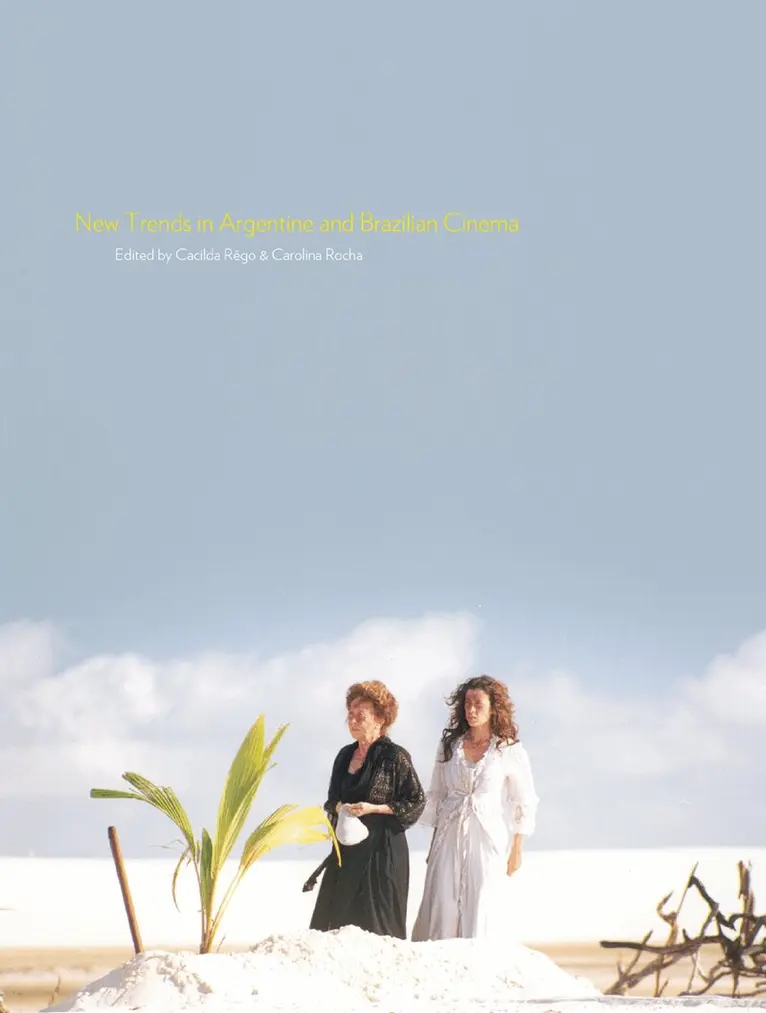
    New Trends in Argentine and Brazilian Cinema

    AvCarolina Rocha,Cacilda M. Rêgo

    Häftad, Engelska, 2011

    363 kr

    Tillfälligt slut

    Beskrivning

    As part of a raft of neoliberal economic reforms in the early 1990s, Brazilian president Fernando Collor de Mello and Argentine president Carlos Menem eliminated long-standing state financial support for cinema. National film production, distribution, and exhibition were deeply affected by the absence of the entire structure and legislation on which they had relied for decades. By the mid-1990s, however, new laws were passed reestablishing subsidies and credit lines—and allowing for a rebirth of national cinema in both countries.This comprehensive and accessible volume surveys Brazilian and Argentine cinematic production from its subsequent dramatic rebirth to the present. It addresses not only the commercially successful films but also the effects of globalization and cultural policies on public incentives for filmmaking. An indispensable resource for students of film and cultural studies, New Trends in Argentine and Brazilian Cinema is moreover an exciting glimpse into a momentous period in recent cinematic history.

    Produktinformation

    • Utgivningsdatum:2011-04-15
    • Mått:178 x 229 x 16 mm
    • Vikt:558 g
    • Format:Häftad
    • Språk:Engelska
    • Antal sidor:274
    • Förlag:Intellect
    • ISBN:9781841503752

    Utforska kategorier

    • Film inom Kultur
    • Media och underhållning inom Ekonomi och Ledarskap

    Mer om författaren

    Carolina Rocha is professor of Spanish at Southern Illinois University Edwardsville. She specializes in Latin American film and literature. She is the author of Argentine Cinema and National Identity (1966–1976) and Masculinities in Contemporary Argentine Popular Cinema (Palgrave, 2012). She has also co-edited several volumes: Violence in Argentine Literature and Film with Elizabeth Montes Garces; New Trends in Argentine and Brazilian Cinema with Cacilda Rêgo; and Representing History, Gender and Class in Spain and Latin America, Children and Adolescents in Film and Screening Minors in Latin American Cinema with Georgia Seminet. She was a Fulbright scholar to Liverpool in 2014.Cacilda M. Rêgo is an associate professor at Utah State University.

    Innehållsförteckning

    • I. Introduction II. General Considerations  Chapter 1: The Fall and Rise of Brazilian Cinema – Cacilda Rêgo Chapter 2: Globo Filmes, Sony and the Pre-Sold Promise: Commercial Filmmaking in the Brazilian Retomada – Courtney Brannon-Donoghue Chapter 3: Close Strangers: The Role of Regional Cultural Policies in Brazilian and Argentinean New Cinemas – Marina Moguillansky Chapter 4: Contemporary Argentine Cinema during Neoliberalism – Carolina Rocha Chapter 5: New Visions of Patagonia: Video Collectives and the Creation of a Regional Movement in Argentina’s South – Tamara Falicov III. Citizens and New Types of Citizenship, Class  Chapter 6: Leaving and Letting Go in Live-in-maid – Ana Ros Chapter 7: Electoral Normalcy and Social Anomaly: the Nueve reinas/Nine Queens paradigm and reformulated Argentine cinema, 1989-2001 – Ana Laura Lunish Chapter 8: Staging Class and Ethnicity in Lucrecia Martel’s La ciénaga – Ana Peluffo Chapter 9: Landscape and the Artist’s Frame in Lucrecia Martel’s La ciénaga and La niña santa – Amanda Holmes Chapter 10: Transactional Fictions: (Sub)urban Realism in the Films of Caetano and Trapero – Beatriz Urraca Chapter 11: Police and Policing in Recent Argentine Cinema – James Scorer Chapter 12: The productive web of Brazil's urban über-dramas – Piers Armstrong Chapter 13: Fernando Meirelles’s City of God: The Representation of Racial Resentment and Violence in the New Brazilian Social Cinema – Vanessa Fitzgibbon IV. Gender/Genre  Chapter 14: The Dystopian City: Gendered Interpretations of the Urban in Um Céu de Estrelas (Tata Amaral, 1996) and Vagón Fumador (Verónica Chen, 2001) – Charlotte Gleghorn Chapter 15: Reimagining Rosinha with Andrucha Waddington and Elena Soarez: Nature, Woman, and Sexuality in the Brazilian Northeast from Popular Music to Cinema – Jack Draper III Chapter 16: The Laughter Contract: Filmed History and Image Demolition in Carlota Joaquina, Princess of Brazil – Regina Felix Chapter 17: Brazilian Women’s Filmmaking before and after the Retomada – Leslie Marsh