Häftad, Engelska, 2015
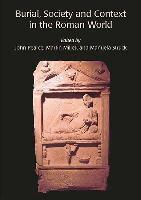
Burial, Society and Context in the Roman World
Av John Pearce, Martin Millett, Manuela Struck
765 kr
Beställningsvara. Skickas inom 3-6 vardagar. Fri frakt över 249 kr.
Beskrivning
Produktinformation
- Utgivningsdatum: 2015-03-31
- Mått: 210 x 297 x 18 mm
- Vikt: 980 g
- Format: Häftad
- Språk: Engelska
- Antal sidor: 256
- Förlag: Oxbow Books
- ISBN: 9781842170342
Utforska kategorier
Mer om författaren
Professor Martin Millett is Emeritus Laurence Professor of Classical Archaeology at the Faculty of Classics of the University of Cambridge and a Fellow of Fitzwilliam College, Cambridge.
Recensioner i media
Taken as a whole, this volume highlights how mortuary archaeology can inform and stimulate current debates on Roman society and the empire-wide process of Romanization. It illustrates the richness and diversity of current studies in Roman mortuary archaeology, while the individual case studies demonstrate that cemetery sites are important nodes of practice and thought in the Roman world.' -- Mortality 7 Mortality 7 As one of the editors of the collection stresses, Roman modes of burial have had relatively scant attention, unless linked to particular historical issues, such as the spread of Christianity. The theoretical possibilities of the so-called archaeology of death have been tried frequently enough upon Greek and Etruscan material: but Rome is no less rich in data. There are several studies included here of mortuary practices in Rome and Italy in later antiquity, but principal consideration is given to the north-west provinces. How funerary rituals can be reconstructed; what burials tell us about social status; how landscapes of commemoration were shaped, and to what extent localized traditions might be Romanized - these are the subdivisions of a volume which ... carries all the signs of current archaeological investigation. Beyond the black-dotted plans and diagrams, what emerges is not so much a prospect of redefining the generalities of some supposedly Roman way of death, but rather the impertinence of such a category. Thanks to the microscopic techniques of examining carbonised plant remains (archaeobotany) and bodily traces (palaeopathology), every excavated grave is redeemed by its own story. To paraphrase Rupert Brooke - we shall not hear their trentals, nor eat their arval bread. But to ponder the number of newly-born infants buried in jars at a Gallo-Roman cemetery in the forest of Fontainebleau, and the assortment of grave goods left with the adults there - old shoes, coarse potshards, handfuls of nails - is insight hinged with the pathos of human fellowship.' -- Greece and Rome Greece and Rome fascinating and informative' -- American Journal Of Archaeology American Journal Of Archaeology
Betyg & recensioner
0 recensioner
Inga recensioner tillgängliga.