• Fri frakt över 249 kr
  • •
  • Snabba leveranser
  • •
  • Billiga böcker
Kundservice

Du är på sajten för privatpersoner.

Företag, bibliotek eller offentlig verksamhet?

Du handlar på classic.bokus.com, där alla dina funktioner finns intakta.
Till classic.bokus.com
Bokus logotyp. Gå till startsidan.
  • Erbjudanden
  • Nyheter
  • Student
  • Topplistor
  • Barn & ungdom
  • Bokus Play
  • E-böcker
  • Pocketböcker
  • Spel & pussel

10% rabatt på allt med kod: NYSTART10 →

Sidfot

Mina sidor

    Hjälp

    • Kundservice
    • Vanliga frågor och svar
    • Frakt och leverans
    • Retur vid ångerrätt
    • Reklamera vara
    • Betalning
    • Köpvillkor
    • Allmänna villkor
    • Information om webbplatsens tillgänglighet

    Om Bokus

    • Om oss
    • Pressrum
    • För studenter
    • För företag
    • För bibliotek och offentlig verksamhet
    • För leverantörer
    • Hållbarhet

    Populärt

    • Aktuella erbjudanden
    • Presentkort
    • Studentlitteratur
    • Nya böcker
    • Topplistor
    • Signerade böcker
    • Engelska böcker

    Inspiration

    • Boktips
    • BookTok
    • Populära bokserier
    • Barnbokskaraktärer
    • Populära författare
    Logotyp för Bokus
    Följ oss på Facebook (extern länk)Följ oss på Instagram (extern länk)Följ oss på YouTube (extern länk)Följ oss på TikTok (extern länk)
    bokus @ CookiesAnpassa cookiesIntegritetspolicyKöpvillkor
    Till Citymail hemsida (extern länk)Till Budbee hemsida (extern länk)Till Postnord hemsida (extern länk)Till Schenker hemsida (extern länk)Till Early Bird hemsida (extern länk)Till Walleys hemsida (extern länk)
    1. Samhälle och politik
    2. Samhälle och kultur
    3. Kultur och medier
    4. Medievetenskap

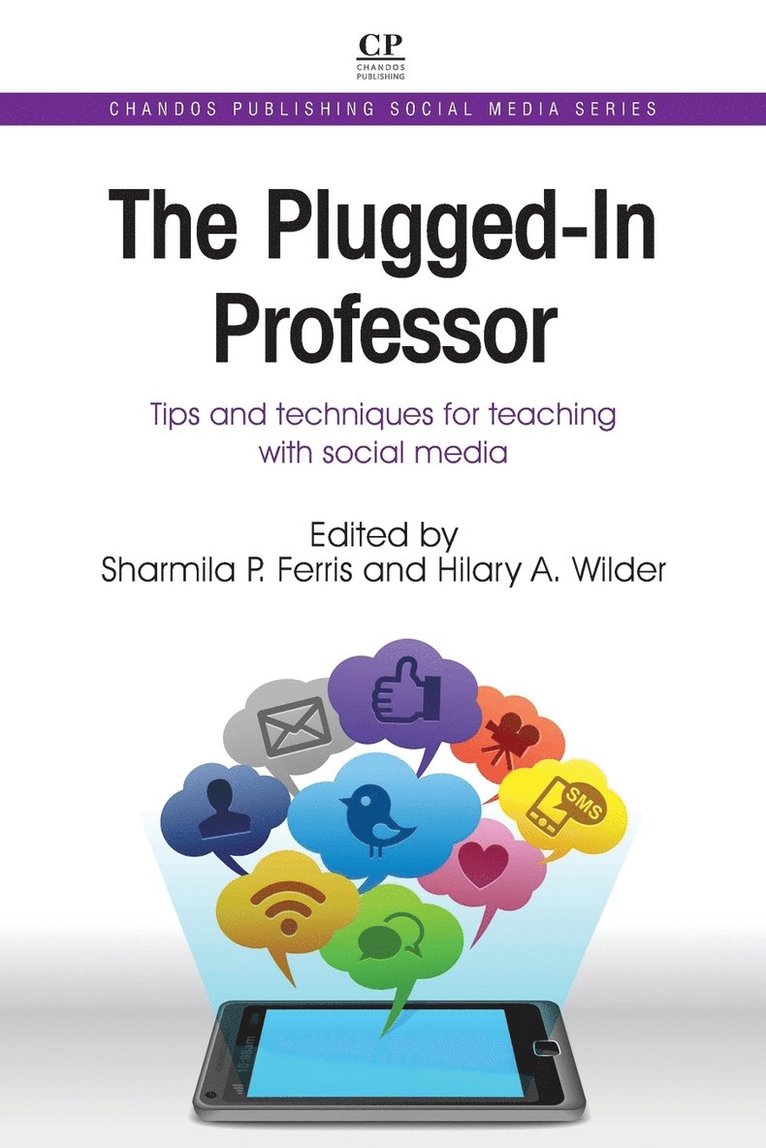
    Plugged-In Professor

    Tips and Techniques for Teaching with Social Media

    AvSharmila Ferris,Hilary Anne Wilder

    Häftad, Engelska, 2013

    Del i serien Chandos Publishing Social Media Series

    756 kr

    Beställningsvara. Skickas inom 10-15 vardagar. Fri frakt över 249 kr.

    Beskrivning

    New technologies are transforming the way students work. The Plugged in Professor provides a timely and exceptional resource for using social media and other new technologies to help college students meet both general and discipline-specific objectives. The title covers techniques built around well-known social networking technologies, as well as other emerging technologies such as mobile phone and tablet apps. With a practical focus and reader-friendly format, this book shows educators how to apply techniques in each technology, and includes clear student learning objectives, step-by-step directions, observations and advice, and supplemental readings and resources. Twenty-five chapters by leading contributors cover key aspects of new technologies in education, in four parts: Writing, research and information fluency; Communication and collaboration; Critical thinking and creativity; and Integrative learning.

    Produktinformation

    • Utgivningsdatum:2013-05-15
    • Vikt:630 g
    • Format:Häftad
    • Språk:Engelska
    • Serie:Chandos Publishing Social Media Series
    • Förlag:Woodhead Publishing Ltd
    • ISBN:9781843346944

    Utforska kategorier

    • Medievetenskap inom Samhälle och politik
    • Material och digital teknik i undervisningen inom Psykologi och pedagogik

    Mer om författaren

    Sharmila P. Ferris is Professor in the Department of Communication at William Paterson University, USA. She recently completed a five year term as Director for the university’s Center for Teaching Excellence. Her research is in new technologies, bringing an interdisciplinary focus to computer-mediated communication. In this area she has published in a variety of print and electronic journals. Hilary A. Wilder is Professor in the Department of Educational Leadership and Professional Studies, and the coordinator for the M.Ed. Curriculum and Learning, Learning Technologies concentration at William Paterson University, USA. Her research is in the use of information and communication technologies in education, particularly the use of online and social networking tools to promote writing literacy.

    Recensioner i media

    "...clearly articulates that learning can be promoted in a host of ways through the use of social media. Therefore this is a valuable resource."- Wabash Center Book Reviews

    Innehållsförteckning

    • List of tables and figureList of abbreviationsAcknowledgmentsPrefaceAbout the editorsAbout the contributorsPart 1: Writing, research, and information fluencyChapter 1: Writing for Wikipedia: co-constructing knowledge and writing for a public audienceAbstract:Discipline/Academic areas addressedInstructional purposeStudent learning outcomesPrerequisite skills and knowledgeStep-by-step directionsApproximate time requiredRequired resourcesVariations on the basic themeObservations and adviceSupplemental materialsChapter 2: Organizing with Pinterest and DeliciousAbstract:Discipline/Academic areas addressedInstructional purposeStudent learning outcomesPrerequisite skills and knowledgeStep-by-step directionsApproximate time requiredRequired resourcesOrganizational/Goal resourcesVariations on the basic themeObservations and adviceSupplemental materialsChapter 3: Students’ inadequate exposure to learning technology: overcoming the pedagogical challenge using wikisAbstract:Discipline/Academic areas addressedInstructional purposeStudent learning outcomesPrerequisite skills and knowledgeStep-by-step directionsApproximate time requiredRequired resourcesVariations on the basic themeObservations and adviceSupplemental materialsChapter 4: Collecting and analyzing primary sourcesAbstract:Discipline/Academic areas addressedInstructional purposeStudent learning outcomesPrerequisite skills and knowledgeStep-by-step directionsInstructions for students – sample for class with a single blogApproximate time requiredRequired resourcesTechnological requirementsVariations on the basic themeObservations and adviceSupplemental materialsChapter 5: Unraveling the research process: social bookmarking and collaborative learningAbstract:Discipline/Academic areas addressedInstructional purposeStudent learning outcomesPrerequisite skills and knowledgeStep-by-step directionsSecond class sessionThird class sessionFourth class sessionFinal assignmentApproximate time requiredRequired resourcesVariations on the basic themeObservations and adviceSupplemental materialsPart 2: Communication and collaboration2A: Communication, oral and writtenChapter 6: Using Wimba Voice Board to facilitate foreign language conversation coursesAbstract:Discipline/Academic areas addressedInstructional purposeStudent learning outcomesPrerequisite skills and knowledgeStep-by-step directionsApproximate time requiredRequired resourcesVariations on the basic themeObservations and adviceSupplemental materialsChapter 7: Web conferencing and peer feedbackAbstract:Discipline/Academic areas addressedStudent learning outcomesPrerequisite skills and knowledgeStep-by-step directionsApproximate time requiredRequired resourcesVariations on the basic themeObservations and adviceChapter 8: Learning through YouTubeAbstract:Discipline/Academic areas addressedInstructional purposeStudent learning outcomesPrerequisite skills and knowledgeStep-by-step directionsApproximate time requiredRequired resourcesVariations on the basic themeObservations and adviceSupplemental materialsChapter 9: Wiki-workshopping: using Wikispaces for peer writing workshopsAbstract:Discipline/Academic areas addressedInstructional purposeStudent learning outcomesPrerequisite skills and knowledgeStep-by-step directionsApproximate time requiredRequired resourcesVariations on the basic themeObservations and adviceSupplemental materials2B: CollaborationChapter 10: Using persistent wikis as a pedagogical resourceAbstract:Discipline/Academic areas addressedInstructional purposeStudent learning outcomesPrerequisite skills and knowledgeStep-by-step directionsApproximate time requiredRequired resourcesVariations on the basic themeObservations and adviceSupplemental materialsChapter 11: Social media and public speaking: student-produced multimedia informative presentationsAbstract:Discipline/Academic areas addressedInstructional purposeStudent learning outcomesPrerequisite skills and knowledgeStep-by-step directionsApproximate time requiredRequired resourcesVariations on the basic themeObservations and adviceSupplemental materialsChapter 12: Collaborative presentations using Google DocsAbstract:Discipline/Academic areas addressedInstructional purposeStudent learning outcomesPrerequisite skills and knowledgeStep-by-step directionsApproximate time requiredRequired resourcesVariations on the basic themeObservations and adviceSupplemental materialChapter 13: Cooperative study blogAbstract:Discipline/Academic areas addressedInstructional purposeStudent learning outcomesPrerequisite skills and knowledgeStep-by-step directionsApproximate time requiredRequired resourcesVariations on the basic themeObservations and adviceSupplemental materialsOption 1 Make the students responsible (recommended)Option 2 Do it yourselfAppendix B Tips for posting to the blogAppendix C Studying with the blogPart 3: Critical thinking and creativity3A: Critical thinkingChapter 14: Using Facebook to apply social learning theoryAbstract:Discipline/Academic areas addressedInstructional purposeStudent learning outcomesPrerequisite skills and knowledgeStep-by-step directionsApproximate time requiredRequired resourcesVariations on the basic themeObservations and adviceSupplemental materialsChapter 15: Technology as a tool to develop problem-solving skills in general chemistryAbstract:Discipline/Academic areas addressedInstructional purposeStudent learning outcomesPrerequisite skills and knowledgeStep-by-step directionsApproximate time requiredRequired resourcesVariations on the basic themeObservations and adviceChapter 16: Communicating experiential learning through an online portfolio in TumblrAbstract:Discipline/Academic areas addressedInstructional purposeStudent learning outcomesPrerequisite skills and knowledgeStep-by-step directionsApproximate time requiredRequired resourcesVariations on the basic themeObservations and adviceSupplemental materialsChapter 17: The Biology Taboo Wiktionary: a tool for improving student comprehension of key terminology in introductory biology coursesAbstract:Discipline/Academic areas addressedInstructional purposeStudent learning outcomesPrerequisite skills and knowledgeStep-by-step directionsApproximate time requiredRequired resourcesVariations on the basic themeObservations and adviceSupplemental materials3B: CreativityChapter 18: Mobile digital storytelling in the second language classroomAbstract:Discipline/Academic areas addressedInstructional purposeStudent learning outcomesPrerequisite skills and knowledgeStep-by-step directionsApproximate time requiredRequired resourcesVariations on the basic themeObservations and adviceSupplemental materialsCultural aha momentChapter 19: Creating a video dialogue with streaming video clipsAbstract:Discipline/Academic areas addressedInstructional purposeStudent learning outcomesPrerequisite skills and knowledgeStep-by-step directionsApproximate time requiredRequired resourcesVariations on the basic themeObservations and adviceSupplemental materialsChapter 20: Remix as an educational activityAbstract:Discipline/Academic areas addressedInstructional purposeStudent learning outcomesPrerequisite skills and knowledgeStep-by-step directionsApproximate time requiredRequired resourcesVariations on the basic themeObservations and adviceSupplemental materialsChapter 21: Using Twitter to assist students in writing a concise nut graphAbstract:Discipline/Academic areas addressedInstructional purposeStudent learning outcomesPrerequisite skills and knowledgeStep-by-step directionsApproximate time requiredRequired resourcesVariations on the basic themeObservations and advicePart 4: Integrative learningChapter 22: Using simulation, video sharing, and discussion threads for practice-based skillsAbstract:Discipline/Academic areas addressedInstructional purposeStudent learning outcomesPrerequisite skills and knowledgeStep-by-step directionsApproximate time requiredVariations on the basic themeObservations and adviceSupplemental materialsChapter 23: Using Facebook Mobile as a tool to create a virtual learning community for pre-service teachersAbstract:Discipline/Academic areas addressedInstructional purposeStudent learning outcomesPrerequisite skills and knowledgeStep-by-step directionsApproximate time requiredRequired resourcesVariations on the basic themeObservations and adviceSupplemental materialsChapter 24: Using social software tools to facilitate peer e-mentoring and self-reflection among students on practicumAbstract:Discipline/Academic areas addressedInstructional purposeStudent learning outcomesPrerequisite skills and knowledgeStep-by-step directionsApproximate time requiredRequired resourcesVariations on the basic themeObservations and adviceSupplemental materialsChapter 25: Using opinion leaders on Twitter to amplify PR and marketing messagesAbstract:Discipline/Academic areas addressedInstructional purposeStudent learning outcomesPrerequisite skills and knowledgeStep-by-step directionsApproximate time requiredRequired resourcesVariations on the basic themeObservations and adviceIndex