• Fri frakt över 249 kr
  • •
  • Snabba leveranser
  • •
  • Billiga böcker
Kundservice

Du är på sajten för privatpersoner.

Företag, bibliotek eller offentlig verksamhet?

Du handlar på classic.bokus.com, där alla dina funktioner finns intakta.
Till classic.bokus.com
Bokus logotyp. Gå till startsidan.
  • Erbjudanden
  • Nyheter
  • Student
  • Topplistor
  • Barn & ungdom
  • Bokus Play
  • E-böcker
  • Pocketböcker
  • Spel & pussel

10% rabatt på allt med kod: NYSTART10 →

Sidfot

Mina sidor

    Hjälp

    • Kundservice
    • Vanliga frågor och svar
    • Frakt och leverans
    • Retur vid ångerrätt
    • Reklamera vara
    • Betalning
    • Köpvillkor
    • Allmänna villkor
    • Information om webbplatsens tillgänglighet

    Om Bokus

    • Om oss
    • Pressrum
    • För studenter
    • För företag
    • För bibliotek och offentlig verksamhet
    • För leverantörer
    • Hållbarhet

    Populärt

    • Aktuella erbjudanden
    • Presentkort
    • Studentlitteratur
    • Nya böcker
    • Topplistor
    • Signerade böcker
    • Engelska böcker

    Inspiration

    • Boktips
    • BookTok
    • Populära bokserier
    • Barnbokskaraktärer
    • Populära författare
    Logotyp för Bokus
    Följ oss på Facebook (extern länk)Följ oss på Instagram (extern länk)Följ oss på YouTube (extern länk)Följ oss på TikTok (extern länk)
    bokus @ CookiesAnpassa cookiesIntegritetspolicyKöpvillkor
    Till Citymail hemsida (extern länk)Till Budbee hemsida (extern länk)Till Postnord hemsida (extern länk)Till Schenker hemsida (extern länk)Till Early Bird hemsida (extern länk)Till Walleys hemsida (extern länk)
    1. Data och IT
    2. Systemvetenskap och AI

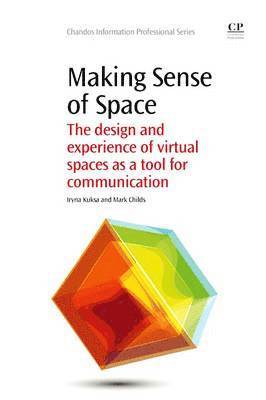
    Making Sense of Space

    The Design and Experience of Virtual Spaces as a Tool for Communication

    AvIryna Kuksa,Mark Childs

    Häftad, Engelska, 2014

    Del i serien Chandos Information Professional Series

    711 kr

    Beställningsvara. Skickas inom 10-15 vardagar. Fri frakt över 249 kr.

    Beskrivning

    The use of Virtual Worlds (VWs) has increased in the last decade. VWs are used for communication, education, community building, creative arts, and more. A good deal of research has been conducted into learning and VWs, but other areas remain ripe for investigation. Factors from technological platforms to the nature and conventions of the communities that use VWs must be considered, in order to achieve the best possible interaction between virtual spaces and their users. Making Sense of Space focuses on the background to these issues, describing a range of case studies conducted by the authors. The book investigates the innovative and creative ways designers employ VWs for research, performance-making, and audience engagement. Secondly, it looks into how educators use these spaces to support their teaching practice. Lastly, the book examines the potential of VWs as new methods of communication, and the ways they are changing our perception of reality. This book is structured into four chapters. An introduction provides a history and outline of important themes for VWs, and subsequent chapters consider the design of virtual spaces, experience of virtual spaces, and communication in virtual spaces.

    Produktinformation

    • Utgivningsdatum:2014-04-22
    • Vikt:300 g
    • Format:Häftad
    • Språk:Engelska
    • Serie:Chandos Information Professional Series
    • Förlag:Woodhead Publishing Ltd
    • ISBN:9781843347408

    Utforska kategorier

    • Systemvetenskap och AI inom Data och IT
    • Referensverk och tvärvetenskap inom Samhälle och politik

    Mer om författaren

    Iryna Kuksa holds a permanent Research Fellowship in the School of Art and Design, Nottingham Trent University, UK. In her research, Iryna examines a suite of rapidly-developing communication and computer-visualization techniques, which enable reciprocal exchange between viewers, artefacts and spaces, and transform the way we experience, learn and co-create our culture. She researches immersive virtual environments, which are already an important aspect of current teaching and research, and promise enormous future potential for scholars in terms of understanding virtual ecologies and sustainability of virtual performance spaces. Mark Childs is a Senior Research Fellow at Coventry University, UK, where he develops and researches online synchronous learning experiences and virtual collaborations, with 15 years experience in this field and work on over 30 educational technology projects. He holds a PhD on learners’ experience of presence in virtual worlds, and his research interests include virtual collaboration; digital identity; embodiment; and telepresence. Mark also works as an independent educational consultant, conducting evaluation and writing on behalf of funding agencies, universities, private sector technology companies, and museums.

    Recensioner i media

    "It investigates the innovative and creative ways designers employ VWs for research, performance-making, and audience engagement. It also looks into how educators use these spaces to support their teaching practice, as well as the potential of VWs as new methods of communication, and the ways they are changing our perception of reality." --LISTrends.com, 2014"...a detailed analysis of digital spaces and their use in educational, design, performance and cultural environments…contains performance and education case studies written by practitioners in those fields." --Multimedia Information & Technology, November 2014

    Innehållsförteckning

    • List of figuresAcknowledgementsAbout the authorsIntroductionPart 1: Spaces, presence, realities … Chapter 1: Remediating technology, translating experience, immersing in spaces Abstract:A history of virtual spaces and definitions of basic termsSpaces in virtual and augmented reality: an explanation of the concept of telepresence and mixed realityCultural use of cyberspace – paradigms of digital realityRemediation and translation: the different theoretical approaches adopted in this bookConclusion Part 2: Creating virtual spaces Chapter 2: Virtual spaces – ‘work-in-progress’: software, devices and design principles Abstract: Chapter 3: Art, history and culture in digital spaces Abstract: Chapter 4: Theatre in the virtual day and age Abstract:ConclusionNote Part 3: Experiencing virtual spaces Chapter 5: Two models to conceptualize space Abstract:Living in virtual spacesThe experience of spatialityEmotional agency in virtual spacesThe engagement of beliefTo Activity Theory and beyond Chapter 6: Other spaces, and other ways of making sense of them Abstract:Entering into a world of make-believeNeither here nor there – the state of metaxisPassing between: crossing the threshold between realitiesMore spin on the concept: the dichotomy between apparent and actual intent Chapter 7: First, second, third and fourth places – making extra sense of space Abstract: Chapter 8: Virtual worlds in education Abstract:The status of virtual worlds c. 2010Conclusion Part 4: Making sense of space – the practitioner perspective Chapter 9: Moving towards the alien ‘other’ … Abstract:Conclusion Part 5: Conclusion Chapter 10: The future of spaces – physical or virtual? Abstract:Digital to virtual: is cyberspace a space?Moving from physical to virtual: losses and gainsPsychological and perceptual immersion in physical, virtual and augmented realitiesLearning in virtual worldsCommunicating history in virtual worldsCommunicating performance in virtual worldsIs the future ‘phyrtual’? GlossaryReferencesIndex