Häftad, Engelska, 2010
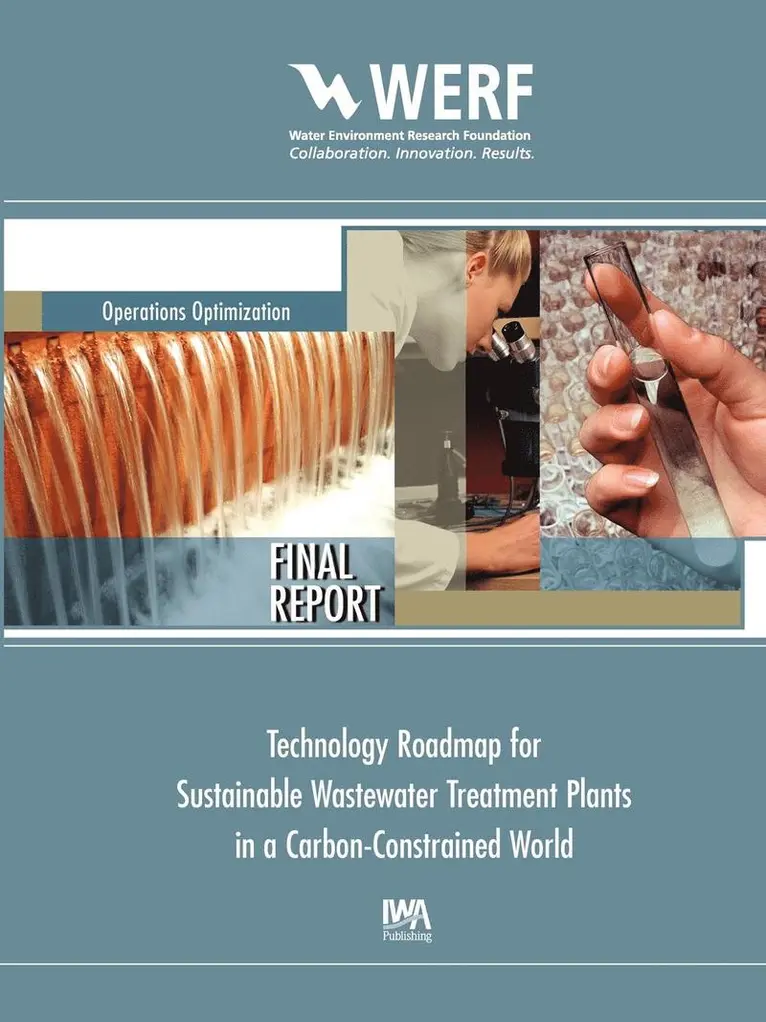
Technology Roadmap for Sustainable Wastewater Treatment Plants in a Carbon-Constrained World
1885 kr
Skickas onsdag 14/10
Beskrivning
Resources end up in wastewater through inefficient consumption. As a result, wastewater contains reusable water, carbon (energy) and nutrients (nitrogen, phosphorus and sulfur) that could be recovered or reused. Meanwhile, current treatment objectives are to produce an acceptable quality of water for reuse or discharge at the lowest life cycle cost. Most of the current treatment processes manage carbon and nutrients as wastes to be removed, and do not attempt to capitalize on these resources inherent in wastewater. In the context of sustainability and climate change, the next generation of wastewater treatment processes should focus on resource recovery (water reuse, energy/carbon recovery and nutrient recovery) as much as they currently do on treatment. The future goal is for wastewater treatment of domestic wastewater to have a minimal carbon footprint, and to be 100% self–sustainable with regards to energy, carbon, and nutrients, while achieving a discharge or reuse quality that preserves the quality of the receiving waters. In May 2009, the Water Environment Research Foundation (WERF) convened a work group of international experts in the wastewater sector to develop a Wastewater Treatment Technology Roadmap which will identify possible routes to sustainable wastewater treatment in a carbon-constrained world. The resultant Technology Roadmap report identifies pathways toward sustainable wastewater systems over the next few decades, including various approaches the sector could utilize over the 20-30 year planning horizon. The Technology Roadmap describes the current status of wastewater technologies, projects future treatment quality requirements, identifies research needs, and summarizes ongoing activities to meet the perceived future objectives such as reducing the carbon footprint while achieving lower nutrient levels. Work group participants brainstormed possible technology concepts which can be reasonably expected to produce actionable results that can be implemented by interested wastewater utilities. The participants considered typical and atypical approaches to optimizing carbon and nutrient management at WWTPs. Typical approaches include the evaluation of process modeling opportunities and constraints, and incremental resource and carbon management optimization techniques. Atypical approaches will be even more important to the future of wastewater resource reclamation. As an additional outcome, several work group members suggested conceptual and sustainable “plant of the future” treatment systems not constrained by existing infrastructure. Participants discussed their “Plant of the Future” concepts which can be expected to generate opportunities and research needs related to energy sources within treatment plants, changing wastewater characteristics, decentralized treatment, increased nutrient recovery and management, and total water reuse.
Produktinformation
- Utgivningsdatum: 2010-11-15
- Mått: 156 x 234 x 18 mm
- Vikt: 224 g
- Format: Häftad
- Språk: Engelska
- Antal sidor: 80
- Förlag: IWA Publishing
- Serie: WERF Research Report Series
- ISBN: 9781843393962
Utforska kategorier
Betyg & recensioner
0 recensioner
Inga recensioner tillgängliga.