• Fri frakt över 249 kr
  • •
  • Snabba leveranser
  • •
  • Billiga böcker
Kundservice

Du är på sajten för privatpersoner.

Företag, bibliotek eller offentlig verksamhet?

Du handlar på classic.bokus.com, där alla dina funktioner finns intakta.
Till classic.bokus.com
Bokus logotyp. Gå till startsidan.
  • Erbjudanden
  • Nyheter
  • Student
  • Topplistor
  • Barn & ungdom
  • Bokus Play
  • E-böcker
  • Pocketböcker
  • Spel & pussel

10% rabatt på allt med kod: NYSTART10 →

Sidfot

Mina sidor

    Hjälp

    • Kundservice
    • Vanliga frågor och svar
    • Frakt och leverans
    • Retur vid ångerrätt
    • Reklamera vara
    • Betalning
    • Köpvillkor
    • Allmänna villkor
    • Information om webbplatsens tillgänglighet

    Om Bokus

    • Om oss
    • Pressrum
    • För studenter
    • För företag
    • För bibliotek och offentlig verksamhet
    • För leverantörer
    • Hållbarhet

    Populärt

    • Aktuella erbjudanden
    • Presentkort
    • Studentlitteratur
    • Nya böcker
    • Topplistor
    • Signerade böcker
    • Engelska böcker

    Inspiration

    • Boktips
    • BookTok
    • Populära bokserier
    • Barnbokskaraktärer
    • Populära författare
    Logotyp för Bokus
    Följ oss på Facebook (extern länk)Följ oss på Instagram (extern länk)Följ oss på YouTube (extern länk)Följ oss på TikTok (extern länk)
    bokus @ CookiesAnpassa cookiesIntegritetspolicyKöpvillkor
    Till Citymail hemsida (extern länk)Till Budbee hemsida (extern länk)Till Postnord hemsida (extern länk)Till Schenker hemsida (extern länk)Till Early Bird hemsida (extern länk)Till Walleys hemsida (extern länk)
    1. Naturvetenskap och teknik
    2. Teknik och industri
    3. Teknik: allmänt

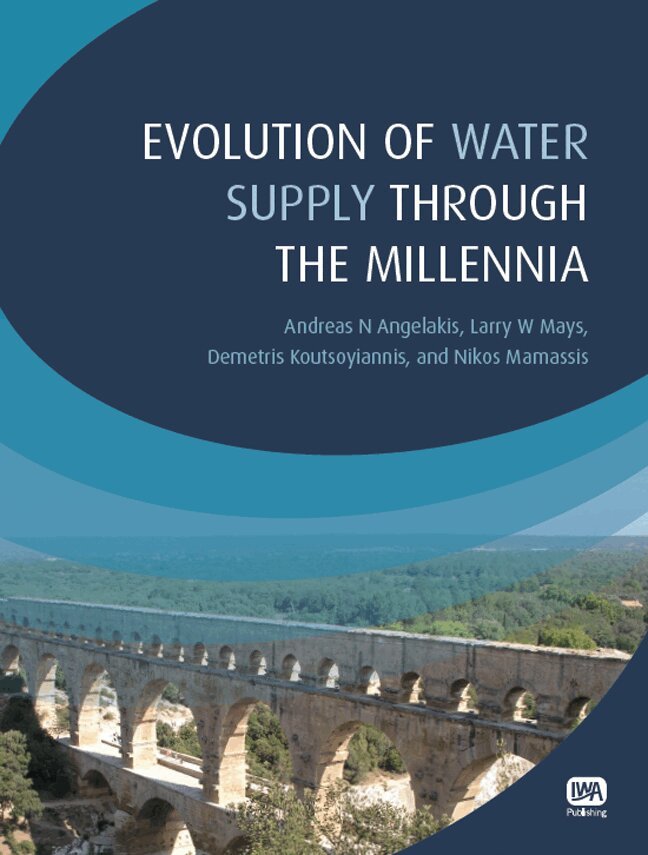
    Evolution of Water Supply Through the Millennia

    AvAndreas N. Angelakis,Larry W. Mays

    Häftad, Engelska, 2012

    1 866 kr

    Skickas . Fri frakt över 249 kr.

    Beskrivning

    Evolution of Water Supply Through the Millennia presents the major achievements in the scientific fields of water supply technologies and management throughout the millennia. It provides valuable insights into ancient water supply technologies with their apparent characteristics of durability, adaptability to the environment, and sustainability. A comparison of the water technological developments in several civilizations is undertaken. These technologies are the underpinning of modern achievements in water engineering and management practices. It is the best proof that “the past is the key for the future.” Rapid technological progress in the twentieth century created a disregard for past water technologies that were considered to be far behind the present ones. There are a great deal of unresolved problems related to the management principles, such as the decentralization of the processes, the durability of the water projects, the cost effectiveness, and sustainability issues such as protection from floods and droughts. In the developing world, such problems were intensified to an unprecedented degree. Moreover, new problems have arisen such as the contamination of surface and groundwater. Naturally, intensification of unresolved problems led societies to revisit the past and to reinvestigate the successful past achievements. To their surprise, those who attempted this retrospect, based on archaeological, historical, and technical evidence were impressed by two things: the similarity of principles with present ones and the advanced level of water engineering and management practices. Evolution of Water Supply Through the Millennia is intended for engineers in water resources companies, hydraulic design companies, and water Institutes. It can be used for all courses related to water resources. Authors: Andreas N. Angelakis, Institute of Iraklion, National Foundation for Agricultural Research (N.AG.RE.F.), Greece, Larry W. Mays, School of Sustainable Engineering and the Built Environment, Arizona State University, USA, Demetris Koutsoyiannis, School of Civil Engineering, National Technical University of Athens, Greece, Nikos Manassis, School of Civil Engineering, National Technical University of Athens, Greece.

    Produktinformation

    • Utgivningsdatum:2012-04-14
    • Mått:156 x 234 x 18 mm
    • Format:Häftad
    • Språk:Engelska
    • Antal sidor:584
    • Förlag:IWA Publishing
    • ISBN:9781843395409

    Utforska kategorier

    • Teknik: allmänt inom Naturvetenskap och teknik
    • Miljöteknik inom Naturvetenskap och teknik

    Mer om författaren

    Andreas N. Angelakis, Institute of Iraklion, National Foundation for Agricultural Research (N.AG.RE.F.), Greece Larry W. Mays, School of Sustainable Engineering and the Built Environment, Arizona State University, USA Demetris Koutsoyiannis, School of Civil Engineering, National Technical University of Athens, Greece Nikos Manassis, School of Civil Engineering, National Technical University of Athens, Greece

    Innehållsförteckning

    • Table of contents: Prolegomena, The Goddesses and the Gods of Water, Water for Human Consumption Through the History, History of Water and Health, Diachronic Climatic Changes Impact on Water Resources, The Impact of Climate Changes on the Evolution of Water Supply Works in the Region of Jerusalem, Water Supply Technologies in Ancient Crete, Greece, Urban Water Management in Ancient Greece, Historical Development of Water Supply in Cyprus, Water Supply in Pre-Columbian Civilizations in Ancient Peru and South America, Water Supply in Ancient Egypt, Contribution of the Greek and Roman Civilizations to the Evolution of Water Supply, History of Water Supply in Premodern China, Hydraulics Techniques in the Middle-east during Roman and Byzantine Periods, Water Services in Tenochtitlan and in Mexico City, Mexico, Water Supply Sustainability of Ancient Civilizations in Mesoamerica and the America Southwest, Water Supply of Barcelona City, Spain Throughout the Centuries, Water Supply of Athens city, Greece in Antiquity, History of the Water Supply of Rome, Italy, Analysis of the Water Supply System of the Ancient city of Apamea (Syria), during Roman and Byzantine Periods: A Case study, Water Supply in Modern Times in Relation to the Ancient Civilizations: Legacies and Lessons