Andreas N. Angelakis – författare
Visar alla böcker från författaren Andreas N. Angelakis. Handla med fri frakt och snabb leverans.
5 produkter
5 produkter
1 921 kr
Tillfälligt slut
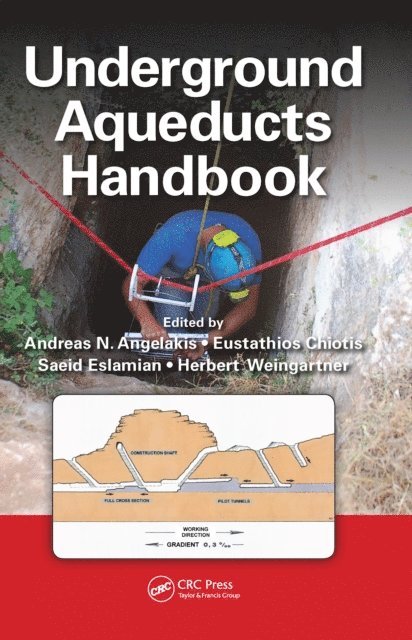
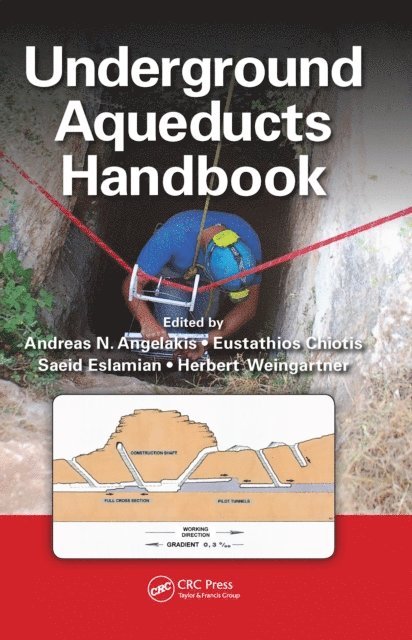
This book presents the major engineering achievements in underground aqueducts from around the world and throughout history. It provides valuable insights into water technologies and management with respect to durability, adaptability to the environment, and sustainability. Comparisons of the technological underground aqueduct developments from several regions are made. These technologies are the underpinning of modern achievements in water supply engineering and water management practices, and current issues of sustainability, cost-effectiveness, and decentralization have led engineers to consider combining older proven technologies with modern infrastructure advancements.
1 446 kr
Skickas
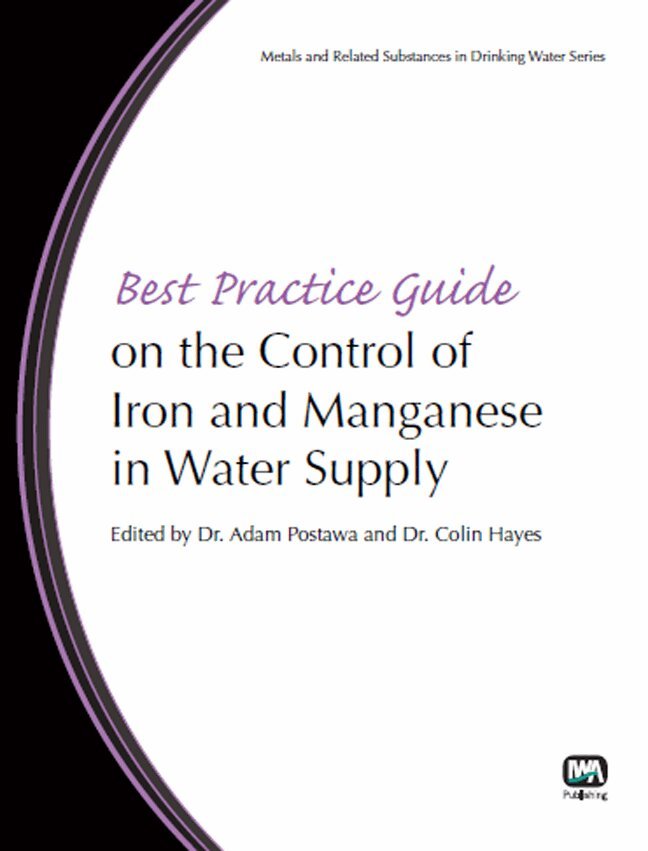
This Best Practice Guide on the Control of Iron and Manganese in Water Supply is one of a series produced by the International Water Association’s Specialist Group on Metals and Related Substances in Drinking Water. Iron and manganese are often found in soft upland water sources associated with natural organic matter and are also commonly found in the groundwater abstracted from confined and unconfined aquifers. The presence of iron and manganese in water is one of the most frequent reasons for customers’ complaint due to aesthetic issues (yellow, brown and black or stains on laundry and plumbing fixtures). These two metals can be removed fairly readily by physico-chemical treatment. The municipal treatment systems deployed derive benefit from their larger scale, particularly in relation to control, but the processes used are less suitable for the numerous small supplies that are the most common water supplies throughout Europe, especially in rural areas. One important source of iron in drinking water is from old corroded cast-iron water mains, historically the material used most commonly in supply networks. Replacement and refurbishment is very expensive and the major challenge is how best to prioritize available expenditure. The purpose for this Best Practice Guide on the Control of Iron and Manganese in Water Supply is to give readers the broad view of a problem based on state-of-the-art compilation of the range of scientific, engineering, regulatory and operational issues concerned with the control of iron and manganese in drinking water. The Guide is of interest to water utility practitioners, health agencies and policy makers, as well as students on civil engineering and environmental engineering courses. Authors: Dr Adam Postawa, AGH University of Science and Technology, Faculty of Geology, Geophysics and Environment Protection, Krakow, Poland and Dr Colin R Hayes, University of Swansea, UK, Chair of IWA Specialist Group on Metals and Related Substances in Drinking Water.
1 822 kr
Skickas
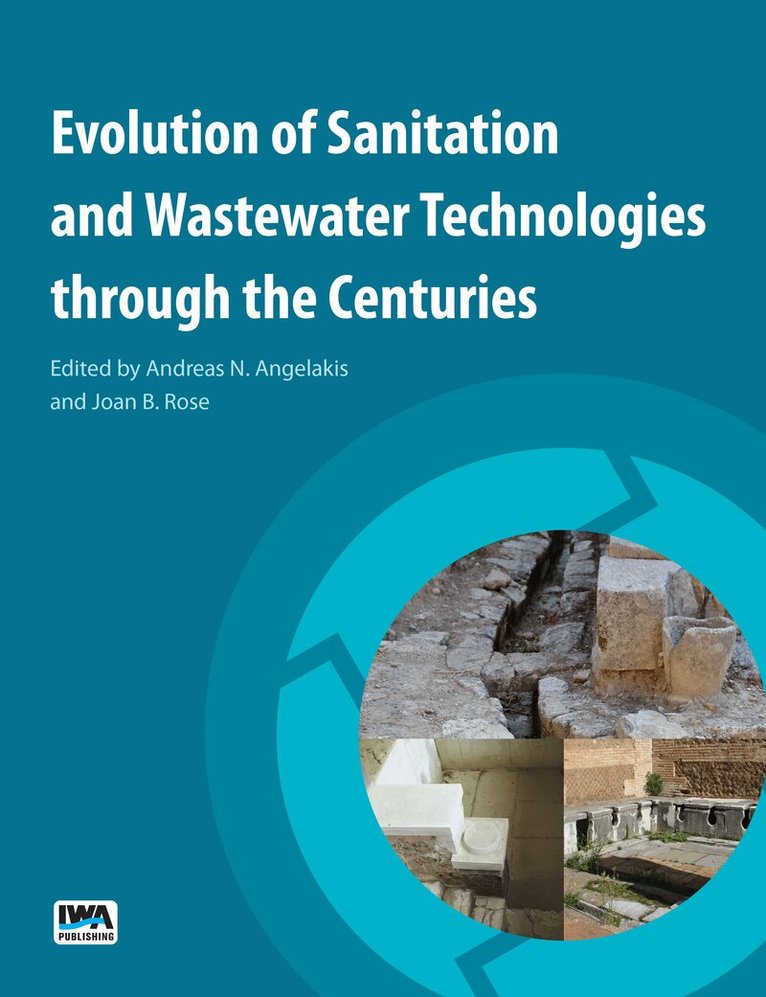
Most of the technological developments relevant to water supply and wastewater date back to more than to five thousand years ago. These developments were driven by the necessity to make efficient use of natural resources, to make civilizations more resistant to destructive natural elements, and to improve the standards of life, both at public and private level. Rapid technological progress in the 20th century created a disregard for past sanitation and wastewater and stormwater technologies that were considered to be far behind the present ones. A great deal of unresolved problems in the developing world related to the wastewater management principles, such as the decentralization of the processes, the durability of the water projects, the cost effectiveness, and sustainability issues, such as protection from floods and droughts were intensified to an unprecedented degree. New problems have arisen such as the contamination of surface and groundwater. Naturally, intensification of unresolved problems has led to the reconsideration of successful past achievements. This retrospective view, based on archaeological, historical, and technical evidence, has shown two things: the similarity of physicochemical and biological principles with the present ones and the advanced level of wastewater engineering and management practices. Evolution of Sanitation and Wastewater Technologies through the Centuries presents and discusses the major achievements in the scientific fields of sanitation and hygienic water use systems throughout the millennia, and compares the water technological developments in several civilizations. It provides valuable insights into ancient wastewater and stormwater management technologies with their apparent characteristics of durability, adaptability to the environment, and sustainability. These technologies are the underpinning of modern achievements in sanitary engineering and wastewater management practices. It is the best proof that “the past is the key for the future”. Evolution of Sanitation and Wastewater Technologies through the Centuries is a textbook for undergraduate and graduate courses of Water Resources, Civil Engineering, Hydraulics, Ancient History, Archaeology, Environmental Management and is also a valuable resource for all researchers in the these fields. Authors: Andreas N. Angelakis, Institute of Iraklion, Iraklion, Greece and Joan B. Rose, Michigan State University, East Lansing, MI, USA
1 822 kr
Skickas
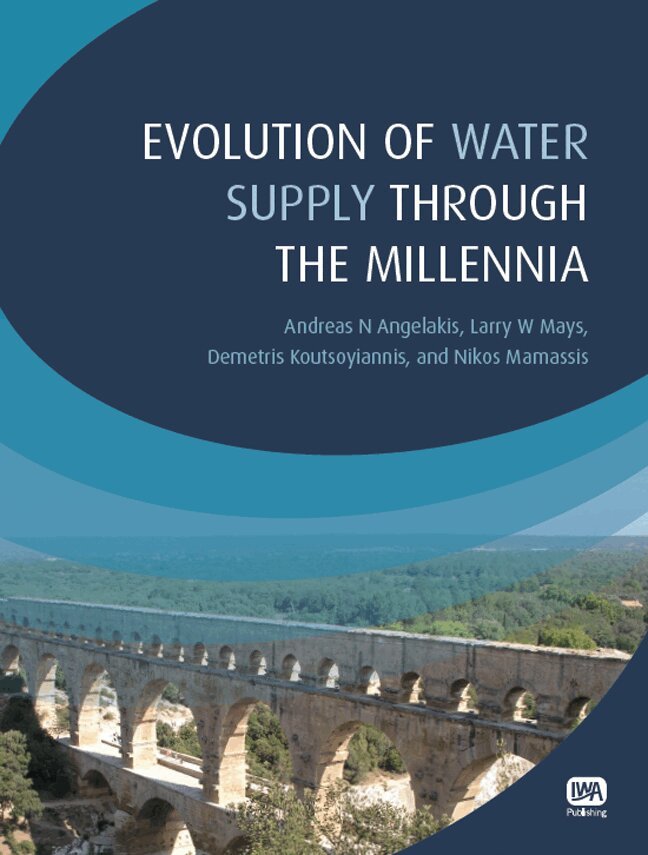
Evolution of Water Supply Through the Millennia presents the major achievements in the scientific fields of water supply technologies and management throughout the millennia. It provides valuable insights into ancient water supply technologies with their apparent characteristics of durability, adaptability to the environment, and sustainability. A comparison of the water technological developments in several civilizations is undertaken. These technologies are the underpinning of modern achievements in water engineering and management practices. It is the best proof that “the past is the key for the future.” Rapid technological progress in the twentieth century created a disregard for past water technologies that were considered to be far behind the present ones. There are a great deal of unresolved problems related to the management principles, such as the decentralization of the processes, the durability of the water projects, the cost effectiveness, and sustainability issues such as protection from floods and droughts. In the developing world, such problems were intensified to an unprecedented degree. Moreover, new problems have arisen such as the contamination of surface and groundwater. Naturally, intensification of unresolved problems led societies to revisit the past and to reinvestigate the successful past achievements. To their surprise, those who attempted this retrospect, based on archaeological, historical, and technical evidence were impressed by two things: the similarity of principles with present ones and the advanced level of water engineering and management practices. Evolution of Water Supply Through the Millennia is intended for engineers in water resources companies, hydraulic design companies, and water Institutes. It can be used for all courses related to water resources. Authors: Andreas N. Angelakis, Institute of Iraklion, National Foundation for Agricultural Research (N.AG.RE.F.), Greece, Larry W. Mays, School of Sustainable Engineering and the Built Environment, Arizona State University, USA, Demetris Koutsoyiannis, School of Civil Engineering, National Technical University of Athens, Greece, Nikos Manassis, School of Civil Engineering, National Technical University of Athens, Greece.
Diachronic Climatic Impacts on Water Resources
with Emphasis on the Mediterranean Region
Häftad, Engelska, 2014
1 066 kr
Skickas inom 10-15 vardagar
Since the beginning of man's existence on Earth, the adequacy of available water has been as important as any other factor for man's survival and prosperity. The volume comprises comprehensive reviews on: Paleoenvironments of arid land, climate-water-man interactions, water resources in the Minoan era, ancient Greek examples of avoiding water shortages, climatic changes in the eastern Mediterranean region since 5000 B.C., climatic evolution in ancient civilizations based on fossil studies, impact of climatic changes on groundwater and Mediterranean wetlands. The book is written for civil and agricultural engineers, hydrologists, geologists, environmental scientists and researchers. It is also useful as a reference to consulting engineers, agriculturists, environmentalists and students.