• Fri frakt över 249 kr
  • •
  • Snabba leveranser
  • •
  • Billiga böcker
Kundservice

Du är på sajten för privatpersoner.

Företag, bibliotek eller offentlig verksamhet?

Du handlar på classic.bokus.com, där alla dina funktioner finns intakta.
Till classic.bokus.com
Bokus logotyp. Gå till startsidan.
  • Erbjudanden
  • Nyheter
  • Student
  • Topplistor
  • Barn & ungdom
  • Bokus Play
  • E-böcker
  • Pocketböcker
  • Spel & pussel

Må bättre, för mindre! Upp till 50% rabatt på hälsoböcker

Sidfot

Mina sidor

    Hjälp

    • Kundservice
    • Vanliga frågor och svar
    • Frakt och leverans
    • Retur vid ångerrätt
    • Reklamera vara
    • Betalning
    • Köpvillkor
    • Allmänna villkor
    • Information om webbplatsens tillgänglighet

    Om Bokus

    • Om oss
    • Pressrum
    • För studenter
    • För företag
    • För bibliotek och offentlig verksamhet
    • För leverantörer
    • Hållbarhet

    Populärt

    • Aktuella erbjudanden
    • Presentkort
    • Studentlitteratur
    • Nya böcker
    • Topplistor
    • Signerade böcker
    • Engelska böcker

    Inspiration

    • Boktips
    • BookTok
    • Populära bokserier
    • Barnbokskaraktärer
    • Populära författare
    Logotyp för Bokus
    Följ oss på Facebook (extern länk)Följ oss på Instagram (extern länk)Följ oss på YouTube (extern länk)Följ oss på TikTok (extern länk)
    bokus @ CookiesAnpassa cookiesIntegritetspolicyKöpvillkor
    Till Citymail hemsida (extern länk)Till Budbee hemsida (extern länk)Till Postnord hemsida (extern länk)Till Schenker hemsida (extern länk)Till Early Bird hemsida (extern länk)Till Walleys hemsida (extern länk)
    1. Kultur
    2. Arkitektur

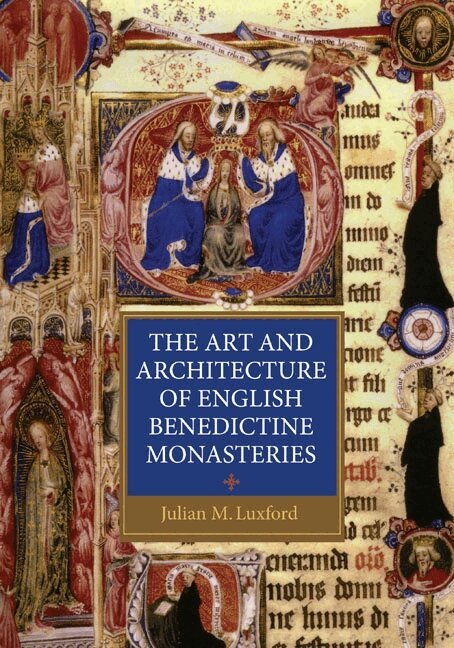
    Art and Architecture of English Benedictine Monasteries

    AvJulian Luxford

    Häftad, Engelska, 2012

    Del 25 i serien Studies in the History of Medieval Religion

    356 kr

    Beställningsvara. Skickas inom 5-8 vardagar. Fri frakt över 249 kr.

    Beskrivning

    Analysis of the patronage of Benedictine monasteries has much to reveal about both monastic life and material culture of the time.The patronage of Benedictine art and architecture, and the circumstances that made it possible and desirable, reveal much about the ambitions, beliefs and allegiances of both the order and those who interacted with it; moreover, analysis of such patronage also improves our understanding of some of the most important and beautiful buildings, sculpture, illuminated manuscripts, stained glass and other artefacts surviving from the middle ages.In this survey,focussing on the Benedictine monasteries and nunneries in south-west England (including Glastonbury) during the 240 years leading up to the dissolution of the religious orders under Henry VIII, the author discusses the question interms of "internal" practice, initiated by Benedictine monks and nuns, and "external" practice, for which non-monastic agents were responsible; and analyses the historical circumstances affecting the commission and the purchase of art and architecture. Throughout, he takes care to situate the study of buildings and their embellishment within the broader context of Benedictine culture. The text is lavishly illustrated with forty-five black and white platesof art, architecture and documents, many of which have not previously been reproduced.Dr JULIAN M. LUXFORD is Senior Lecturer at the School of Art History, St Andrews University.

    Produktinformation

    • Utgivningsdatum:2012-10-18
    • Mått:172 x 244 x 19 mm
    • Vikt:520 g
    • Format:Häftad
    • Språk:Engelska
    • Serie:Studies in the History of Medieval Religion
    • Antal sidor:346
    • Förlag:Boydell & Brewer Ltd
    • ISBN:9781843837596

    Utforska kategorier

    • Arkitektur inom Kultur
    • Medeltiden inom Historia och arkeologi

    Mer om författaren

    JULIAN LUXFORD is Professor in the School of Art History at the University of St Andrews.

    Recensioner i media

    In many ways a model book. It is a model of careful scholarship, of caution in its conclusions, of thoroughness in its research, in the way it neatly mortars a sturdy brick to the existing architecture of Benedictine scholarship.