• Fri frakt över 249 kr
  • •
  • Snabba leveranser
  • •
  • Billiga böcker
Kundservice

Du är på sajten för privatpersoner.

Företag, bibliotek eller offentlig verksamhet?

Du handlar på classic.bokus.com, där alla dina funktioner finns intakta.
Till classic.bokus.com
Bokus logotyp. Gå till startsidan.
  • Erbjudanden
  • Nyheter
  • Student
  • Topplistor
  • Barn & ungdom
  • Bokus Play
  • E-böcker
  • Pocketböcker
  • Spel & pussel

10% rabatt på allt med kod: NYSTART10 →

Sidfot

Mina sidor

    Hjälp

    • Kundservice
    • Vanliga frågor och svar
    • Frakt och leverans
    • Retur vid ångerrätt
    • Reklamera vara
    • Betalning
    • Köpvillkor
    • Allmänna villkor
    • Information om webbplatsens tillgänglighet

    Om Bokus

    • Om oss
    • Pressrum
    • För studenter
    • För företag
    • För bibliotek och offentlig verksamhet
    • För leverantörer
    • Hållbarhet

    Populärt

    • Aktuella erbjudanden
    • Presentkort
    • Studentlitteratur
    • Nya böcker
    • Topplistor
    • Signerade böcker
    • Engelska böcker

    Inspiration

    • Boktips
    • BookTok
    • Populära bokserier
    • Barnbokskaraktärer
    • Populära författare
    Logotyp för Bokus
    Följ oss på Facebook (extern länk)Följ oss på Instagram (extern länk)Följ oss på YouTube (extern länk)Följ oss på TikTok (extern länk)
    bokus @ CookiesAnpassa cookiesIntegritetspolicyKöpvillkor
    Till Citymail hemsida (extern länk)Till Budbee hemsida (extern länk)Till Postnord hemsida (extern länk)Till Schenker hemsida (extern länk)Till Early Bird hemsida (extern länk)Till Walleys hemsida (extern länk)
    1. Naturvetenskap och teknik
    2. Teknik och industri
    3. Energiteknik

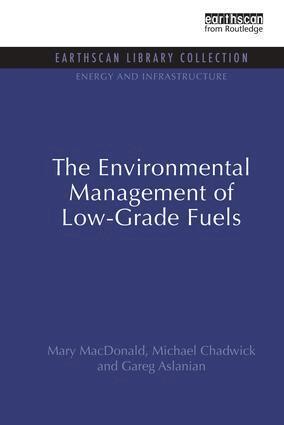
    Environmental Management of Low-Grade Fuels

    AvMary MacDonald,Michael Chadwick

    Inbunden, Engelska, 2009

    Del i serien Energy and Infrastructure Set

    1 466 kr

    Beställningsvara. Skickas inom 10-15 vardagar. Fri frakt över 249 kr.

    Fler format och utgåvor

    Häftad

    484 kr

    Beskrivning

    The negative environmental impacts of energy use, particularly soil and water pollution, continue to present serious policy dilemmas. The release of emissions and effluents and the build-up of solid waste throughout the fuel cycle have disruptive effects on natural habitats and human health. Further, fuel combustion can result in the emission of carbon dioxide, ozone, methane and nitrogen dioxide � the 'greenhouse gases' which have been linked to climate change. The safe and sustainable use of energy has become an important issue in the wider environmental debate. In this report, researchers from the Stockholm Environment Institute explore the issues raised by the use of low-grade fuels such as peat, wood, biomass, lignite, oil shale and municipal and industrial wastes. The present strategies and policy options for all stages of the process, from mining and transport to processing and combustion. With those who would like to learn more about these fuels in mind, the material is presented clearly, and discussions of environmental protection measures are given in table form throughout the ease of reference. A directory of environmental guidelines, regulations and standards is given in an appendix. While a high calorific value fuels remain the most significant source of energy in many countries, economic and other constraints on the use of these fuels may result in more nations turning to low-grade sources of energy to operate their industrial or transportation sectors. The greater potential for environmental degradation that accompanies the use of low-grade fuels means that it is crucial that environmentally sound methods for their management, such as those presented here, be more widely available. The Environmental Management of Low-Grade Fuels will be valuable for industry specialists, policy makers, students and all who are concerned with the life cycle of these materials. Mary MacDonald is an affiliated scientist, and Michael Chadwick is a former director, at the Stockholm Environment Institute. Garegin Aslanian is a senior associate with the Institute for High Temperature Research in Moscow. Originally published in 1996

    Produktinformation

    • Utgivningsdatum:2009-10-01
    • Mått:156 x 234 x 23 mm
    • Vikt:720 g
    • Format:Inbunden
    • Språk:Engelska
    • Serie:Energy and Infrastructure Set
    • Antal sidor:300
    • Förlag:Taylor & Francis Ltd
    • ISBN:9781844079773

    Utforska kategorier

    • Energiteknik inom Naturvetenskap och teknik
    • Miljövetenskap och miljöpolitik inom Naturvetenskap och teknik

    Mer om författaren

    Mary MacDonald, Michael Chadwick, Gareg Aslanian

    Innehållsförteckning

    • Table of Contents List of Figures and Tables Preface Acknowledgements Foreword Chapter 1 Overview A definition of Low-grade Fuels Factors Contributing to Calorific Value Environmental Implications of Calorific Value Low-grade Fuels Considered Characteristics of Low-grade Fuels Peat Coal Oil Shale Wood Biomass other than Wood Municipal Solid Waste Global Use of Low-grade Fuels Peat Lignite Oil Shale Wood Biomass other than Wood Differences in Low-grade Fuel Use between Developed and Developing Countries Wood Lignite Peat Oil Shale Current Application of Low-grade Fuels Combustion Gasification Liquefaction Environmental Impacts of Low-grade Fuel Use The Fuel Cycle Scale of Operation Environmental Standards Conservation Technology Transfer Environmental Impacts Associated with Individual Low-grade Fuels Chapter 2 Alternative Uses of Low-grade Fuels Chemical Feedstocks Chemical Products from Peat Chemical Feedstocks from Lignite Chemical Feedstocks from Oil Shale Chemical Products from Wood The Environmental Impacts Associated with the Production of Chemical Feedstocks from Low-grade Fuels Mining or Gaining for Chemical Feedstock Production Transportation Heating and Cooling Extraction Wastewater Treatment Fertilizers and Soil Amendments from Low-grade Fuels Sphagnum Peat Moss and Peat-derived Fertilizers Nerosine Liming with Powdered Oil Shale Ash Gypsum Absorbent Biofilters Building Materials Landfill Chapter 3 Global Resources and Reserves of Low-grade Fuels Low-grade Coals Peat Oil Shale Wood Biomass other than Wood Municipal, Industrial and Mining Wastes Chapter 4 Environmental Management during the Mining of Low-grade Fuels Mining of Lignite Destruction of Ground Cover Worker Health and Safety Social Impacts of Lignite Mining Water Quality and Soil Fertility Interaction with Groundwater Site Restoration Oil Shale Mining Acidic Run-off Land Restoration Worker Health and Safety during Oil Shale Mining Social Impacts of Oil Shale Mining Harvesting of Peat Impacts on the Physical Environment due to Peat Harvesting Worker Health and Safety during Peat Harvest Social Impacts of Peat Harvesting Harvesting or Collecting of Wood Impacts to the Physical Environment due to Harvesting of Wood Collection of Biomass other than Wood Municipal, Industrial and Mining Wastes Chapter 5 Environmental Management of the Transport of Low-grade Fuels Environmental Impacts and Low-grade Fuel Transport Storage of Low-grade Fuels Impacts to the Physical Environment due to the Transport of Low-grade Fuels Disruption to Residents along Transport Routes Health Risks of Low-grade Fuel Transport Worker Health and Safety during Low-grade Fuel Transport Chapter 6 Environmental Management During Processing and Upgrading of Low-grade Fuels Peat Processing Peat Drying and Dewatering Carbonization Compaction Lignite Upgrading Homogenization Cleaning Moisture Removal and Thermal Upgrading Drying and Thermal Upgrading Briquetting Environmental Implications of Lignite Processing and Upgrading Oil Shale Processing and Upgrading Surface Retorting In Situ Retorting Shale Oil Upgrading Water Quality Environmental Management During Oil Shale Processing and Upgrading Wood Processing Large-scale Charcoal Making Mobility of Carbonization Technology Environmental Impacts of Charcoal Manufacture Briquetting of Biomass, Municipal Waste and Mining Waste Treatment and Processing of Liquid Wastes Chapter 7 Environmental Management and Low-grade Fuel Conversion Low-grade Fuel Conversion Technologies Stoves for Domestic Use of Low-grade Fuels Fixed Bed Combustion Fluidized Bed Combustion Circulating Fluidized Bed Combustion Pressurized Fluidized Bed Combustion Low-grade Fuel Gasification Integrated Gasification Combined Cycle Fuel Pyrolysis On Overview of Pollutant Formation and Control Health Risks of Low-grade Fuel Combustion Particulates Environmental Aspects of Particulates Control of Particulate Matter Carbon Dioxide Environmental Aspects of CO2 Environmental Protection and CO2 C02 Production and Low-grade Fuels Sulphur Oxides Environmental Aspects of SOx Control Mechanisms for SOx SOx Production and Low-grade Fuels Sulphur Recovery using Wet Processes Dry alkali Injection into the Combustion Chamber Dry Absorption Use of Metal Oxides Regenerable Processes Nitrogen Oxides Environmental Aspects of NOx Control Mechanisms for NOx NOx and Low-grade Fuels Suppression of NOx during Combustion Flue Gas Treatment for NOx Removal Halogens Environmental Aspects of Halogens Control of Halogens during Combustion Halogens and Low-grade Fuels Polycyclic Aromatic Hydrocarbons Environmental Aspects of PAHs Control of PAHs Low-grade Fuels and PAHs Solid Wastes Environmental Aspects of Solid Waste Environmental Protection Measures for Solid Wastes Solid Waste and Low-grade Fuels Gaseous Trace Elements Chapter 8 Low-grade Fuel Use Efficiency and Conservation Energy Conservation Developing a Conservation Plan Energy-efficient Power Production and Low-grade Fuels Energy Process Improvement Boiler Improvement Investment in a New Energy System Waste Heat Recovery Chapter 9 The Transfer of Environmentally Sound Technology for Low-grade Fuel Use Towards a Definition of Technology Transfer Controversy Surrounding Technology Transfer New and Expensive versus Older and Cheaper The Social Impacts of Technology Indigenous Technology Effective Technology Transfer Methods and Mechanisms of Technology Transfer Constraints to Technology Transfer Approaches to Environmentally Sound Technology Transfer Business Transaction between Companies Aid Agency Funding Enforcement of Global Standards Real Costing Trust Funds Chapter 10 Costs Considerations and Low-grade Fuel Use Industry or Internal Costs External Costs Environmental Loads Health Costs Costs of Control Technology Technology Cost Estimates Cost Estimation Methodology Other Methodological Approaches Pollution Abatement Options Chapter 11 Integrated Planning and Environmental Management of Low-grade Fuels Integrated Energy Planning Environmental Impacts and Integrated Energy Planning Energy Sector Indicators of Environmental Quality Energy Intensity Environmental Impact Assessment Conducting on EIA Comparing Alternatives Modelling Approaches Appendix A Environmental Legislation for Low-grade Fuels Environmental Policy Guidelines, Regulations and Standards Environmental Guidelines Regulations Standards Low-grade Fuel Regulations Glossary Index