• Fri frakt över 249 kr
  • •
  • Snabba leveranser
  • •
  • Billiga böcker
Kundservice

Du är på sajten för privatpersoner.

Företag, bibliotek eller offentlig verksamhet?

Du handlar på classic.bokus.com, där alla dina funktioner finns intakta.
Till classic.bokus.com
Bokus logotyp. Gå till startsidan.
  • Erbjudanden
  • Nyheter
  • Student
  • Topplistor
  • Barn & ungdom
  • Bokus Play
  • E-böcker
  • Pocketböcker
  • Spel & pussel

10% rabatt på allt med kod: NYSTART10 →

Sidfot

Mina sidor

    Hjälp

    • Kundservice
    • Vanliga frågor och svar
    • Frakt och leverans
    • Retur vid ångerrätt
    • Reklamera vara
    • Betalning
    • Köpvillkor
    • Allmänna villkor
    • Information om webbplatsens tillgänglighet

    Om Bokus

    • Om oss
    • Pressrum
    • För studenter
    • För företag
    • För bibliotek och offentlig verksamhet
    • För leverantörer
    • Hållbarhet

    Populärt

    • Aktuella erbjudanden
    • Presentkort
    • Studentlitteratur
    • Nya böcker
    • Topplistor
    • Signerade böcker
    • Engelska böcker

    Inspiration

    • Boktips
    • BookTok
    • Populära bokserier
    • Barnbokskaraktärer
    • Populära författare
    Logotyp för Bokus
    Följ oss på Facebook (extern länk)Följ oss på Instagram (extern länk)Följ oss på YouTube (extern länk)Följ oss på TikTok (extern länk)
    bokus @ CookiesAnpassa cookiesIntegritetspolicyKöpvillkor
    Till Citymail hemsida (extern länk)Till Budbee hemsida (extern länk)Till Postnord hemsida (extern länk)Till Schenker hemsida (extern länk)Till Early Bird hemsida (extern länk)Till Walleys hemsida (extern länk)
    1. Ekonomi och Ledarskap
    2. Industrier och branscher
    3. Servicesektorn

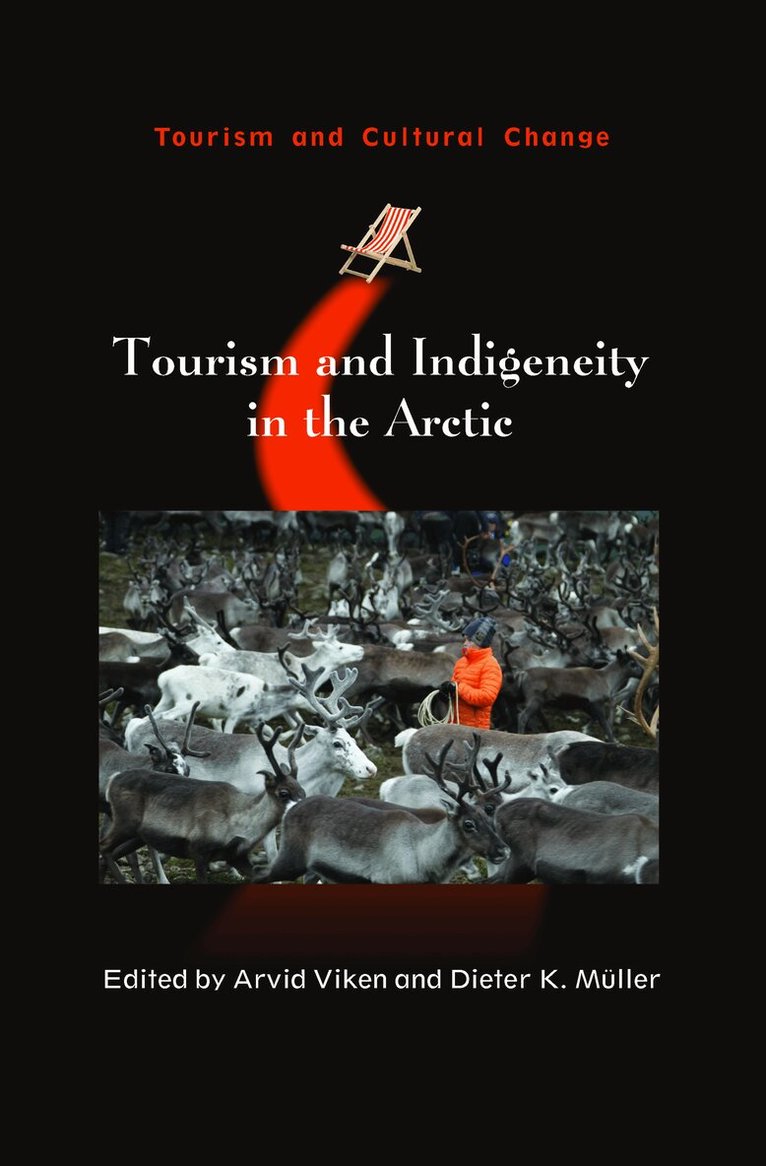
    Tourism and Indigeneity in the Arctic

    AvArvid Viken,Dieter K. Müller

    Inbunden, Engelska, 2017

    Del 51 i serien Tourism and Cultural Change

    1 947 kr

    Beställningsvara. Skickas inom 5-8 vardagar. Fri frakt över 249 kr.

    Beskrivning

    This is the first book to exclusively address tourism and indigenous peoples in the circumpolar North. It examines how tourism in indigenous communities is influenced by academic and political discourses, and how these communities are influenced by tourism. The volume focuses on the ambivalence relating to tourism as a modern force within ethnic groups who are concerned with maintaining indigenous roots and traditional practices. It seeks to challenge stereotypical understandings of indigenousness and indigeneity and considers conflicting imaginaries of the Arctic and Arctic indigenous tourism. The book contains case studies from Canada, Greenland, Norway, Sweden, Finland and Russia and will be of interest to postgraduate students and researchers of tourism, geography, sociology, cultural studies and anthropology.

    Produktinformation

    • Utgivningsdatum:2017-05-03
    • Mått:156 x 234 x 22 mm
    • Vikt:615 g
    • Format:Inbunden
    • Språk:Engelska
    • Serie:Tourism and Cultural Change
    • Antal sidor:291
    • Förlag:Channel View Publications Ltd
    • ISBN:9781845416096

    Utforska kategorier

    • Servicesektorn inom Ekonomi och Ledarskap
    • Sociologi och antropologi inom Samhälle och politik
    • Geografi inom Naturvetenskap och teknik

    Mer om författaren

    Arvid Viken is Professor in Tourism, UiT The Arctic University of Norway, Norway. His research interests include destination development, indigenous tourism, tourism and community interaction.Dieter K. Müller is Professor in Social and Economic Geography, Umeå University, Sweden. His research interests focus on issues related to tourism and local and regional development in rural and peripheral areas in northern environments.

    Recensioner i media

    The roles of indigenous peoples in tourism are complex, dynamic and politically sensitive all of which contribute to their worthiness as well as their challenge as subjects of academic discourse. Viken and Müller have done a masterful job of meeting these challenges in their edited volume Tourism and Indigeneity in the Arctic – a “must-read" for tourism students, stakeholders and scholars.

    Innehållsförteckning

    • PrefaceContributorsPart I: Conceptualizing Arctic Indigeneity and Tourism1. Dieter K. Müller and Arvid Viken: Indigenous Tourism in the Arctic2. Arvid Viken and Dieter K. Müller: Indigeneity and Indigenous Tourism3. E. Carina H. Keskitalo: Images of the Northern and “Arctic” In Tourism and Regional Literature4. Britt Kramvig: Orientalism or Cultural Encounters? Tourism Assembling Culture, Capital and IdentityPart II: Arctic Contestations; Resourcification of Indigenous Landscapes5. Dieter K. Müller and Fredrik Hoppstadius: Sami Tourism At The Crossroad: Globalization As Challenge For Business, Environment And Culture In Swedish Sápmi6. Yulian Konstantinov: Tourist Hegemonies of Outside Powers: The Case of Salmon-Fishing Safari-Camps in Territories of Traditional Land-Use (Kola Peninsula)7. Albina Pashkevich: Empowering Whom? Politics and Realities of Indigenous Tourism Development in the Russian Arctic8. Seija Tuulentie: Destination Development In The Middle Of the Sápmi: Whose Voice Is Heard and How?9. Karina M. Smed: Culture in Nature - Exploring the Role of ‘Culture’ In the Destination of Ilulissat, GreenlandPart III: Touristification of the Arctic – Indigenous Wrapping10. John S. Hull, Suzanne De La Barre and Patrick T. Maher: Peripheral Geographies Of Creativity: The Case For Indigenous Tourism And Community Economic Development In The Western Canadian Arctic11. Vladislava Vladimirova:  “Sport and Folklore”: Festivals as Sites of Indigenous Cultural Revitalization in Russia12. Gro B. Ween and Åge Riseth: Indigenous Hospitality and Tourism: Past Trajectories and New BeginningsPart IV: Tourism Negotiating Sami Traditions13. Kjell Olsen: What Does The Sieidi Do? Tourism as a Part of a Continued Tradition?14. Trude Fonneland: Indigenous Spirituality and the Staging of Sami Culture in Northern Scandinavia15. Gaute Svensson and Arvid Viken: Tourism, Nomadism and the Sami Verdde NexusPart V: Epilogue16. Dieter K. Müller and Arvid Viken: Towards a De-Essentializing of Indigenous Tourism?