• Fri frakt över 249 kr
  • •
  • Snabba leveranser
  • •
  • Billiga böcker
Kundservice

Du är på sajten för privatpersoner.

Företag, bibliotek eller offentlig verksamhet?

Du handlar på classic.bokus.com, där alla dina funktioner finns intakta.
Till classic.bokus.com
Bokus logotyp. Gå till startsidan.
  • Erbjudanden
  • Nyheter
  • Student
  • Topplistor
  • Barn & ungdom
  • Bokus Play
  • E-böcker
  • Pocketböcker
  • Spel & pussel

10% rabatt på allt med kod: NYSTART10 →

Sidfot

Mina sidor

    Hjälp

    • Kundservice
    • Vanliga frågor och svar
    • Frakt och leverans
    • Retur vid ångerrätt
    • Reklamera vara
    • Betalning
    • Köpvillkor
    • Allmänna villkor
    • Information om webbplatsens tillgänglighet

    Om Bokus

    • Om oss
    • Pressrum
    • För studenter
    • För företag
    • För bibliotek och offentlig verksamhet
    • För leverantörer
    • Hållbarhet

    Populärt

    • Aktuella erbjudanden
    • Presentkort
    • Studentlitteratur
    • Nya böcker
    • Topplistor
    • Signerade böcker
    • Engelska böcker

    Inspiration

    • Boktips
    • BookTok
    • Populära bokserier
    • Barnbokskaraktärer
    • Populära författare
    Logotyp för Bokus
    Följ oss på Facebook (extern länk)Följ oss på Instagram (extern länk)Följ oss på YouTube (extern länk)Följ oss på TikTok (extern länk)
    bokus @ CookiesAnpassa cookiesIntegritetspolicyKöpvillkor
    Till Citymail hemsida (extern länk)Till Budbee hemsida (extern länk)Till Postnord hemsida (extern länk)Till Schenker hemsida (extern länk)Till Early Bird hemsida (extern länk)Till Walleys hemsida (extern länk)
    1. Samhälle och politik
    2. Politik och statsskick
    3. Centralt styre och förvaltning

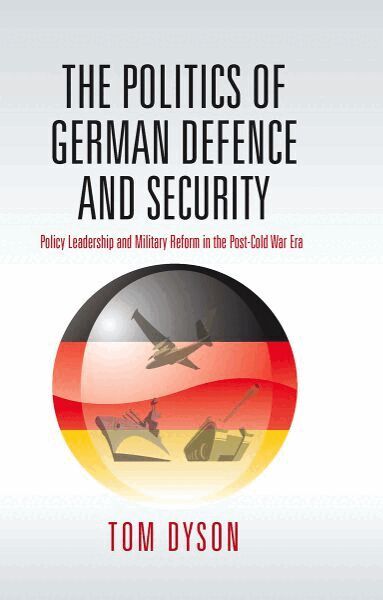
    Politics of German Defence and Security

    Policy Leadership and Military Reform in the post-Cold War Era

    AvTom Dyson

    Inbunden, Engelska, 2008

    1 861 kr

    Beställningsvara. Skickas inom 5-8 vardagar. Fri frakt över 249 kr.

    Fler format och utgåvor

    E-bok

    325 kr

    Beskrivning

    The post-Cold War era has witnessed a dramatic transformation in the German political consensus about the legitimacy of the use of force. However, in comparison with its EU and NATO partners, Germany has been reticent to transform its military to meet the challenges of the contemporary security environment. Until 2003 territorial defence rather than crisis-management remained the armed forces' core role and the Bundeswehr continues to retain conscription. The book argues that 'strategic culture' provides only a partial explanation of German military reform. It demonstrates how domestic material factors were of crucial importance in shaping the pace and outcome of reform, despite the impact of 'international structure' and adaptational pressures from the EU and NATO. The domestic politics of base closures, ramifications for social policy, financial restrictions consequent upon German unification and commitment to EMU's Stability and Growth Pact were critical in determining the outcome of reform. The study also draws out the important role of policy leaders in the political management of reform as entrepreneurs, brokers or veto players, shifting the focus in German leadership studies away from a preoccupation with the Chancellor to the role of ministerial and administrative leadership within the core executive. Finally, the book contributes to our understanding of the Europeanization of the German political system, arguing that policy leaders played a key role in 'uploading' and 'downloading' processes to and from the EU and that Defence Ministers used 'Atlanticization' and 'Europeanization' in the interests of their domestic political agendas.

    Produktinformation

    • Utgivningsdatum:2008-03-01
    • Mått:152 x 229 x 17 mm
    • Vikt:454 g
    • Format:Inbunden
    • Språk:Engelska
    • Antal sidor:230
    • Förlag:Berghahn Books
    • ISBN:9781845453923

    Utforska kategorier

    • Centralt styre och förvaltning inom Samhälle och politik
    • Militär strategi inom Samhälle och politik

    Mer om författaren

    Tom Dyson is a Lecturer at the University of Surrey, having previously worked as an ESRC Research Fellow at the International Relations Department, London School of Economics and as a Visiting Lecturer at the LSE's Department of Government. He has published articles on German foreign and security policy in European Security and the British Core Executive in the Second World War in Contemporary British History.

    Recensioner i media

    "Taking the focus away from ideological considerations Dyson manages to add to the discussion a refined analysis of the domestic political network which influences the outcome of foreign and security policy to a great extend. The relations between the different political subsystems explain policy outcome far better than any ideological approach will ever do."   ·  German Politics"Tom Dyson provides a well-researched overview of the German military in the post Cold War era...The analysis allows the reader not only to follow the evolution of German security and defense policy more broadly from after the Wende through the Schröder administration, but it also permits a rare look into internal party politics in this area. The book in this way interestingly crosses the domestic/foreign policy lines of most authors whose expertise is one or the other without the background to present the analysis undertaken in this exhaustive, to be recommended, book.”   ·  German Politics & Society

    Innehållsförteckning

    • AcknowledgementsFigures and TablesList of AbbreviationsChapter 1. Explaining the Paradox of German Defense Policy 1990–2005Germany in Context: Military Reform in Britain and FranceExplaining the Paradox: Leadership and Culture as a Political ResourceThe Concept of Policy LeadershipLeadership and Policy Studies in GermanyChapter 2. The Bundeswehr in its Historical and Structural Context: The Scope for Policy LeadershipThe Bundeswehr Policy SubsystemInterlocking and Nested Policy Subsystems: Defense, Security, Foreign, and Budgetary PolicyThe Three Coalitions in Defense and Security Policy During the Cold WarThe Post-Cold War World: Unification, New Security Threats, and Responding to U.S. PowerConclusionChapter 3. Policy Leadership and Bundeswehr Reform During the Kohl Chancellorships: The Art of Varying and Sequencing RolesFrom the Gulf War to Sarajevo: Helmut Kohl as Policy LeaderDeveloping the Crisis Intervention Role of the Bundeswehr: Volker Rühe as Policy Entrepreneur and Broker 1992–94The Structure of the Bundeswehr and the Politics of Base Closures: Volker Rühe as Policy Broker and Veto Player 1994–98Leadership within the Defense Ministry: Denkverbot and the Control of Policy LearningContenders for the Role of Policy Entrepreneur on Bundeswehr Reform: Klaus Kinkel, the Foreign Ministry, the FDP, and the GreensAdapting to Rühe: The SPD and the Deferral of Bundeswehr ReformConclusionsChapter 4. Policy Leadership on Bundeswehr Reform During First the Schröder Chancellorship 1998–2002: Managing "Government by Commission"Fanning the Flames of Policy Learning: The Weizsäcker CommissionThe Strategic Context of Bundeswehr Reform: Base Closures, Social Policy, and the CDU/CSU OppositionRudolf Scharping as Policy Leader: The Marginalisation of the Weizsäcker Commission and the Control of Policy LearningPolicy Leadership and the Unsuccessful Implementation of ReformConclusionsChapter 5. Bundeswehr Reform During the Second Schröder Chancellorship 2002–05: The Art of Combining Leadership RolesThe Parameters of Reform: Domestic Politics and the "Need for New Think"Struck and the Defense Policy Guidelines (VPR): "Germany Will be Defended on the Hindukush"Combining Leadership Roles to Build Consensus at the Macropolitical LevelStruck as Policy Veto Player on Structural Reform: Political Timing and the Control of Policy LearningConclusionsChapter 6. Military Reform, NATO, and The Common European Security and Defense Policy: Between Atlanticization and EuropeanizationTheories of Europeanization and German Defense and Security PolicyThe EU and German Defense and Security Policy During the Kohl ChancellorshipFischer, Scharping, and Europeanization: The Legacy of OppositionEuropeanization versus Atlanticization in the Defense Ministry: The Problem of Institutional CredibilityConclusion: A Disjointed DiscourseChapter 7. A Laggard in Military Reform: The Arts of Policy Leadership and the Triumph of Domestic Constraints over International OpportunityLeadership and the Triumph of Domestic ConstraintThe Implications for German Leadership StudiesThe Concept of Strategic Culture: Resource as Well as ConstraintEuropeanization: Leadership and the Management of 'Fit'BibliographyIndex