• Fri frakt över 249 kr
  • •
  • Snabba leveranser
  • •
  • Billiga böcker
Kundservice

Du är på sajten för privatpersoner.

Företag, bibliotek eller offentlig verksamhet?

Du handlar på classic.bokus.com, där alla dina funktioner finns intakta.
Till classic.bokus.com
Bokus logotyp. Gå till startsidan.
  • Erbjudanden
  • Nyheter
  • Student
  • Topplistor
  • Barn & ungdom
  • Bokus Play
  • E-böcker
  • Pocketböcker
  • Spel & pussel

10% rabatt på allt med kod NYSTART10 →

Sidfot

Mina sidor

    Hjälp

    • Kundservice
    • Vanliga frågor och svar
    • Frakt och leverans
    • Retur vid ångerrätt
    • Reklamera vara
    • Betalning
    • Köpvillkor
    • Allmänna villkor
    • Information om webbplatsens tillgänglighet

    Om Bokus

    • Om oss
    • Pressrum
    • För studenter
    • För företag
    • För bibliotek och offentlig verksamhet
    • För leverantörer
    • Hållbarhet

    Populärt

    • Aktuella erbjudanden
    • Presentkort
    • Studentlitteratur
    • Nya böcker
    • Topplistor
    • Signerade böcker
    • Engelska böcker

    Inspiration

    • Boktips
    • BookTok
    • Populära bokserier
    • Barnbokskaraktärer
    • Populära författare
    Logotyp för Bokus
    Följ oss på Facebook (extern länk)Följ oss på Instagram (extern länk)Följ oss på YouTube (extern länk)Följ oss på TikTok (extern länk)
    bokus @ CookiesAnpassa cookiesIntegritetspolicyKöpvillkor
    Till Citymail hemsida (extern länk)Till Budbee hemsida (extern länk)Till Postnord hemsida (extern länk)Till Schenker hemsida (extern länk)Till Early Bird hemsida (extern länk)Till Walleys hemsida (extern länk)
    1. Samhälle och politik
    2. Sociologi och antropologi
    3. Antropologi

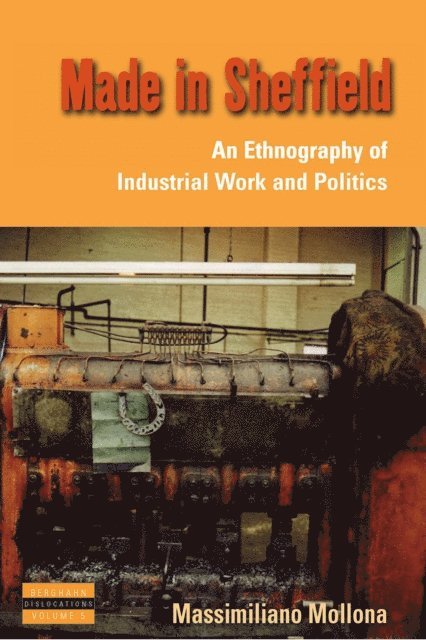
    Made in Sheffield

    An Ethnography of Industrial Work and Politics

    AvMassimiliano Mollona

    Inbunden, Engelska, 2009

    Del i serien Dislocations

    1 861 kr

    Beställningsvara. Skickas inom 5-8 vardagar. Fri frakt över 249 kr.

    Fler format och utgåvor

    E-bok

    315 kr

    Beskrivning

    In 1900, Sheffield was the tenth largest city in the world. Cutlery “made in Sheffield” was used across the globe, and the city built armored plate for the navy in the run-up to the First World War. Today, however, Sheffield’s derelict Victorian shop floors and industrial buildings are hidden behind new leisure developments and shopping centers.Based on an extended period of research in two local steel factories, this book combines a lively, descriptive account with a wide-ranging critique of post-industrial capitalism. Its central argument is that recent government attempts to engineer Britain’s transition to a post-industrial and classless society have instead created volatile post-industrial spaces marked by informal labor, industrial sweatshops and levels of risk and deprivation that divide citizens along lines of gender, age, and class. The author discovers a link between production and reproduction, and demonstrates the centrality of kinship relations, child and female labor, and intra-household exchanges to the economic process of de-industrialization. Paradoxically, government policies have reinvigorated working-class militancy, spawned local industrial clusters and re-embedded the economy in the spatial and social structure of the neighborhood.

    Produktinformation

    • Utgivningsdatum:2009-03-01
    • Mått:152 x 229 x 16 mm
    • Vikt:458 g
    • Format:Inbunden
    • Språk:Engelska
    • Serie:Dislocations
    • Antal sidor:212
    • Förlag:Berghahn Books
    • ISBN:9781845455514

    Utforska kategorier

    • Antropologi inom Samhälle och politik
    • Byggnadsindustri och tung industri inom Ekonomi och Ledarskap

    Mer om författaren

    Massimiliano Mollona has been Lecturer in Social Anthropology at Goldsmiths College, London, since 2003. After an Italian Laurea in Economics, he received his Ph.D. and MSc in Anthropology from the London School of Economics. He is a co-editor of Critique of Anthropology and Reviews Editor of Journal of the Royal Anthropological Institute (JRAI). His recent publications include ‘Gifts of Labour. Steel Production and Technological Imagination in an Area of Urban Deprivation, Sheffield, UK’ in Critique of Anthropology, 25(2) and ‘Factory, Family and Neighbourhood. The Political Economy of Informal Labour in Sheffield, UK’ in JRAI. (N.S.) 11. He has published widely on labour issues and steel production.

    Recensioner i media

    “The tale that Mollona tells is not a pleasant one…However, it is an important tale, not least because it reminds us that anthropologists in Britain have a long history, now mostly lost to mind, of research in the heartlands of industrial capitalism. Mollona shows us, once more, that we have worthwhile things to say about the lives, work, and situation of the British working class, and through these the political-economic situation in which they find themselves. One can only hope that other anthropologists will follow his lead.”  ·  JRAI"His narrative of the embodied lives of the factory workers and their tools brings the theory of local and transnational networks of production to life. The book's real triumph lies in this subtle layering of experiential ethnographic narratives of production and economy. The political theory underpinning the account whilst challenging is, however, illuminating for a deeper reading of Mollona's argument. The reader's 'work' is rewarded by an argument which presents a valuable contribution to the field of political and industrial ethnography in contemporary neoliberal Europe."  ·  Durham Anthropology Journal

    Innehållsförteckning

    • AcknowledgementsIntroductionAnthropology of LabourBourgeoisie and ProletariansHistory and ClassTechnological FetishismClass and KinshipNotes on FieldworkPART I: ARTISANSChapter 1. Morris LtdThe Factory as Socio-technical SpaceThe Shop FloorThe MarketThe Formal OrganizationInformal OrganizationA Short Social History of the MachinesThe Social Distribution of Knowledge in MorrisDiscussion about Value in the Break-roomPolitical EconomyConclusionChapter 2. The ‘Return’ of the Informal Economy in EndcliffeThe Informal Economy Debate in AnthropologyInformal ProductionInformal ExchangesSex Market: the Elysium Khaled’sConclusionChapter 3. Working-class HomesWorking-class Families and PovertyThe ‘Post-kinship’ Turn GovernmentalFamilies and New Extended HouseholdsConclusionChapter 4. Welcome to Political LimboLocal History of Working-class PoliticsFolk Models of ClassFrom Steel Town to Leisure CentreCutlers versus DevelopersFish, Fishermen and SteelworkersReclaiming the Body: Sickness BenefitConclusionPART II: PROLETARIANSChapter 5. Unsor LtdThe PlaceThe Production Process and Formal OrganizationA Normal Day at the Smelting Shop‘Every Furnace is like a Good-looking Woman’Stories of ‘Gods’ and ‘Donkeys’ during Break-timesThe Rolling MillThe Grinding BayHealth and Safety Politics at Bay 2Farewell to Manual LabourConclusionChapter 6. A Divided ProletariatCharlie Moody: from Working-class to NursingThe Strange Disappearance of Charlie MoodyBeing Italian in Worksop: Antonio MassoPepperoni, Lampascioni and Vino Rosso: A Food Journey from the South of Italy to South YorkshireReturning ‘Home’EpilogueConclusionChapter 7. Community Unionism, Business Unionism – Two Strategies, the Same PhoenixTransmutations of Labour RepresentationThe Phoenix Flies on the ISTC Divisional OfficeThe ISTC in UNSORPolitical Meeting at the ISTC or Community Unionism in ActionThe Same Phoenix, Different TrajectoriesReorganizationThe AEU FactoryBranch BusinessUnionism in Times of ReorganizationConclusionConclusionFarewell to the Working Class?Labour and Alienation as Relational ValuesRelational Consciousness as the Basis for Class StruggleBibliographyIndex