• Fri frakt över 249 kr
  • •
  • Snabba leveranser
  • •
  • Billiga böcker
Kundservice

Du är på sajten för privatpersoner.

Företag, bibliotek eller offentlig verksamhet?

Du handlar på classic.bokus.com, där alla dina funktioner finns intakta.
Till classic.bokus.com
Bokus logotyp. Gå till startsidan.
  • Erbjudanden
  • Nyheter
  • Student
  • Topplistor
  • Barn & ungdom
  • Bokus Play
  • E-böcker
  • Pocketböcker
  • Spel & pussel

10% rabatt på allt med kod: NYSTART10 →

Sidfot

Mina sidor

    Hjälp

    • Kundservice
    • Vanliga frågor och svar
    • Frakt och leverans
    • Retur vid ångerrätt
    • Reklamera vara
    • Betalning
    • Köpvillkor
    • Allmänna villkor
    • Information om webbplatsens tillgänglighet

    Om Bokus

    • Om oss
    • Pressrum
    • För studenter
    • För företag
    • För bibliotek och offentlig verksamhet
    • För leverantörer
    • Hållbarhet

    Populärt

    • Aktuella erbjudanden
    • Presentkort
    • Studentlitteratur
    • Nya böcker
    • Topplistor
    • Signerade böcker
    • Engelska böcker

    Inspiration

    • Boktips
    • BookTok
    • Populära bokserier
    • Barnbokskaraktärer
    • Populära författare
    Logotyp för Bokus
    Följ oss på Facebook (extern länk)Följ oss på Instagram (extern länk)Följ oss på YouTube (extern länk)Följ oss på TikTok (extern länk)
    bokus @ CookiesAnpassa cookiesIntegritetspolicyKöpvillkor
    Till Citymail hemsida (extern länk)Till Budbee hemsida (extern länk)Till Postnord hemsida (extern länk)Till Schenker hemsida (extern länk)Till Early Bird hemsida (extern länk)Till Walleys hemsida (extern länk)
    1. Historia och arkeologi
    2. Historia
    3. Historia: särskilda händelser och ämnen
    4. Socialhistoria och kulturhistoria

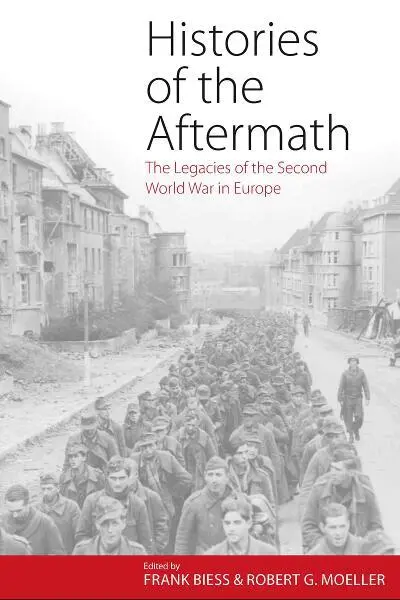
    Histories of the Aftermath

    The Legacies of the Second World War in Europe

    AvFrank Biess,Robert G. Moeller

    Inbunden, Engelska, 2010

    1 916 kr

    Beställningsvara. Skickas inom 5-8 vardagar. Fri frakt över 249 kr.

    Beskrivning

    In 1945, Europeans confronted a legacy of mass destruction and death: millions of families had lost their homes and livelihoods; millions of men in uniform had lost their lives; and millions more had been displaced by the war’s destruction, and the genocidal policies of the Nazi regime. From a range of methodological historical perspectives—military, cultural, and social, to film and gender and sexuality studies—this volume explores how Europeans came to terms with these multiple pasts. With a focus on distinctive national experiences in both Eastern and Western Europe, it illuminates how postwar stabilization coexisted with persistent insecurities, injuries, and trauma.

    Produktinformation

    • Utgivningsdatum:2010-07-01
    • Mått:152 x 229 x 22 mm
    • Vikt:640 g
    • Format:Inbunden
    • Språk:Engelska
    • Antal sidor:326
    • Förlag:Berghahn Books
    • ISBN:9781845457327

    Utforska kategorier

    • Socialhistoria och kulturhistoria inom Historia och arkeologi
    • Europas historia inom Historia och arkeologi

    Mer om författaren

    Frank Biess is Associate Professor of History at the University of California, San Diego. He is the author of Homecomings: Returning POWs and the Legacies of Defeat in Postwar Germany (Princeton UP, 2006), and he is currently working on a history of fear and anxiety in postwar Germany.

    Recensioner i media

    “The editors and contributors have created a volume that is easily accessible for graduate students and upper-level undergraduate seminars. Professional historians will also benefit greatly because so few of us have tried to understand this period without the blinders of Cold War dichotomies.”  ·  Slavic Review“Frank Biess' introduction perfectly sets the tone for this book by reviewing where present-day post- 1945 historiography stands following the scholarship of the late Tony Judt… The structure of the book is impressive; five parts and sixteen essays…[The essays in this collection are] extraordinarily well thought-through…Histories of the Aftermath compares with any scholarly masterpiece about reconstruction after the American Civil War… For this reason this book is essential reading for any European history course.”  ·  Canadian Journal of History"With [this volume] Frank Biess and Robert G. Moeller have assembled a fine set of essays. Offering thematic and geographic breadth, the collection presents stimulating and rewarding ways of thinking about the legacies of the war in Europe…What is unusual is the cross-pollination of theoretical frameworks and topical emphases in ways that shed genuinely new light on the subject… It is tempting to suppose that little remains to be said about Europeans’ ‘coming to terms with their past’. This volume shows how fruitful this line of inquiry still can be"  ·  English Historical Review“This is an excellent collection. In its thematic breadth and its broad geographical coverage it is quite distinctive.”  ·  Mark Roseman, Indiana University, Bloomington

    Innehållsförteckning

    • Introduction Frank BiessI. Defining the Postwar Chapter 1. The Persistence of "the Postwar": Germany and PolandNorman NaimarkChapter 2. Feelings in the Aftermath: Toward a History of Postwar EmotionsFrank BiessChapter 3. In the Aftermath of CampsSamuel MoynII. Public and Private Memories Chapter 4. Nothing Is Forgotten: Individual Memory and the Myth of the Great Patriotic WarLisa KirschenbaumChapter 5. Erased nor Remembered: Soviet “Women Combatants” and Cultural Strategies of Forgetting In Soviet Russia, 1940s-1980sAnna KrylovaChapter 6. Generations as Narrative Communities: On the Private Sources of Official Cultures of Remembrance in Postwar GermanyDorothee WierlingIII. Mass-Mediating War: How Movies Shaped Memories Chapter 7. ‘When Will the Real Day Come?’ War Films and Soviet Postwar CultureDenise YoungbloodChapter 8. “Winning the Peace at the Movies:” Suffering, Loss, and Redemption in Postwar German Cinema”Robert MoellerChapter 9. Italian Cinema and the Transition from Dictatorship to DemocracyRuth Ben-GhiatIV. The Reconstruction of Citizenship Chapter 10. War Orphans and Post-Fascist Families: Kinship and Belonging after 1945Heide FehrenbachChapter 11. Manners, Morality and Civilization: Reflections on Postwar German Etiquette BooksPaul BettsChapter 12. From the “New Jerusalem” to the ‘Decline’ of the “New Elizabethan Age:” National Identity and Citizenship: Britain, 1945-56Sonya RoseChapter 13. “We are Building a Common Home:” The Moral Economy of Citizenship in Postwar PolandKatherine LebowV. In the Shadow of the Bomb: Military Cultures Chapter 14. The Great Tradition and the Fates of Annihilation – West German Military Culture in the Aftermath of the Second World WarKlaus NaumannChapter 15. Soviet Military Culture and the Legacy of the Second World WarMikhail TsypkinChapter 16. 1945-1955: The Age of Total WarPieter LagrouNotes on ContributorsIndex