• Fri frakt över 249 kr
  • •
  • Snabba leveranser
  • •
  • Billiga böcker
Kundservice

Du är på sajten för privatpersoner.

Företag, bibliotek eller offentlig verksamhet?

Du handlar på classic.bokus.com, där alla dina funktioner finns intakta.
Till classic.bokus.com
Bokus logotyp. Gå till startsidan.
  • Erbjudanden
  • Nyheter
  • Student
  • Topplistor
  • Barn & ungdom
  • Bokus Play
  • E-böcker
  • Pocketböcker
  • Spel & pussel

10% rabatt på allt med kod NYSTART10 →

Sidfot

Mina sidor

    Hjälp

    • Kundservice
    • Vanliga frågor och svar
    • Frakt och leverans
    • Retur vid ångerrätt
    • Reklamera vara
    • Betalning
    • Köpvillkor
    • Allmänna villkor
    • Information om webbplatsens tillgänglighet

    Om Bokus

    • Om oss
    • Pressrum
    • För studenter
    • För företag
    • För bibliotek och offentlig verksamhet
    • För leverantörer
    • Hållbarhet

    Populärt

    • Aktuella erbjudanden
    • Presentkort
    • Studentlitteratur
    • Nya böcker
    • Topplistor
    • Signerade böcker
    • Engelska böcker

    Inspiration

    • Boktips
    • BookTok
    • Populära bokserier
    • Barnbokskaraktärer
    • Populära författare
    Logotyp för Bokus
    Följ oss på Facebook (extern länk)Följ oss på Instagram (extern länk)Följ oss på YouTube (extern länk)Följ oss på TikTok (extern länk)
    bokus @ CookiesAnpassa cookiesIntegritetspolicyKöpvillkor
    Till Citymail hemsida (extern länk)Till Budbee hemsida (extern länk)Till Postnord hemsida (extern länk)Till Schenker hemsida (extern länk)Till Early Bird hemsida (extern länk)Till Walleys hemsida (extern länk)
    1. Historia och arkeologi
    2. Historia
    3. Europas historia

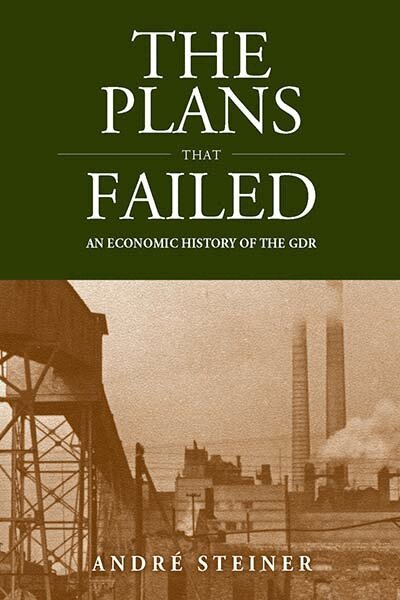
    Plans That Failed

    An Economic History of the GDR

    AvAndré Steiner

    Inbunden, Engelska, 2010

    Del i serien Studies in German History

    1 916 kr

    Beställningsvara. Skickas inom 5-8 vardagar. Fri frakt över 249 kr.

    Fler format och utgåvor

    Häftad

    526 kr

    Beskrivning

    The establishment of the Communist social model in one part of Germany was a result of international postwar developments, of the Cold War waged by East and West, and of the resultant partition of Germany. As the author argues, the GDR’s ‘new’ society was deliberately conceived as a counter-model to the liberal and marketregulated system. Although the hopes connected with this alternative system turned out to be misplaced and the planned economy may be thoroughly discredited today, it is important to understand the context in which it developed and failed. This study, a bestseller in its German version, offers an in-depth exploration of the GDR economy’s starting conditions and the obstacles to growth it confronted during the consolidation phase. These factors, however, were not decisive in the GDR’s lack of growth compared to that of the Federal Republic. As this study convincingly shows, it was the economic model that led to failure.

    Produktinformation

    • Utgivningsdatum:2010-09-01
    • Mått:152 x 229 x 19 mm
    • Vikt:508 g
    • Format:Inbunden
    • Språk:Engelska
    • Serie:Studies in German History
    • Antal sidor:236
    • Förlag:Berghahn Books
    • ISBN:9781845457488

    Utforska kategorier

    • Europas historia inom Historia och arkeologi
    • Ekonomisk historia inom Ekonomi och Ledarskap

    Mer om författaren

    André Steiner is Senior Research Fellow at the Center for Contemporary History Potsdam (ZZF) and Professor of economic and social history at the University of Potsdam. He has been the Research Director of the Department of Economic and Social History at the ZZF, a Research Fellow at Institutes for Economic History in Berlin and Mannheim and was Professor at the Ruhr-University Bochum.

    Recensioner i media

    “…the economic history of the GDR is an important topic, not just in modern German history, but in the history of the world Communist movement. The publication of André Steiner’s book is therefore warmly to be welcomed, for it provides a competent and useful overview of the evolution of the East German economy from the Soviet occupation of 1945–9 through to the collapse of the Communist regime in 1989.”  ·  English Historical Review“So far there has been a dearth of studies on the economic history of the GDR, unlike the recent surge of general historical accounts. Based on an exceptional knowledge of the literature and well supported by a number of key, so far unpublished, documents, this book fills the gap. André Steiner fully succeeds in his attempt, managing to produce from highly complex material a very accessible text for a wide readership without sacrificing analytical quality.”  ·  H-Soz-u-Kult”…provide[s] an excellent introduction for students and researchers who are just starting their work in the area of East Germany’s history, or for the researchers of state-owned enterprises and planned economies, who are interested in an overview of the historical precedent. Furthermore, Steiner’s bibliography presents an impressive scholarly reference to a large subset of primary and secondary sources that are available on the topic.”  ·  EH-Net“This 13th volume in the "Studies in German History" series (published in association with the German Historical Institute, Washington, DC)  is the most comprehensive account of the German Democratic Republic (GDR) economy available in English…Detailed endnotes, extensive bibliography, brief biographical sketches, and very good index…Highly recommended.”  ·  Choice

    Innehållsförteckning

    • Introduction Chapter 1. A Difficult Start? Initial Conditions in the Soviet Occupation ZoneEconomic Potential and Structure at the End of the WarPlant Dismantling and ReparationsPolitical Forces in the Soviet Occupation Zone and their Ideas on Economic PolicyLand Reform and Nationalisation of IndustryRestarting ProductionChapter 2. The Establishment of the Planned Economy 1948–1952German Economic Commission and Currency ReformProblems of Economic ControlReorientation of Foreign Trade and Industrial DevelopmentAgriculture and Supplies for the PopulationThe Resolution to ‘Build Socialism’The Events of 17 June 1953Chapter 3. Between Shortages and Growth 1953–1963Industrial and Structural PolicyThe Private Sector and AgricultureProblems of the Steering MechanismGrowth, Structural Transformation and Standard of LivingThe ‘Main Economic Task’: ‘Catch Up and Overtake’Collectivisation and the Road into Crisis 1960/61Chapter 4. The ‘Golden’ Sixties? Economic Reform between Take-off and Crisis 1961–1971Störfreimachung and Produktionsaufgebot 1961/62A ‘New Economic System’?Implementation of the Reform‘Overtake without Catching Up’Economic Results and Living Standards in the Reform PeriodThe Growth Crisis of 1969/70 and its Political ConsequencesChapter 5. ‘Unity of Economic and Social Policy’ 1971–1982Honecker's ‘Main Task’Fewer Investments and Innovations?Concentration in Industry and AgricultureAnd More Consumption?Debt CrisisChapter 6. Continued Economic Decline 1982–1989Getting out of Debt?Dispensing with Reforms in the Steering of the EconomyGrowing Loss of AssetsMore Money, Fewer GoodsFinal CrisisBrief BiographiesIndex