• Fri frakt över 249 kr
  • •
  • Snabba leveranser
  • •
  • Billiga böcker
Kundservice

Du är på sajten för privatpersoner.

Företag, bibliotek eller offentlig verksamhet?

Du handlar på classic.bokus.com, där alla dina funktioner finns intakta.
Till classic.bokus.com
Bokus logotyp. Gå till startsidan.
  • Erbjudanden
  • Nyheter
  • Student
  • Topplistor
  • Barn & ungdom
  • Bokus Play
  • E-böcker
  • Pocketböcker
  • Spel & pussel

10% rabatt på allt med kod: NYSTART10 →

Sidfot

Mina sidor

    Hjälp

    • Kundservice
    • Vanliga frågor och svar
    • Frakt och leverans
    • Retur vid ångerrätt
    • Reklamera vara
    • Betalning
    • Köpvillkor
    • Allmänna villkor
    • Information om webbplatsens tillgänglighet

    Om Bokus

    • Om oss
    • Pressrum
    • För studenter
    • För företag
    • För bibliotek och offentlig verksamhet
    • För leverantörer
    • Hållbarhet

    Populärt

    • Aktuella erbjudanden
    • Presentkort
    • Studentlitteratur
    • Nya böcker
    • Topplistor
    • Signerade böcker
    • Engelska böcker

    Inspiration

    • Boktips
    • BookTok
    • Populära bokserier
    • Barnbokskaraktärer
    • Populära författare
    Logotyp för Bokus
    Följ oss på Facebook (extern länk)Följ oss på Instagram (extern länk)Följ oss på YouTube (extern länk)Följ oss på TikTok (extern länk)
    bokus @ CookiesAnpassa cookiesIntegritetspolicyKöpvillkor
    Till Citymail hemsida (extern länk)Till Budbee hemsida (extern länk)Till Postnord hemsida (extern länk)Till Schenker hemsida (extern länk)Till Early Bird hemsida (extern länk)Till Walleys hemsida (extern länk)
    1. Naturvetenskap och teknik
    2. Teknik och industri
    3. Tillverkningsteknik

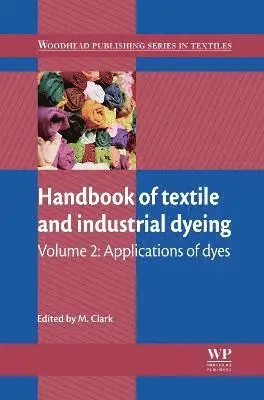
    Handbook of Textile and Industrial Dyeing

    Volume 2: Applications of Dyes

    AvM Clark

    Inbunden, Engelska, 2011

    Del i serien Woodhead Publishing Series in Textiles

    2 119 kr

    Beställningsvara. Skickas inom 10-15 vardagar. Fri frakt över 249 kr.

    Beskrivning

    Dyeing is one of the most effective and popular methods used for colouring textiles and other materials. Dyes are employed in a variety of industries, from cosmetic production to the medical sector. The two volumes of the Handbook of textile and industrial dyeing provide a detailed review of the latest techniques and equipment used in the dyeing industry, as well as examining dyes and their application in a number of different industrial sectors.

    Volume 2 deals with major applications of dyes and is divided into two parts. Part one covers textile applications, with chapters dealing with the dyeing of wool, synthetic and cellulosic fibres, and textile fibre blends. In part two, industrial applications of dyes are examined, with topics including dyes used in food and in the cosmetics industry.

    With its distinguished editor and contributions from some of the world's leading authorities, the Handbook of textile and industrial dyeing is an essential reference for designers, colour technologists and product developers working in a variety of sectors, and will also be suitable for academic use.

    • Provides a detailed review of the latest techniques and equipment used in the dyeing industry
    • Industrial applications of dyes are examined, with topics including dyes used in food and in the cosmetics industry
    • Is appropriate for a variety of different readers including designers, colour technologists, product developers and those in academia

    Produktinformation

    • Utgivningsdatum:2011-10-25
    • Mått:156 x 234 x undefined mm
    • Vikt:660 g
    • Format:Inbunden
    • Språk:Engelska
    • Serie:Woodhead Publishing Series in Textiles
    • Antal sidor:344
    • Förlag:Elsevier Science
    • ISBN:9781845696962

    Utforska kategorier

    • Tillverkningsteknik inom Naturvetenskap och teknik

    Mer om författaren

    Dr Matthew Clark is a lecturer in the Department of Colour Science at the University of Leeds.

    Innehållsförteckning

    • Contributor contact detailsWoodhead Publishing Series in TextilesPart I: Textile applicationsChapter 1: The colouration of woolAbstract:1.1 Introduction1.2 Overview of industry practice1.3 The theoretical basis of wool dyeing1.4 Environmental impact of wool colouration processes1.5 Reactive dyes for wool1.6 Wool protection during dyeing by using reactive dyes and/or anti-setting agents1.7 Ink-jet printing of wool fabricsChapter 2: Dyeing of synthetic fibresAbstract:2.1 Introduction2.2 Mass coloration2.3 Disperse dyes2.4 Disperse dyes on acetate fibres2.5 Disperse dyes on polyester fibres2.6 Disperse dyes on texturised polyester2.7 Disperse dyes on modified polyester2.8 Disperse dyes on nylon2.9 Disperse dyes on other fibres2.10 Dyeing of nylon fibres2.11 Anionic dyes on nylon2.12 Reactive dyes on nylon2.13 Dyeing of modified nylons2.14 Dyeing of aramid fibres2.15 Basic or cationic dyes2.16 Dyeing of acrylic fibres with basic dyes2.17 Dyeing of olefin fibres2.18 Dyeing of elastomeric fibres2.19 Future trendsChapter 3: Dyeing of cellulosic fibresAbstract:3.1 Introduction3.2 Cellulosic fibres3.3 Main methods of dyeing cellulosic fibres3.4 Future trendsChapter 4: Dyeing of textile fibre blendsAbstract4.1 Introduction4.2 Key fibre blends4.3 Dyeing of textile blends4.4 Main dyeing methods4.5 Future trends4.6 Sources of further information and advice4.7 AcknowledgementPart II: Industrial applicationsChapter 5: Colourants and dyes for the cosmetics industryAbstract:5.1 Introduction5.2 Regulations and definitions5.3 Raw material types and chemistry5.4 Product types5.5 Future trendsChapter 6: Dyes for the medical industryAbstract:6.1 Introduction6.2 Dyes for indication6.3 Dyes as colourants in medicines6.4 Dyes for therapy6.5 Medical photosensitisers6.6 Potential adverse effects of dyes6.7 Future prospectsChapter 7: Automotive dyes and pigmentsAbstract:7.1 Introduction7.2 Key issues of automotive dyes and pigments7.3 Major pigment types used in automotive coatings7.4 Techniques commonly used to improve the technical performance of pigments7.5 Application technology7.6 Future trends in automotive pigmentsChapter 8: Food colourantsAbstract:8.1 Introduction8.2 UK and EU legislation8.3 Synthetic food colours8.4 Illegal dyes8.5 Natural dyes8.6 Conclusions8.7 AcknowledgementsIndex