E-bok, Engelska, 2008
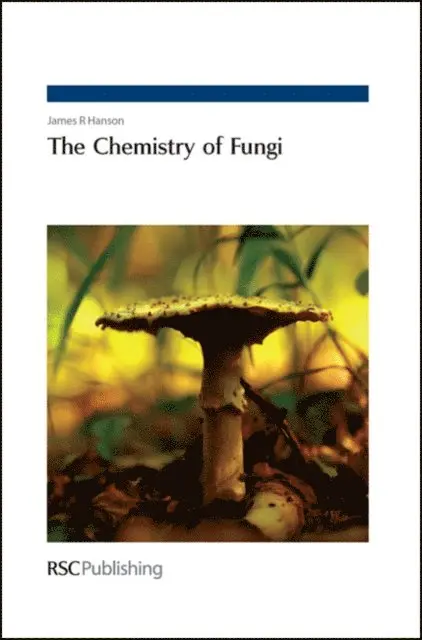
Chemistry of Fungi
978 kr
Läs direkt i Bokus Reader – eller ladda ned till din enhet (PDF kräver ofta zoom och scroll på små skärmar).
Beskrivning
Fungi occupy an important place in the natural world, as non-photosynthetic organisms, they obtain their nutrients from the degradation of organic material. They use many of their secondary metabolites to secure a place in a competitive natural environment and to protect themselves from predation. The diverse structures, biosyntheses and biological activities of fungal metabolites have attracted chemists for many years. Fungi are ubiquitous and their activities affect many aspects of our daily lives whether it be as sources of pharmaceuticals and food or as spoilage organisms and the causes of diseases in plants and man. The chemistry of the fungi involved in these activities has been the subject of considerable study particularly over the last fifty years. Although their ramifications can be large as in the spread of plant diseases, the quantities of the metabolites which could be isolated precluded much chemical work until the advent of spectroscopic methods. Whereas many natural products derived from plants were isolated prior to the 1960s on a scale which permitted extensive chemical degradation, this was rarely the case for fungal metabolites. This book is an introduction to the chemistry of fungal metabolites. The aim is to illustrate within the context of fungal metabolites, the historical progression from chemical to spectroscopic methods of structure elucidation, the development in biosynthetic studies from establishing sequences and mechanisms to chemical enzymology and genetics and the increasing understanding of the biological roles of natural products. The book begins with a historical introduction followed by a description of the general chemical features which contribute to the growth of fungi. There are many thousands of fungal metabolites whose structures are known and the book does not aim to list them all as there are databases to fulfill this role. The book''s aim is to describe some of the more important metabolites classified according to their biosynthetic origin. Biosynthesis provides a unifying feature underlying the diverse structures of fungal metabolites and the chapters covering this area begin with a general outline of the relevant biosynthetic pathway before presenting a detailed description of particular metabolites. Investigations into these biosyntheses have utilized many subtle isotopic labelling experiments and compounds that are fungal pigments and those which are distinctive metabolites of the more conspicuous Basidiomycetes are treated separately. Many fungal metabolites are involved in the interactions of fungi with plants and others are toxic to man and some of these are described in further chapters. Fungi have the ability to transform chemicals in ways which can complement conventional reactions and the use of fungi as reagents forms the subject of the final chapter. This book will be particularly useful to anybody about to embark on a career in chemical microbiology by providing an overall perspective of fungal metabolites as well as an essential reference tool for more general chemists.
Produktinformation
- Utgivningsdatum: 2008-06-24
- Språk: Engelska
- Filformat: PDF
- Kopieringsskydd: LCP
- ISBN: 9781847558329
- Förlag: RSC
Utforska kategorier
Betyg & recensioner
0 recensioner
Inga recensioner tillgängliga.