• Fri frakt över 249 kr
  • •
  • Snabba leveranser
  • •
  • Billiga böcker
Kundservice

Du är på sajten för privatpersoner.

Företag, bibliotek eller offentlig verksamhet?

Du handlar på classic.bokus.com, där alla dina funktioner finns intakta.
Till classic.bokus.com
Bokus logotyp. Gå till startsidan.
  • Erbjudanden
  • Nyheter
  • Student
  • Topplistor
  • Barn & ungdom
  • Bokus Play
  • E-böcker
  • Pocketböcker
  • Spel & pussel

10% rabatt på allt med kod: NYSTART10 →

Sidfot

Mina sidor

    Hjälp

    • Kundservice
    • Vanliga frågor och svar
    • Frakt och leverans
    • Retur vid ångerrätt
    • Reklamera vara
    • Betalning
    • Köpvillkor
    • Allmänna villkor
    • Information om webbplatsens tillgänglighet

    Om Bokus

    • Om oss
    • Pressrum
    • För studenter
    • För företag
    • För bibliotek och offentlig verksamhet
    • För leverantörer
    • Hållbarhet

    Populärt

    • Aktuella erbjudanden
    • Presentkort
    • Studentlitteratur
    • Nya böcker
    • Topplistor
    • Signerade böcker
    • Engelska böcker

    Inspiration

    • Boktips
    • BookTok
    • Populära bokserier
    • Barnbokskaraktärer
    • Populära författare
    Logotyp för Bokus
    Följ oss på Facebook (extern länk)Följ oss på Instagram (extern länk)Följ oss på YouTube (extern länk)Följ oss på TikTok (extern länk)
    bokus @ CookiesAnpassa cookiesIntegritetspolicyKöpvillkor
    Till Citymail hemsida (extern länk)Till Budbee hemsida (extern länk)Till Postnord hemsida (extern länk)Till Schenker hemsida (extern länk)Till Early Bird hemsida (extern länk)Till Walleys hemsida (extern länk)
    1. Samhälle och politik
    2. Samhälle och kultur
    3. Sociala och etiska frågor

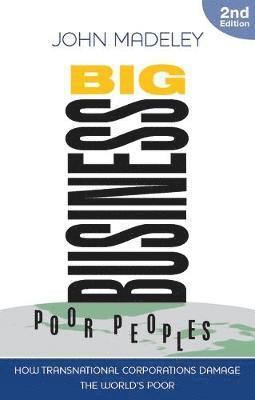
    Big Business, Poor Peoples

    How Transnational Corporations Damage the World's Poor

    AvJohn Madeley

    Häftad, Engelska, 2008

    354 kr

    Beställningsvara. Skickas inom 10-15 vardagar. Fri frakt över 249 kr.

    Fler format och utgåvor

    E-bok

    389 kr

    E-bok

    389 kr

    Beskrivning

    Transnational corporations are one of the most important actors in the global economy, occupying a more powerful position than ever before. In their persistent battle to increase profits, they have increasingly turned to the developing world, a world that holds many attractions for them. But what is their impact on the poor?Now in its second edition, Big Business, Poor Peoples finds that these corporations are damaging the lives of millions of poor people in developing countries. Looking at every sector where transnational corporations are involved, this vital book is packed with detail on how the poor are affected. The book exposes how developing countries’ natural resources are being ceded to TNCs and how governments are unwilling or unable to control them. The author argues that TNCs, answerable to no one but their shareholders, have used their money, size and power to influence international negotiations and taken full advantage of the move towards privatization to influence government policies; sovereignty is passing into corporate hands, and the poor are paying the price. But people are fighting back: citizens, workers, and communities are exposing the corporations and looking for alternatives.The first edition of this path-breaking book put the issue of transnational corporations and the poor firmly on the agenda. This second edition contains significant new and updated material and is an essential read for anyone who wants to know more about the effects of corporate power on the poor.

    Produktinformation

    • Utgivningsdatum:2008-12-15
    • Mått:138 x 216 x 15 mm
    • Vikt:328 g
    • Format:Häftad
    • Språk:Engelska
    • Antal sidor:256
    • Upplaga:2
    • Förlag:Bloomsbury Publishing PLC
    • ISBN:9781848130333

    Utforska kategorier

    • Sociala och etiska frågor inom Samhälle och politik
    • Internationell ekonomi inom Ekonomi och Ledarskap
    • Organisation och ägarskap inom Ekonomi och Ledarskap

    Mer om författaren

    John Madeley is a writer, author of nine books and broadcaster who has specialized in development issues for over thirty years. From 1983 to 1998, he was editor of the renowned magazine International Agricultural Development. A contributor to leading British papers including The Observer and The Financial Times, he has also written for many NGOs, including Christian Aid, the Panos Institute and the Catholic Institute for International Relations.

    Recensioner i media

    'Authoritative and highly readable. Madeley names the names and tells the stories to provide a clear answer to those who cling to the myth that foreign investment, transnational corporations, the IMF, the World Bank and UNDP are an answer to the prayers of the poor. An excellent book that should be read by everyone committed to ending global poverty.' David C. Korten, The People-Centered Development Forum 'At last, a lucid account of how transnational corporations which should be accountable are destroying the lives of the world's poor. Read it, and understand how we can regain control over the powerful forces that are shaping our future.' Barry Coates, World Development Movement 'Readable and persuasive ... a timely and cogent examination of transnational corporations, the engines that drive globalization.' New Internationalist 'A searing indictment of contemporary corporate plunder, this book constructs an airtight case for international regulation of TNCs' Walden Bello 'Millions of people around the world are working for more effective means of holding big business accountable for its human rights impacts. John Madeley's expertly researched and highly readable book shows how necessary and how difficult the task is proving to be.' Miles Litvinoff, Ecumenical Council for Corporate Responsibility

    Innehållsförteckning

    • Preface to second editionPrefaceAcknowledgementsIntroduction: The Corporate Spread1. Why Poor Countries 'Want' the Corporations2. The Agri-corporations: From Production to Trade Seeds3. Agri-commodities Take Their Toll Tobacco4. Health: The Poor Take the Corporate Pill5. Water: The Corporate Tap6. Tourism: The Great Illusion7. Extracting Logs and Fish Forests8. Mining the Poor Culture. The companies9. Manufactured Goods: Poverty amid the Glitz10. Energy: No Force for the Poor11. The Corporate Persuaders12. Tackling the Power: Regulation, Bypass, ActionConclusion