• Fri frakt över 249 kr
  • •
  • Snabba leveranser
  • •
  • Billiga böcker
Kundservice

Du är på sajten för privatpersoner.

Företag, bibliotek eller offentlig verksamhet?

Du handlar på classic.bokus.com, där alla dina funktioner finns intakta.
Till classic.bokus.com
Bokus logotyp. Gå till startsidan.
  • Erbjudanden
  • Nyheter
  • Student
  • Topplistor
  • Barn & ungdom
  • Bokus Play
  • E-böcker
  • Pocketböcker
  • Spel & pussel

10% rabatt på allt med kod: NYSTART10 →

Sidfot

Mina sidor

    Hjälp

    • Kundservice
    • Vanliga frågor och svar
    • Frakt och leverans
    • Retur vid ångerrätt
    • Reklamera vara
    • Betalning
    • Köpvillkor
    • Allmänna villkor
    • Information om webbplatsens tillgänglighet

    Om Bokus

    • Om oss
    • Pressrum
    • För studenter
    • För företag
    • För bibliotek och offentlig verksamhet
    • För leverantörer
    • Hållbarhet

    Populärt

    • Aktuella erbjudanden
    • Presentkort
    • Studentlitteratur
    • Nya böcker
    • Topplistor
    • Signerade böcker
    • Engelska böcker

    Inspiration

    • Boktips
    • BookTok
    • Populära bokserier
    • Barnbokskaraktärer
    • Populära författare
    Logotyp för Bokus
    Följ oss på Facebook (extern länk)Följ oss på Instagram (extern länk)Följ oss på YouTube (extern länk)Följ oss på TikTok (extern länk)
    bokus @ CookiesAnpassa cookiesIntegritetspolicyKöpvillkor
    Till Citymail hemsida (extern länk)Till Budbee hemsida (extern länk)Till Postnord hemsida (extern länk)Till Schenker hemsida (extern länk)Till Early Bird hemsida (extern länk)Till Walleys hemsida (extern länk)
    1. Psykologi och pedagogik
    2. Psykologi

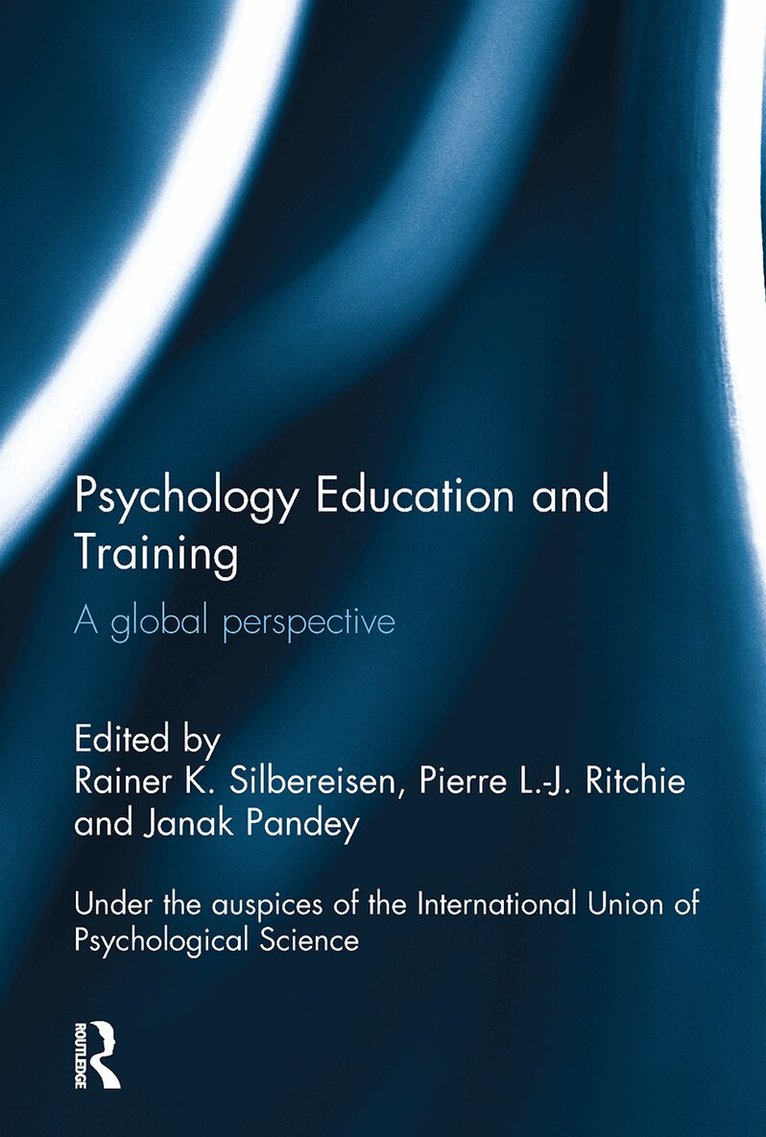
    Psychology Education and Training

    A global perspective

    AvRainer Silbereisen,Pierre Ritchie

    Häftad, Engelska, 2017

    498 kr

    Beställningsvara. Skickas inom 10-15 vardagar. Fri frakt över 249 kr.

    Beskrivning

    Much of the psychological research in the last century has been conducted in the global North West; hence, many prevailing theories and methodologies reflect the philosophical framework and shared cultural knowledge of this region. Other world views and cultural contexts have, as yet, not had the same opportunity to develop scientific insights that come to the attention of global audiences. Psychology Education and Training is the first truly international effort to generate a framework for common standards in psychological education and training across the globe.Psychologists have long studied human beings in their socio-cultural context. New challenges such as globalisation and the relationship of the brain and behavior require that education and training keep pace with these rapidly evolving developments. The chapters in this book were generated by an international conference which resulted in the Dornburg Accord. While anchored in higher education, the focus is on the generative and translational psychological science needed to fulfill psychology’s responsibility to society. Psychology Education and Training is the first book of its kind to cover both historic strengths and the requirements of emerging fields. The book deals with balancing the universalities and cultural specificities of psychological processes, the adjustments to academic curricula required to support national needs, as well as the credentials and regulations required to assure the quality of psychological services.Psychology Education and Training is unique in providing initial data and concurrent assessment of various components of education and training in psychology across the globe. The book is a must for faculty members, advanced students of psychology and policy-makers who are interested in the issues that shape their societies.

    Produktinformation

    • Utgivningsdatum:2017-02-07
    • Mått:156 x 234 x 17 mm
    • Vikt:520 g
    • Format:Häftad
    • Språk:Engelska
    • Antal sidor:278
    • Förlag:Taylor & Francis Ltd
    • ISBN:9781848724273

    Utforska kategorier

    • Psykologi inom Psykologi och pedagogik
    • Undervisning i specifika ämnen inom Psykologi och pedagogik

    Mer om författaren

    Rainer K. Silbereisen is Research Professor of Developmental Psychology and Director of the Center for Applied Developmental Science at the University of Jena, Germany. He is Past-President of the International Union of Psychological Science (2012-2016). His main research interests are in human lifespan development from a biopsychosocial perspective and in the role of social and cultural change in positive and maladaptive human development.

    Recensioner i media

    "…I strongly recommend this book to anyone involved with psychology organizations: The conversation has started. It is too much to expect the answers to emerge immediately, but the questions are beginning to crystalize. Because the book focuses on the questions rather than the answers, it might be fairest to say that this work’s value is in setting the stage and the context for further discussion...All of the chapters are interesting and cover information about educational curricula, training requirements for practice, and quality control by the professional bodies or by state educational audits. Thus, for anyone involved in psychology’s future as a globally shared enterprise there is much to stimulate our working together."- Ian M.Evans, PsycCRITQUES, October 27, 2014, Vol.59, No.43, Article 4

    Innehållsförteckning

    • 1: Introduction. Rainer K. Silbereisen and Pierre L.-J. Ritchie, Psychology Education and Training: A Global Perspective. 2: Setting the Stage. 1. Martin Pinquart and Allan Bernardo, Results of the IUPsyS Survey on Psychology Education and Training Worldwide. Janak Pandey, Commentary on ‘Setting the Stage’. 3: International Framework for Psychology Education and Training (PET). 2. Ingrid Lunt, International Frameworks for Psychology and Training: A European Perspective. 3. Merry Bullock, International Frameworks for Psychology Education and Training: Overarching issues and principles. Rainer K. Silbereisen, Commentary on ‘International Framework for Psychology Education and Training (PET)’. 4: Implications of emerging areas for Psychology Education and Training. 4. Rocio Fernandez-Ballesteros, Implications of emerging areas for Psychology Education and Training: The case of Geropsychology. 5. Wolfgang Miltner, Implications of emerging areas for Psychology Education and Training: The case of Neuroscience, Psychophysiology, and Biological Psychology. Andreas Beelmann, Commentary on ‘Implications of emerging areas for Psychology Education and Training’. 5: Bridging Scientific Universality and Cultural Specificity in PET. 6. Oscar Barbarin, Psychology Education and Training: A perspective from the United States of America. 7. Kwang-Kuo Hwang, Psychology Education and Training: A Chinese Perspective. 8. Bame Nsamenang, Psychology Education and Training: An African Perspective. Pascal Huguet, Commentary on ‘Bridging Scientific Universality and Cultural Specificity in PET’. 6: Balancing Basic and Applied Research with National Needs in PET. 9. Lawrence Aber, Optimizing the relationship between basic and applied research for Psychology Education and Training. 10. Cheryl De La Rey, Basic and Applied Research in Psychology Education and Training: South Africa as a Case Study. Buxin Han, Commentary on ‘Balancing Basic and Applied Research with National Needs in PET’. 7: Quality Control and PET. 11. Victor Karandashev, Quality Control in Psychology Education and Training (PET): Views from around the World. 12. Judy E. Hall, Models for Quality Control in Psychology Education and Training: A North American Perspective. Ava D. Thompson, Commentary on ‘Quality Control and PET’: A Caribbean Perspective. 8: Roles and Responsibilities of International Psychology Organizations for PET. 13. José Peiro, Roles and Responsibilities of International Psychology Organizations in Improving Psychology Education and Training. 14. Regina-Maria Maluf, Improving Psychology Education and Training in Latin America: An overview. Tea Gogotishvili, Commentary on ‘Roles and Responsibilities of International Psychology Organizations for PET’.