• Fri frakt över 249 kr
  • •
  • Snabba leveranser
  • •
  • Billiga böcker
Kundservice

Du är på sajten för privatpersoner.

Företag, bibliotek eller offentlig verksamhet?

Du handlar på classic.bokus.com, där alla dina funktioner finns intakta.
Till classic.bokus.com
Bokus logotyp. Gå till startsidan.
  • Erbjudanden
  • Nyheter
  • Student
  • Topplistor
  • Barn & ungdom
  • Bokus Play
  • E-böcker
  • Pocketböcker
  • Spel & pussel

10% rabatt på allt med kod: NYSTART10 →

Sidfot

Mina sidor

    Hjälp

    • Kundservice
    • Vanliga frågor och svar
    • Frakt och leverans
    • Retur vid ångerrätt
    • Reklamera vara
    • Betalning
    • Köpvillkor
    • Allmänna villkor
    • Information om webbplatsens tillgänglighet

    Om Bokus

    • Om oss
    • Pressrum
    • För studenter
    • För företag
    • För bibliotek och offentlig verksamhet
    • För leverantörer
    • Hållbarhet

    Populärt

    • Aktuella erbjudanden
    • Presentkort
    • Studentlitteratur
    • Nya böcker
    • Topplistor
    • Signerade böcker
    • Engelska böcker

    Inspiration

    • Boktips
    • BookTok
    • Populära bokserier
    • Barnbokskaraktärer
    • Populära författare
    Logotyp för Bokus
    Följ oss på Facebook (extern länk)Följ oss på Instagram (extern länk)Följ oss på YouTube (extern länk)Följ oss på TikTok (extern länk)
    bokus @ CookiesAnpassa cookiesIntegritetspolicyKöpvillkor
    Till Citymail hemsida (extern länk)Till Budbee hemsida (extern länk)Till Postnord hemsida (extern länk)Till Schenker hemsida (extern länk)Till Early Bird hemsida (extern länk)Till Walleys hemsida (extern länk)
    1. Historia och arkeologi
    2. Historia
    3. Mellanösterns historia

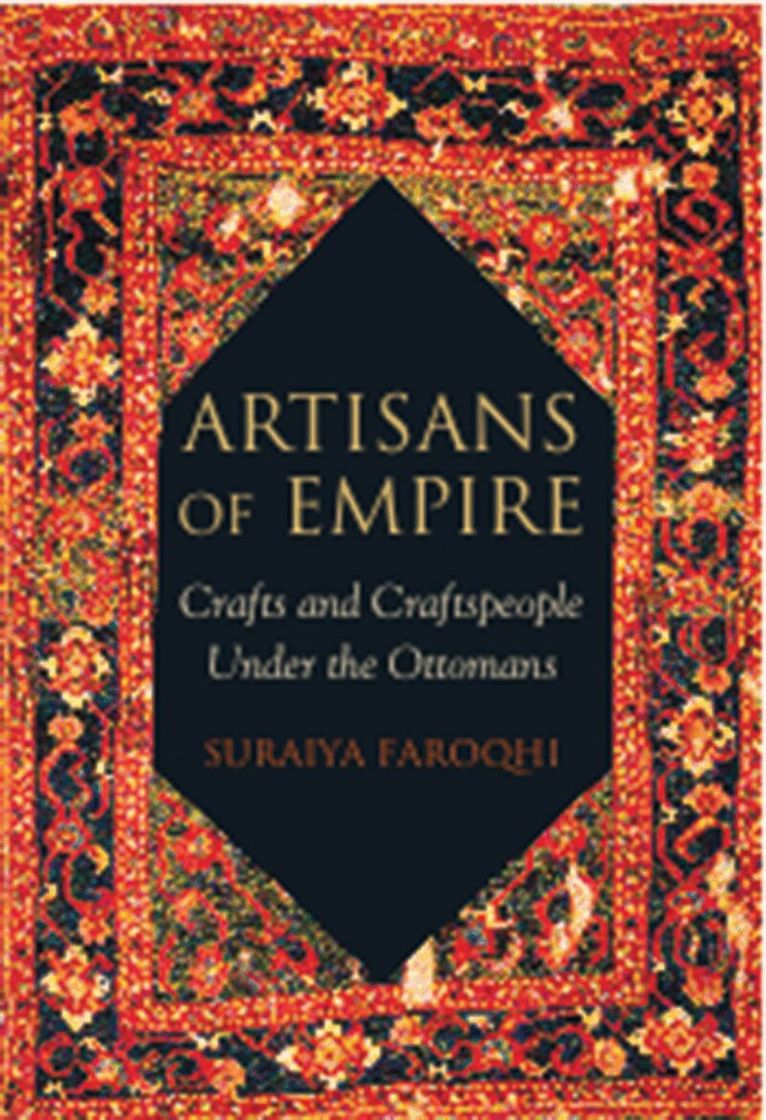
    Artisans of Empire

    Crafts and Craftspeople Under the Ottomans

    AvSuraiya Faroqhi

    Häftad, Engelska, 2011

    393 kr

    Beställningsvara. Skickas inom 10-15 vardagar. Fri frakt över 249 kr.

    Fler format och utgåvor

    E-bok

    420 kr

    E-bok

    420 kr

    Beskrivning

    The manufacture and trade in crafted goods and the men and women who were involved in this industry - including metalworkers, ceramicists, silk weavers, fez-makers, blacksmiths and even barbers - lay at the social as well as the economic heart of the Ottoman empire. This comprehensive history, by leading Ottoman historian Suraiya Faroqhi, presents the definitive view of the subject, from the production and distribution of different craft objects to their use and enjoyment within the community. Faroqhi sheds new light on all aspects of artisan life, setting the concerns of individual craftsmen within the context of the broader cultural themes that connect them to the wider world. Combining social, cultural, economic, religious and historical insights, this will be the authoritative work on Ottoman artisans and guilds for many years to come.

    Produktinformation

    • Utgivningsdatum:2011-10-17
    • Mått:150 x 232 x 20 mm
    • Vikt:460 g
    • Format:Häftad
    • Språk:Engelska
    • Antal sidor:304
    • Förlag:Bloomsbury Publishing PLC
    • ISBN:9781848859609

    Utforska kategorier

    • Mellanösterns historia inom Historia och arkeologi
    • Socialhistoria och kulturhistoria inom Historia och arkeologi
    • Kulturvetenskap inom Samhälle och politik

    Mer om författaren

    Suraiya Faroqhi is Professor of History at Bilgi University, Istanbul, and the author of The Ottoman Empire and the World Around It, Pilgrims and Sultans and Subjects of the Sultan (all published by I.B. Tauris).

    Recensioner i media

    "'A display of unrivalled knowledge of the sources by one of the leading historians of the Ottoman Empire.' (Erik J. Zurcher, Professor of Turkish Studies at the University of Leiden) 'A real pleasure...the main line of the argument is entirely convincing. Artisans of Emipre is learned and informative, written with evident mastery of lots of empirical material.' (Marcel van der Linden, Research Director of the International Institute of Social History, University of Amsterdam)"

    Innehållsförteckning

    • AcknowledgementsIntroductionBefore the 1670sBefore and after 1500: how artisan organization may have emerged in the Ottoman lands. 3. Services to the state. 4. Guildsmen of Istanbul and Cairo. 5. Provincial craftspeople and merchant networks. From the 1670s to the 1850s6. Changes in Istanbul guilds. 7. Cairo: from military penetration of artisan guilds to the state monopolies of Mehmed Ali Pa?a. 8. The political role of craftsmen. 9. Provincial craftsmen: how guildsmen adapted to new circumstances. After 185010. From 1850 to 1914: a different state, a different economy and the disappearance of the guilds. 11. Conclusion. A note on transliteration