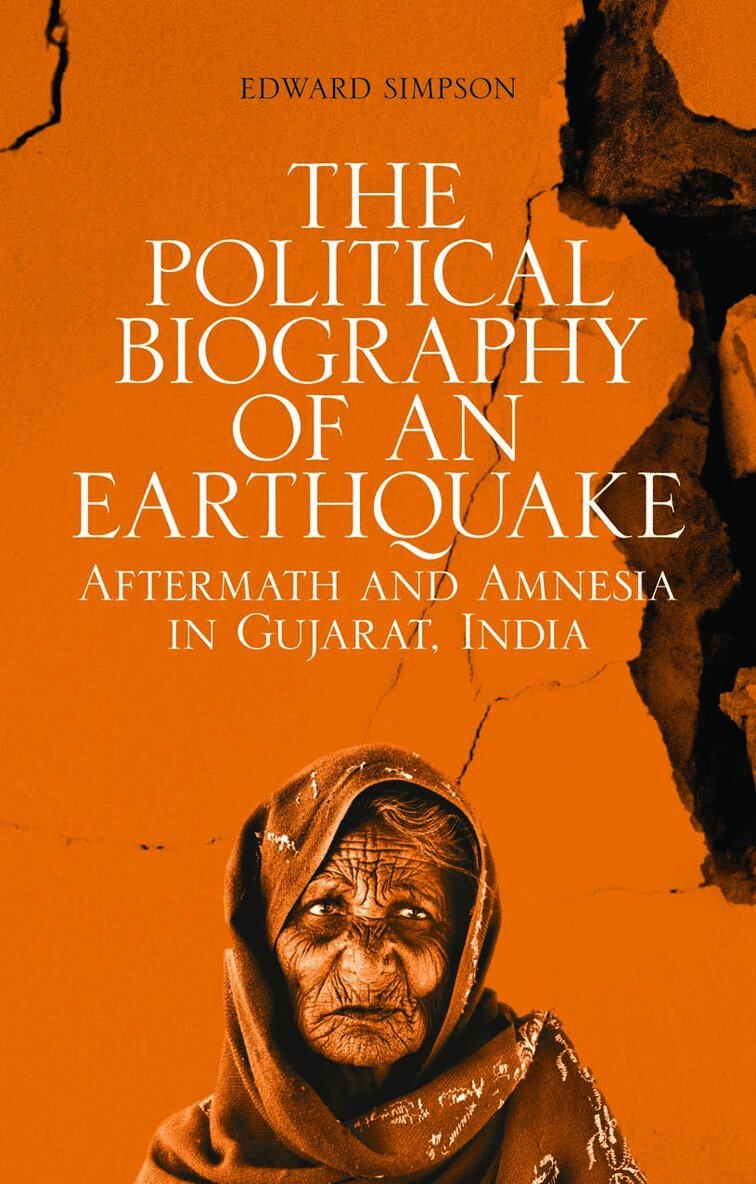
Häftad, Engelska, 2014
Political Biography of an Earthquake
Aftermath and Amnesia in Gujarat, India
Del i serien Society and History in the Indian Ocean
331 kr
Beställningsvara. Skickas inom 7-10 vardagar. Fri frakt över 249 kr.
Beskrivning
Produktinformation
- Utgivningsdatum: 2014-02-07
- Mått: 138 x 216 x 22 mm
- Vikt: 564 g
- Format: Häftad
- Språk: Engelska
- Serie: Society and History in the Indian Ocean
- Antal sidor: 288
- Förlag: C Hurst & Co Publishers Ltd
- ISBN: 9781849042871
Utforska kategorier
Mer om författaren
Edward Simpson is Senior Lecturer in Social Anthropology at the School of Oriental and African Studies, University of London. He co-edited Struggling With History: Islam and Cosmopolitanism in the Western Indian Ocean, also published by Hurst.
Recensioner i media
'In his Political Biography of an Earthquake - Edward Simpson tries to pull back from the immediate, ephemeral spotlight so typical of journalists, politicians and international humanitarian agencies. - Without reverting to excessive theory, Simpson explores the history of the most affected district of Kutch and investigates the consequences of the relief efforts of 2001. In these efforts, he sees - for good or evil - an underlying neoliberal capitalist agenda, with industrialisation, immigration and environmental degradation accelerated if not caused by the reconstruction efforts. Simpson provocatively suggests the need for an alternative view of "humanitarians" as trespassers, "their actions no longer - so routinely sensible or so morally untouchable". - his many years of research in the region provide important material for reflection beyond the usual focus on local government failure and the need to accelerate foreign help after disasters.'
Betyg & recensioner
0 recensioner
Inga recensioner tillgängliga.