• Fri frakt över 249 kr
  • •
  • Snabba leveranser
  • •
  • Billiga böcker
Kundservice

Du är på sajten för privatpersoner.

Företag, bibliotek eller offentlig verksamhet?

Du handlar på classic.bokus.com, där alla dina funktioner finns intakta.
Till classic.bokus.com
Bokus logotyp. Gå till startsidan.
  • Erbjudanden
  • Nyheter
  • Student
  • Topplistor
  • Barn & ungdom
  • Bokus Play
  • E-böcker
  • Pocketböcker
  • Spel & pussel

10% rabatt på allt med kod NYSTART10 →

Sidfot

Mina sidor

    Hjälp

    • Kundservice
    • Vanliga frågor och svar
    • Frakt och leverans
    • Retur vid ångerrätt
    • Reklamera vara
    • Betalning
    • Köpvillkor
    • Allmänna villkor
    • Information om webbplatsens tillgänglighet

    Om Bokus

    • Om oss
    • Pressrum
    • För studenter
    • För företag
    • För bibliotek och offentlig verksamhet
    • För leverantörer
    • Hållbarhet

    Populärt

    • Aktuella erbjudanden
    • Presentkort
    • Studentlitteratur
    • Nya böcker
    • Topplistor
    • Signerade böcker
    • Engelska böcker

    Inspiration

    • Boktips
    • BookTok
    • Populära bokserier
    • Barnbokskaraktärer
    • Populära författare
    Logotyp för Bokus
    Följ oss på Facebook (extern länk)Följ oss på Instagram (extern länk)Följ oss på YouTube (extern länk)Följ oss på TikTok (extern länk)
    bokus @ CookiesAnpassa cookiesIntegritetspolicyKöpvillkor
    Till Citymail hemsida (extern länk)Till Budbee hemsida (extern länk)Till Postnord hemsida (extern länk)Till Schenker hemsida (extern länk)Till Early Bird hemsida (extern länk)Till Walleys hemsida (extern länk)
    1. Naturvetenskap och teknik
    2. Teknik och industri
    3. Elektronik och kommunikationer

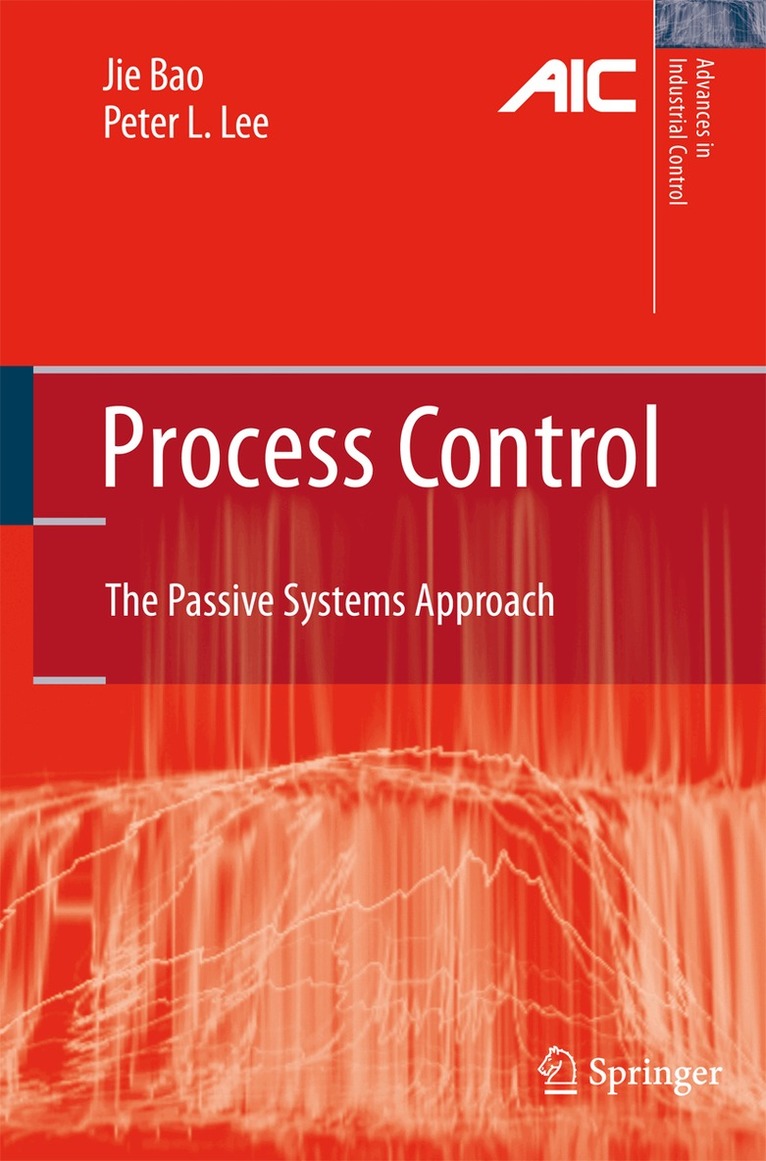
    Process Control

    The Passive Systems Approach

    AvJie Bao,Peter L. Lee

    Häftad, Engelska, 2010

    Del i serien Advances in Industrial Control

    1 519 kr

    Beställningsvara. Skickas inom 10-15 vardagar. Fri frakt över 249 kr.

    Fler format och utgåvor

    Inbunden

    1 841 kr

    Beskrivning

    Passivity and associated stability conditions form one of the cornerstones in control theory and have begun to be applied in process control. The passivity framework can be used in process input-output controllability analysis as well as control design. Here, the concept of passive systems is also linked to process thermodynamics to provide engineers with insights into the physical bases of results.In this book, passivity-based developments in the areas of robust process control, decentralized control, fault tolerant control, process controllability analysis and nonlinear process control are addressed systematically for the first time. Written for the industrial, engineering and academic communities, the emphasis is placed on results that enhance insight and intuition. Application issues are illustrated by case studies in all the main chapters. MATLAB® routines for all examples and a library of functions that implement the methods developed in "Process Control" can be downloaded from springer.com.

    Produktinformation

    • Utgivningsdatum:2010-10-21
    • Mått:155 x 235 x 16 mm
    • Vikt:423 g
    • Format:Häftad
    • Språk:Engelska
    • Serie:Advances in Industrial Control
    • Antal sidor:253
    • Förlag:Springer London Ltd
    • ISBN:9781849966696

    Utforska kategorier

    • Elektronik och kommunikationer inom Naturvetenskap och teknik
    • Referensverk och tvärvetenskap inom Samhälle och politik
    • Tillverkningsteknik inom Naturvetenskap och teknik

    Mer om författaren

    Jie Bao holds the position of Senior Lecturer; he has industrial experience in China with the Control and Measurement Division of ZUSTD Corp. He is a reviewer for several journals including: Journal of Process Control, Journal of Membrane Science, IEEE Automatic Control and ASME Journal of Dynamic Systems, Measurement and Control. In the last seven years, he has published 16 papers in archival journals. Peter Lee is currently the Executive Dean of Engineering, Science and Computing at Curtin University of Technology. Previously he held senior positions at Murdoch University and the University of Queensland. He also worked with ICI Australia for a number of years. He has worked in Process Control for the last 25 years, both in academe and industry. An author of 3 books and over 220 papers, he also has an active consultancy practice in the feasibility, development and application of process control methods. He is also a consultant to the United Nations Industry Development Organisation. He was awarded the Shedden Pacific Medal for Excellence for contributions to Chemical Engineering in 1993, The Institution of Engineers Australia Excellence Award in 1998 for the design of laboratory facilities at Rockingham and the Centenary Medal for services to Australian society in 2003. Peter was educated in Melbourne and has degrees from RMIT (BE) and Monash University (PhD). He is a Fellow of the Institution of Engineers Australia and a Fellow of the Institution of Chemical Engineers, London. Peter Lee is the editor of the 1993 Springer title: Lee (ed.), Nonlinear Process Control (3-540-19856-3, 1993, 264 pp HC)

    Recensioner i media

    From the reviews: "Process Control: The Passive Systems Approach provides material that is potentially valuable to students and researchers interested in learning the fundamentals of passivity-based methods and their application to chemical process control and thermodynamics. ... The main strength of the book is that it shows that passivity can provide a formalism for studying process control. Relevant results are reviewed, and interesting research questions are posed. ... Overall, the book is useful as a reference and as a source of new research ideas." (B. Erik Ydstie, IEEE Control Systems Magazine, Vol. 30, February, 2010)

    Innehållsförteckning

    • Dissipativity and Passivity.- Passivity-based Robust Control.- Passivity-based Decentralized Control.- Passivity-based Fault-tolerant Control.- Process Controllability Analysis Based on Passivity.- Process Control Based on Physically Inherent Passivity.