• Fri frakt över 249 kr
  • •
  • Snabba leveranser
  • •
  • Billiga böcker
Kundservice

Du är på sajten för privatpersoner.

Företag, bibliotek eller offentlig verksamhet?

Du handlar på classic.bokus.com, där alla dina funktioner finns intakta.
Till classic.bokus.com
Bokus logotyp. Gå till startsidan.
  • Erbjudanden
  • Student
  • Topplistor
  • Barn & ungdom
  • Bokus Play
  • E-böcker
  • Ljudböcker
  • Pocketböcker
  • Spel & pussel

Upp till 25% på utvalda nyheter →

Sidfot

Mina sidor

    Hjälp

    • Kundservice
    • Vanliga frågor och svar
    • Frakt och leverans
    • Retur vid ångerrätt
    • Reklamera vara
    • Betalning
    • Köpvillkor
    • Allmänna villkor
    • Information om webbplatsens tillgänglighet

    Om Bokus

    • Om oss
    • Pressrum
    • För studenter
    • För företag
    • För bibliotek och offentlig verksamhet
    • För leverantörer
    • Hållbarhet

    Populärt

    • Aktuella erbjudanden
    • Presentkort
    • Studentlitteratur
    • Nya böcker
    • Topplistor
    • Signerade böcker
    • Engelska böcker

    Inspiration

    • Boktips
    • BookTok
    • Populära bokserier
    • Barnbokskaraktärer
    • Populära författare
    Logotyp för Bokus
    Följ oss på Facebook (extern länk)Följ oss på Instagram (extern länk)Följ oss på YouTube (extern länk)Följ oss på TikTok (extern länk)
    bokus @ CookiesAnpassa cookiesIntegritetspolicyKöpvillkor
    Till Citymail hemsida (extern länk)Till Budbee hemsida (extern länk)Till Postnord hemsida (extern länk)Till Schenker hemsida (extern länk)Till Early Bird hemsida (extern länk)Till Walleys hemsida (extern länk)
    1. Data och IT
    2. Systemvetenskap och AI

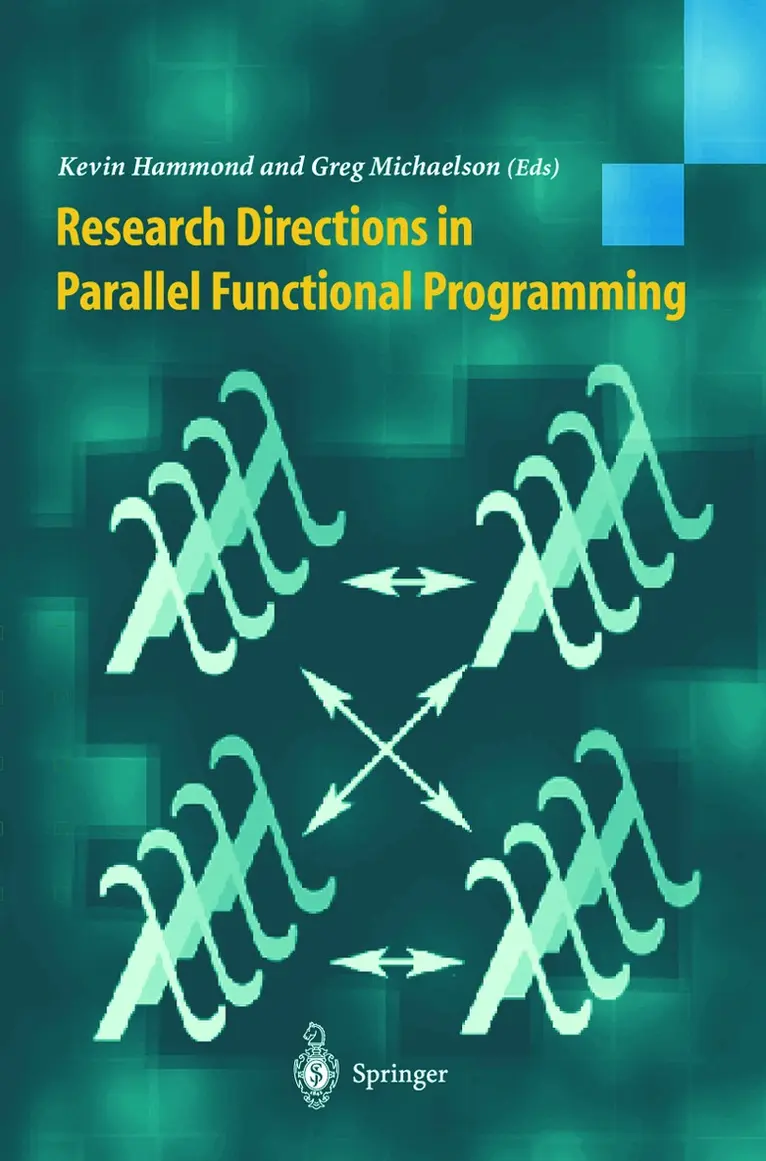
    Research Directions in Parallel Functional Programming

    AvKevin Hammond,Greg Michaelson

    Häftad, Engelska, 1999

    1 119 kr

    Beställningsvara. Skickas inom 10-15 vardagar. Fri frakt över 249 kr.

    Beskrivning

    Programming is hard. Building a large program is like constructing a steam locomotive through a hole the size of a postage stamp. An artefact that is the fruit of hundreds of person-years is only ever seen by anyone through a lOO-line window. In some ways it is astonishing that such large systems work at all. But parallel programming is much, much harder. There are so many more things to go wrong. Debugging is a nightmare. A bug that shows up on one run may never happen when you are looking for it - but unfailingly returns as soon as your attention moves elsewhere. A large fraction of the program's code can be made up of marshalling and coordination algorithms. The core application can easily be obscured by a maze of plumbing. Functional programming is a radical, elegant, high-level attack on the programming problem. Radical, because it dramatically eschews side-effects; elegant, because of its close connection with mathematics; high-level, be­ cause you can say a lot in one line. But functional programming is definitely not (yet) mainstream. That's the trouble with radical approaches: it's hard for them to break through and become mainstream. But that doesn't make functional programming any less fun, and it has turned out to be a won­ derful laboratory for rich type systems, automatic garbage collection, object models, and other stuff that has made the jump into the mainstream.

    Produktinformation

    • Utgivningsdatum:1999-11-01
    • Mått:155 x 235 x 29 mm
    • Vikt:785 g
    • Format:Häftad
    • Språk:Engelska
    • Antal sidor:496
    • Förlag:Springer London Ltd
    • ISBN:9781852330927

    Utforska kategorier

    • Systemvetenskap och AI inom Data och IT
    • Programmeringsböcker inom Data och IT

    Innehållsförteckning

    • I. Fundamentals.- 1. Introduction.- 2. Foundations.- 3. Programming Language Constructs.- 4. Proof.- 5. Realisations for Strict Languages.- 6. Realisations for Non-Strict Languages.- II. Current Research Areas.- 7. Data Parallelism.- 8. Cost Modelling.- 9. Shaping Distributions.- 10. Performance Monitoring.- 11. Memory Performance of Dataflow Programs.- 12. Portability of Performance in the BSP Model.- 13. Algorithmic Skeletons.- 14. Coordination Languages.- 15. Parallel and Distributed Programming in Concurrent Clean.- 16. Functional Process Modelling.- 17. Validating Programs in Concurrent ML.- 18. Explicit Parallelism.- III. Conclusion.- 19. Large Scale Functional Applications.- 20. Summary.