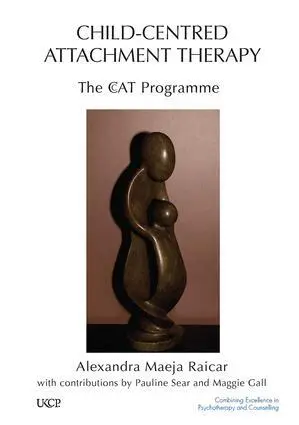
Häftad, Engelska, 2009
Child-Centred Attachment Therapy
The CcAT Programme
Av Maggie Gall, Alexandra Maeja Raicar, Pauline Sear
Del i serien The United Kingdom Council for Psychotherapy Series
436 kr
Beställningsvara. Skickas inom 10-15 vardagar. Fri frakt över 249 kr.
Fler format och utgåvor
Beskrivning
Produktinformation
- Utgivningsdatum: 2009-12-31
- Mått: 147 x 230 x 14 mm
- Vikt: 354 g
- Format: Häftad
- Språk: Engelska
- Serie: The United Kingdom Council for Psychotherapy Series
- Antal sidor: 232
- Förlag: Taylor & Francis Ltd
- ISBN: 9781855755055
Utforska kategorier
Mer om författaren
Maeja Raicar is a UKCP registered psychoanalytic psychotherapist, parent/infant psychotherapist, life coach, NLP and EFT practitioner. She has a CQSW, B.A. (Hons.) degree in English and a M.Sc. in the Sociology of Health and Illness. Her dissertation on her social work experience of adoption was published under the title of 'Teenage Pregnancy: the social making and unmaking of mothers' (1984, Birmingham, Pepar Publications). She has a private therapy practice and works part-time at the Post-Adoption Centre, London.
Recensioner i media
'CcAT is an elegant blend of art and science - the art of the family therapist, and the science of attachment research. Maeja Raicar and colleagues bring a clarity and freshness to working with very troubled children in foster or adoptive families.'- Sir Richard Bowlby'Maeja and her colleagues have written about their learning from The CcAT Programme in an engaging way, interweaving stories with theoretical material. Quite complex ideas from attachment theory and newer research are presented clearly, with a brief and useful explanation of the terminology used. CcAT offers a useful model of attachment work that can help to safeguard children: a multi-disciplinary team approach that emphasises the importance of being able to reflect honestly and respectfully with colleagues on the risks involved and effectiveness of the therapeutic work.'- Dr Vivien Nice, Lecturer in Social Work, University of East Anglia 'This book is a must for anyone working with children and families where broken trust and disrupted attachments make developing trusting and satisfying relationships almost impossible. The book interweaves passion and empathy with comprehensive and up to date theoretical knowledge and skills that make for a very accessible and inclusive holistic model for any one working in this field. I found the level of sensitivity, insight and empathy that the writers had for their clients refreshing and inspiring. I thoroughly recommend it!'- Rosie Ingham, Manager, Time Out Young People's Centre - Solihull NSPCC Counselling and Advocacy Centre for Children and Young People'The passion and humility of the author and contributors with their willingness to continue to learn is impressive, as is the wealth of material they have presented. The book's construction of this holistic therapy, with its excellent explanatory diagrams and interwoven appropriate case histories, also makes accessible reading. Practical and helpful appendices complete the book.'- Jenny Bloomer, Counselling Children and Young PeopleContentsThe Long Term Impact of Attachment Difficulties on FamiliesBackground to the Development of CcATFrom Theory to Practice: CcAT as a 'working model'Phase 2 of the CcAT Programme - 1996Phase 3 of the CcAT Programme - 1997 to 2007Re-evaluating CcATCcAT therapists' learning; users' perspectives.A future for CcAT: spreading the word amongst professionalsOverall learning from CcAT: who can benefit
Betyg & recensioner
0 recensioner
Inga recensioner tillgängliga.