• Fri frakt över 249 kr
  • •
  • Snabba leveranser
  • •
  • Billiga böcker
Kundservice

Du är på sajten för privatpersoner.

Företag, bibliotek eller offentlig verksamhet?

Du handlar på classic.bokus.com, där alla dina funktioner finns intakta.
Till classic.bokus.com
Bokus logotyp. Gå till startsidan.
  • Erbjudanden
  • Nyheter
  • Student
  • Topplistor
  • Barn & ungdom
  • Bokus Play
  • E-böcker
  • Pocketböcker
  • Spel & pussel

10% rabatt på allt med kod: NYSTART10 →

Sidfot

Mina sidor

    Hjälp

    • Kundservice
    • Vanliga frågor och svar
    • Frakt och leverans
    • Retur vid ångerrätt
    • Reklamera vara
    • Betalning
    • Köpvillkor
    • Allmänna villkor
    • Information om webbplatsens tillgänglighet

    Om Bokus

    • Om oss
    • Pressrum
    • För studenter
    • För företag
    • För bibliotek och offentlig verksamhet
    • För leverantörer
    • Hållbarhet

    Populärt

    • Aktuella erbjudanden
    • Presentkort
    • Studentlitteratur
    • Nya böcker
    • Topplistor
    • Signerade böcker
    • Engelska böcker

    Inspiration

    • Boktips
    • BookTok
    • Populära bokserier
    • Barnbokskaraktärer
    • Populära författare
    Logotyp för Bokus
    Följ oss på Facebook (extern länk)Följ oss på Instagram (extern länk)Följ oss på YouTube (extern länk)Följ oss på TikTok (extern länk)
    bokus @ CookiesAnpassa cookiesIntegritetspolicyKöpvillkor
    Till Citymail hemsida (extern länk)Till Budbee hemsida (extern länk)Till Postnord hemsida (extern länk)Till Schenker hemsida (extern länk)Till Early Bird hemsida (extern länk)Till Walleys hemsida (extern länk)
    1. Samhälle och politik
    2. Samhälle och kultur
    3. Kultur och medier
    4. Referensverk och tvärvetenskap

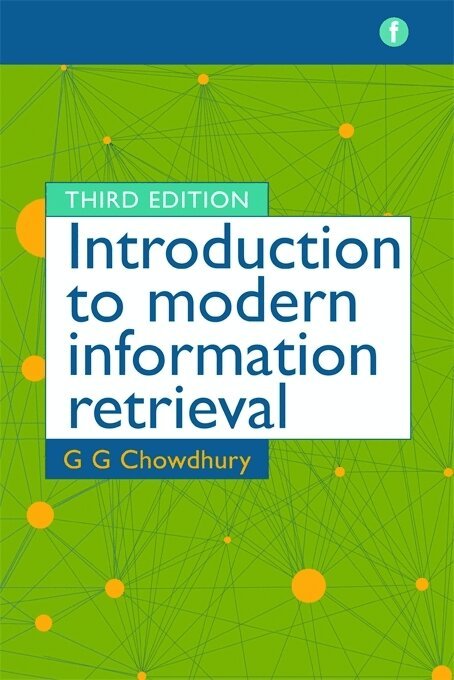
    Introduction to Modern Information Retrieval

    AvG. G. Chowdhury

    Häftad, Engelska, 2010

    1 358 kr

    Beställningsvara. Skickas inom 11-20 vardagar. Fri frakt över 249 kr.

    Fler format och utgåvor

    Inbunden

    2 709 kr

    Beskrivning

    An information retrieval (IR) system is designed to analyse, process and store sources of information and retrieve those that match a particular user's requirements. A bewildering range of techniques is now available to the information professional attempting to successfully retrieve information. It is recognized that today's information professionals need to concentrate their efforts on learning the techniques of computerized IR. However, it is this book's contention that it also benefits them to learn the theory, techniques and tools that constitute the traditional approaches to the organization and processing of information. In fact much of this knowledge may still be applicable in the storage and retrieval of electronic information in digital library environments. The fully revised third edition of this highly regarded textbook has been thoroughly updated to incorporate major changes in this rapidly expanding field since the second edition in 2004, and a complete new chapter on citation indexing has been added. Unique in its scope, the book covers the whole spectrum of information storage and retrieval, including: users of IR and IR options; database technology; bibliographic formats; cataloguing and metadata; subject analysis and representation; automatic indexing and file organization; vocabulary control; abstracts and indexing; searching and retrieval; user-centred models of IR and user interfaces; evaluation of IR systems and evaluation experiments; online and CD-ROM IR; multimedia IR; hypertext and mark-up languages; web IR; intelligent IR; natural language processing and its applications in IR; citation analysis and IR; IR in digital libraries; and trends in IR research. Illustrated with many examples and comprehensively referenced for an international audience, this is an indispensable textbook for students of library and information studies. It is also an invaluable aid for information practitioners wishing to brush up on their skills and keep up to date with the latest techniques.

    Produktinformation

    • Utgivningsdatum:2010-06-20
    • Mått:159 x 234 x 28 mm
    • Vikt:342 g
    • Format:Häftad
    • Språk:Engelska
    • Antal sidor:528
    • Upplaga:3
    • Förlag:Facet Publishing
    • ISBN:9781856046947

    Utforska kategorier

    • Referensverk och tvärvetenskap inom Samhälle och politik
    • Databaser inom Data och IT

    Mer om författaren

    Professor Gobinda Chowdhury BSc Hons, MSc, PhD, FCLIP is Professor in Information Science at iSchool@northumbria, and Head of the Department of Mathematics and Information Sciences at Northumbria University. Before joining Northumbria University he was a Professor and Director of the Centre for Information and Knowledge Management at the University of Technology Sydney, Australia. For over 25 years he has worked as an academic and researcher in information science in different parts of the world including Asia, Africa, Europe and Australia. For the past few years he has been actively involved in the iSchools activities. Professor Chowdhury has written or edited 15 books and over 150 research papers.

    Recensioner i media

    "The full gamut of information is covered … The text will be of great use to information practitioners to review their IR knowledge, and bring it up-to-date in many areas."

    Innehållsförteckning

    • 1. Basic concepts of information retrieval systemsIntroduction Features of an information retrieval systemElements of an information retrieval systemKinds of information retrieval systems Design issuesDiscussionReferences 2. Database technology Introduction Data The database Kinds of databases Database technology The development of databases in an information retrieval environment Discussion References 3. Bibliographic formats Introduction Bibliographic records ISO 2709: Format for bibliographic information interchange MARC format UNIMARC format The Common Communication Format Discussion References 4. Cataloguing and metadata Introduction Cataloguing Metadata Discussion References 5. Subject analysis and representation Introduction Classification Types of bibliographic classification schemes Major library classification schemes Classification of electronic resources Subject analysis Manual indexing Theory of indexing Discussion References 6. Automatic indexing and file organization Introduction The process of indexing Automatic classification Index file organization Inverted file Sequential access Alternative text retrieval structures Discussion References 7. Vocabulary control Introduction Controlled vs natural indexing Vocabulary control tools Thesauri Criteria for evaluating a thesaurus Use of thesauri in online information retrieval Discussion References 8. Abstracts and abstracting Introduction Types of abstract Qualities of abstracts Uses of abstracts The art of abstracting Automatic abstracting Recent works on text summarization Discussion References 9. Searching and retrievalIntroduction The search strategy and its prerequisites The pre-search interview The searching process Retrieval models Alternative information retrieval models Search facilities offered by most text retrieval systems Discussion References 10. Users of information retrieval Introduction Users and their nature Types of information needs Information needs in different areas of activity Information-seeking behaviour of users What we need to know about users User studies Possible sources of information about users Discussion References 11. User-centred models of information retrievalIntroduction Information seeking Human information behaviour models User-centred information search models Discussion References 12. User interfaces Introduction The four-phase framework for interface design Information seeking and user interfaces User interfaces and visualization User interfaces of some information retrieval systems Discussion References 13. Evaluation of information retrieval systems Introduction The purpose of evaluation Evaluation criteria The steps of evaluation Discussion References 14. Evaluation experiments Introduction The Cranfield tests MEDLARS The SMART retrieval experiment The STAIRS project Limitations of early evaluation studies TREC Discussion References 15. Online and CD-ROM information retrieval Introduction Online searching CD-ROM databases Discussion References 16. Multimedia information retrieval Introduction Multimedia information retrieval systems Standards Discussion References 17. Hypertext and markup languages Introduction Hypertext Markup languages Discussion References 18. Web information retrieval Introduction Traditional vs web information retrieval Web information: volume and growth Web information retrieval: issues and challenges Access to information on the web: the tools Economic aspects of web information and search engines Deciding which pages to return Search engine optimization Web information retrieval: evaluation studies Information seeking on the web Discussion References 19. Natural language processing and information retrieval Introduction Natural language understanding Syntactic analysis Semantic analysis Pragmatic knowledge Discussion References 20. Natural language processing applications in information retrieval Introduction Cross-language information retrieval Machine translation Question answering systems Text mining Information extraction Discussion References 21. Citation analysis and information retrieval Introduction Bibliometrics, scientometrics and webometrics Citation indexes and information retrieval Discussion References 22. Information retrieval in digital libraries Introduction Information resources in digital libraries The basic design of a digital library Interoperability Common features of digital libraries Information retrieval features of selected digital libraries Problems and prospects Discussion References 23. Trends in information retrieval Introduction Evaluation of information retrieval systems Developments related to the input subsystem Searching and retrieval User studies and user modelling User interfaces Information retrieval standards and protocols Information retrieval in the context of web and digital libraries Evaluation of natural language processing systems Machine translation Conclusions References