• Fri frakt över 249 kr
  • •
  • Snabba leveranser
  • •
  • Billiga böcker
Kundservice

Du är på sajten för privatpersoner.

Företag, bibliotek eller offentlig verksamhet?

Du handlar på classic.bokus.com, där alla dina funktioner finns intakta.
Till classic.bokus.com
Bokus logotyp. Gå till startsidan.
  • Erbjudanden
  • Nyheter
  • Student
  • Topplistor
  • Barn & ungdom
  • Bokus Play
  • E-böcker
  • Pocketböcker
  • Spel & pussel

Må bättre, för mindre! Upp till 50% rabatt på hälsoböcker

Sidfot

Mina sidor

    Hjälp

    • Kundservice
    • Vanliga frågor och svar
    • Frakt och leverans
    • Retur vid ångerrätt
    • Reklamera vara
    • Betalning
    • Köpvillkor
    • Allmänna villkor
    • Information om webbplatsens tillgänglighet

    Om Bokus

    • Om oss
    • Pressrum
    • För studenter
    • För företag
    • För bibliotek och offentlig verksamhet
    • För leverantörer
    • Hållbarhet

    Populärt

    • Aktuella erbjudanden
    • Presentkort
    • Studentlitteratur
    • Nya böcker
    • Topplistor
    • Signerade böcker
    • Engelska böcker

    Inspiration

    • Boktips
    • BookTok
    • Populära bokserier
    • Barnbokskaraktärer
    • Populära författare
    Logotyp för Bokus
    Följ oss på Facebook (extern länk)Följ oss på Instagram (extern länk)Följ oss på YouTube (extern länk)Följ oss på TikTok (extern länk)
    bokus @ CookiesAnpassa cookiesIntegritetspolicyKöpvillkor
    Till Citymail hemsida (extern länk)Till Budbee hemsida (extern länk)Till Postnord hemsida (extern länk)Till Schenker hemsida (extern länk)Till Early Bird hemsida (extern länk)Till Walleys hemsida (extern länk)
    1. Kultur
    2. Arkitektur

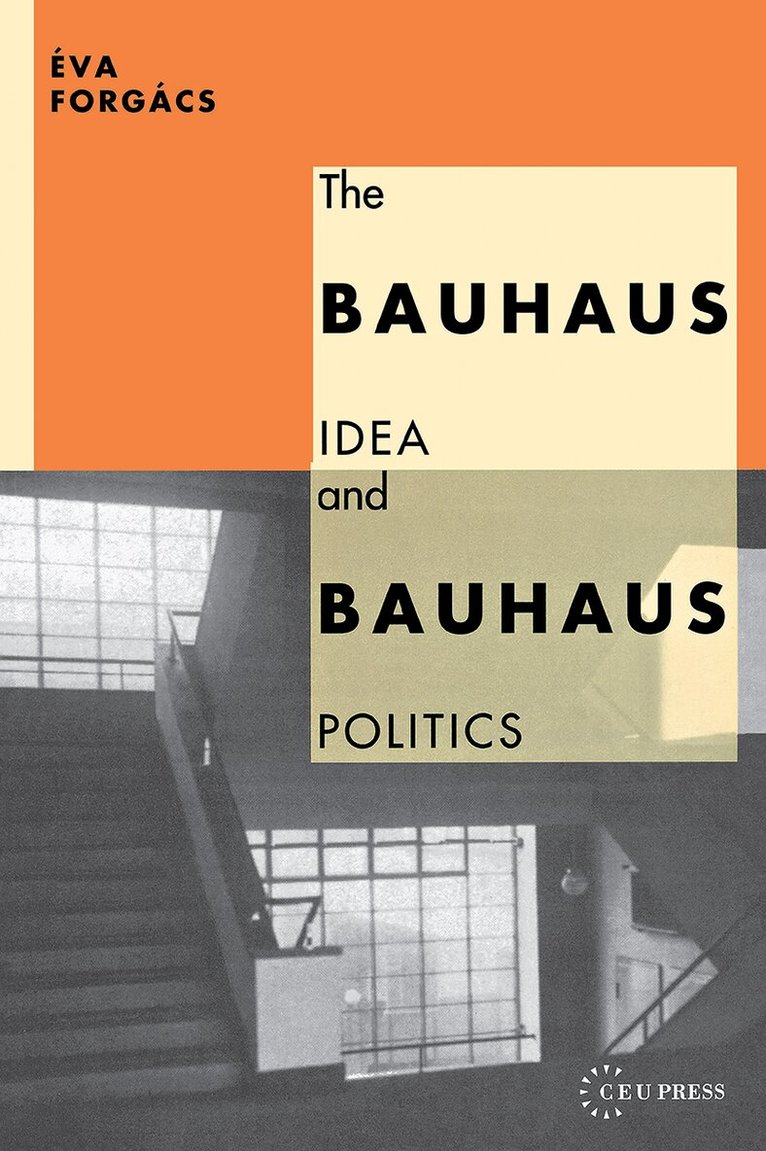
    Bauhaus Idea and Bauhaus Politics

    AvÉva Forgács

    Häftad, Engelska, 1995

    686 kr

    Beställningsvara. Skickas inom 10-15 vardagar. Fri frakt över 249 kr.

    Beskrivning

    Forgacs examines the development of the Bauhaus school of architecture and applied design by focusing on the idea of the Bauhaus, rather than on its artefacts. What gave this idea its extraordinary powers of survival? Founded in 1919, with the architect Walter Gropius as its first director, the Bauhaus carried within it the seeds of conflict from the start. The duration of the Bauhaus coincides very nearly with that of the Weimar Republic; the Bauhaus idea - the notion that the artist should be involved in the technological innovations of mechanization and mass production - is a concept that was bound to arouse the most passionate feelings. It is these two strands - personal and political - that Forgacs so cleverly interweaves. The text has been extensively revised since its original publication in Hungarian, and an entirely new chapter has been added on the Bauhaus's Russian analogue, VkhUTEMAS, the Moscow academy of industrial art.

    Produktinformation

    • Utgivningsdatum:1995-02-01
    • Mått:152 x 229 x 15 mm
    • Vikt:460 g
    • Format:Häftad
    • Språk:Engelska
    • Antal sidor:248
    • Förlag:Central European University Press
    • ISBN:9781858660127

    Utforska kategorier

    • Arkitektur inom Kultur
    • Konsthistoria inom Kultur

    Mer om författaren

    Dr. Éva Forgács is formerly professor of art history at the Hungarian Academy of Crafts and Design, teaches at Art Center College of Design in Pasadena, California. She has been active as a curator, art critic, and essayist.

    Recensioner i media

    "In this thought-provoking work, the author brings to bear the understanding of the postmodern era and an Eastern European perspective."

    Innehållsförteckning

    • List of illustrations, Picture credits, Acknowledgments, Introduction, Chapter 1. The Beauty of Progress, Chapter 2. Time out of Joint, Chapter 3. 'We Shall Draw Grand Designs, Chapter 4. First Steps, Chapter 5. Weimar, Chapter 6. Breathing Exercises, Chapter 7. Time 'PEOPLE CRITICIZE THE CAUSE THEY ESPOUSE' THE VAN DOESBURG EPISODE, Chapter 8. New Faces, Chapter 9. If We Intend to Survive, Chapter 10. The New Unity, Chapter 11. Man at the Control Panel, Chapter 12. The Part Versus the Whole, Chapter 13. Why did Gropius Leave? Chapter 14. Hannes Meyer, Chapter 15. Parallel Fates? PRIMARY SOURCES, SECONDARY SOURCES, Index

    Betyg & recensioner

    4/5