• Fri frakt över 249 kr
  • •
  • Snabba leveranser
  • •
  • Billiga böcker
Kundservice

Du är på sajten för privatpersoner.

Företag, bibliotek eller offentlig verksamhet?

Du handlar på classic.bokus.com, där alla dina funktioner finns intakta.
Till classic.bokus.com
Bokus logotyp. Gå till startsidan.
  • Erbjudanden
  • Nyheter
  • Student
  • Topplistor
  • Barn & ungdom
  • Bokus Play
  • E-böcker
  • Pocketböcker
  • Spel & pussel

10% rabatt på allt med kod: NYSTART10 →

Sidfot

Mina sidor

    Hjälp

    • Kundservice
    • Vanliga frågor och svar
    • Frakt och leverans
    • Retur vid ångerrätt
    • Reklamera vara
    • Betalning
    • Köpvillkor
    • Allmänna villkor
    • Information om webbplatsens tillgänglighet

    Om Bokus

    • Om oss
    • Pressrum
    • För studenter
    • För företag
    • För bibliotek och offentlig verksamhet
    • För leverantörer
    • Hållbarhet

    Populärt

    • Aktuella erbjudanden
    • Presentkort
    • Studentlitteratur
    • Nya böcker
    • Topplistor
    • Signerade böcker
    • Engelska böcker

    Inspiration

    • Boktips
    • BookTok
    • Populära bokserier
    • Barnbokskaraktärer
    • Populära författare
    Logotyp för Bokus
    Följ oss på Facebook (extern länk)Följ oss på Instagram (extern länk)Följ oss på YouTube (extern länk)Följ oss på TikTok (extern länk)
    bokus @ CookiesAnpassa cookiesIntegritetspolicyKöpvillkor
    Till Citymail hemsida (extern länk)Till Budbee hemsida (extern länk)Till Postnord hemsida (extern länk)Till Schenker hemsida (extern länk)Till Early Bird hemsida (extern länk)Till Walleys hemsida (extern länk)
    1. Historia och arkeologi
    2. Arkeologi
    3. Arkeologiska perioder och områden

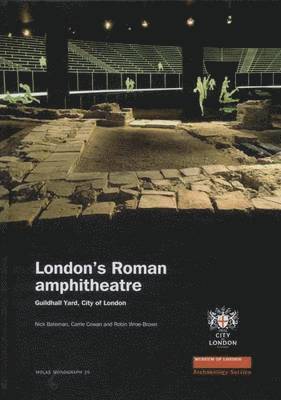
    London's Roman Amphitheatre

    AvNick Bateman,Carrie Cowan

    Inbunden, Engelska, 2008

    Del i serien MoLAS Monograph

    421 kr

    Tillfälligt slut

    Beskrivning

    The discovery of one of Roman Londons most significant buildings - its amphitheatre - underneath the medieval Guildhall resulted from major archaeological excavations which took place between 1985 and 1999 as part of the City of London Corporations ambitious programme of redevelopment at the Guildhall. The history of the Guildhall and its precinct from the 12th to the 20th centuries is the subject of a companion volume. This book describes the construction, development and disuse of the amphitheatre, from the 1st to 4th centuries AD. Constructed on relatively low ground in the north-west part of Londinium, the first amphitheatre was built in c AD 74 of timber. Evidence was recovered for the eastern entrance, arena palisade, bank for seating and associated drains. The amphitheatre was rebuilt shortly after AD 120, with masonry foundations and walls, associated with new timber stands. The evidence allows conjectural reconstruction and comparison with other British amphitheatres. Abandoned by the mid 4th century, the amphitheatre was largely demolished and sealed by dark earth. The arena may have survived as an oval depression until the area was reoccupied in the 11th century. Significant finds assemblages include an early 2nd-century dump of glass cullet, lead curses from the arena surface and samian pottery with gladiatorial motifs. The amphitheatres remains are preserved and displayed in the basement of the new Guildhall Art Gallery.

    Produktinformation

    • Utgivningsdatum:2008-12-14
    • Mått:210 x 297 x 23 mm
    • Vikt:1 274 g
    • Format:Inbunden
    • Språk:Engelska
    • Serie:MoLAS Monograph
    • Antal sidor:240
    • Förlag:Museum of London Archaeology
    • ISBN:9781901992717

    Utforska kategorier

    • Arkeologiska perioder och områden inom Historia och arkeologi

    Recensioner i media

    The volume provides a huge amount of data (with additional tables on a CD-ROM) and is clearly intended for a specialist audience. However, it is presented in such a clear and visually appealing format (including numerous reconstructive birds-eye views in color) that it is likely to attract a broader readership. I found the sections that reconstruct the amphitheaters architecture as well as its sponsors and spectators-including evidence specific to the presence of women-to be particularly insightful.' -- American Journal of Archaeology Book Review American Journal of Archaeology Book Review