• Fri frakt över 249 kr
  • •
  • Snabba leveranser
  • •
  • Billiga böcker
Kundservice

Du är på sajten för privatpersoner.

Företag, bibliotek eller offentlig verksamhet?

Du handlar på classic.bokus.com, där alla dina funktioner finns intakta.
Till classic.bokus.com
Bokus logotyp. Gå till startsidan.
  • Erbjudanden
  • Nyheter
  • Student
  • Topplistor
  • Barn & ungdom
  • Bokus Play
  • E-böcker
  • Pocketböcker
  • Spel & pussel

10% rabatt på allt med kod: NYSTART10 →

Sidfot

Mina sidor

    Hjälp

    • Kundservice
    • Vanliga frågor och svar
    • Frakt och leverans
    • Retur vid ångerrätt
    • Reklamera vara
    • Betalning
    • Köpvillkor
    • Allmänna villkor
    • Information om webbplatsens tillgänglighet

    Om Bokus

    • Om oss
    • Pressrum
    • För studenter
    • För företag
    • För bibliotek och offentlig verksamhet
    • För leverantörer
    • Hållbarhet

    Populärt

    • Aktuella erbjudanden
    • Presentkort
    • Studentlitteratur
    • Nya böcker
    • Topplistor
    • Signerade böcker
    • Engelska böcker

    Inspiration

    • Boktips
    • BookTok
    • Populära bokserier
    • Barnbokskaraktärer
    • Populära författare
    Logotyp för Bokus
    Följ oss på Facebook (extern länk)Följ oss på Instagram (extern länk)Följ oss på YouTube (extern länk)Följ oss på TikTok (extern länk)
    bokus @ CookiesAnpassa cookiesIntegritetspolicyKöpvillkor
    Till Citymail hemsida (extern länk)Till Budbee hemsida (extern länk)Till Postnord hemsida (extern länk)Till Schenker hemsida (extern länk)Till Early Bird hemsida (extern länk)Till Walleys hemsida (extern länk)
    1. Historia och arkeologi
    2. Historia
    3. Europas historia

    Polin: Studies in Polish Jewry Volume 23

    Jews in Krakow

    AvMichal Galas,Antony Polonsky

    Häftad, Engelska, 2010

    Del 23 i serien Polin: Studies in Polish Jewry

    421 kr

    Beställningsvara. Skickas inom 5-8 vardagar. Fri frakt över 249 kr.

    Beskrivning

    Few Polish cities have evoked more affection from their Jewish inhabitants than Kraków, and this volume brings together the work of leading historians from Israel, Poland, Great Britain, and the United States to explore how this relationship evolved. It takes as its starting point 1772, when Poland was partitioned between the Great Powers and Kraków came under Austrian rule, and examines the relationship between the Jewish minority and the Polish majority in the city in the different stages of its history down to the period of German occupation in the Second World War. An additional perspective is provided by a consideration of how Jewish life in Kraków has been remembered by Holocaust survivors, and how it is portrayed in post-war Polish literature.The main explanation for the specific nature of relations between Poles and Jews in Kraków as it emerges from these studies seems to be that Jewish acculturation to Polish culture was more pronounced in Kraków than anywhere else in Poland. The Jewish community as a whole opened itself up to contemporary currents and participated in the life of the city, above all in its cultural dimension, while nevertheless retaining a highly articulated sense of Jewish identity and unity. This meant that they were able both to defend their interests effectively and to establish links with the rest of the population from a position of strength. An additional important factor appears to have been the more tolerant atmosphere which prevailed in the Austro-Hungarian empire, which meant that ethnic tensions were less acute than elsewhere on the Polish lands. Furthermore, the fact that the city was largely pre-industrial and conservative, and was a spiritual and intellectual centre for both Catholics and Jews, may paradoxically have mitigated ethnic conflict, as did the fact that the two societies—Polish and Jewish—were largely socially separate. While the increase in antisemitism after 1935 and the consequences of the Holocaust are still etched in the minds of many, the city nevertheless has a special place in Jewish hearts and will continue to be remembered as one of the great centres of Jewish culture in east-central Europe.As in other volumes of Polin, the New Views section examines a number of important topics. These include a general investigation of the situation of the Jews in Galicia; an analysis of the position of Jewish slave labourers in the Kielce area under Nazi rule; an investigation into the resurgence after 1944 of the myth of ritual murder; and a discussion of the history of the Jewish settlement in Lower Silesia after the Second World War.

    Produktinformation

    • Utgivningsdatum:2010-12-02
    • Mått:157 x 231 x 48 mm
    • Vikt:940 g
    • Format:Häftad
    • Språk:Engelska
    • Serie:Polin: Studies in Polish Jewry
    • Antal sidor:584
    • Förlag:Liverpool University Press
    • ISBN:9781904113645

    Utforska kategorier

    • Europas historia inom Historia och arkeologi
    • Sociala grupper och identitet inom Samhälle och politik

    Mer om författaren

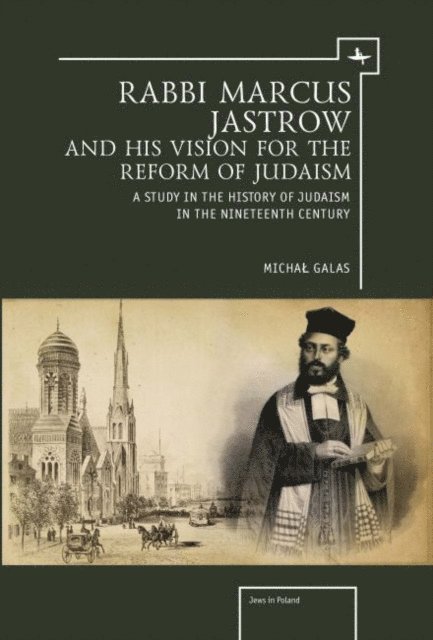
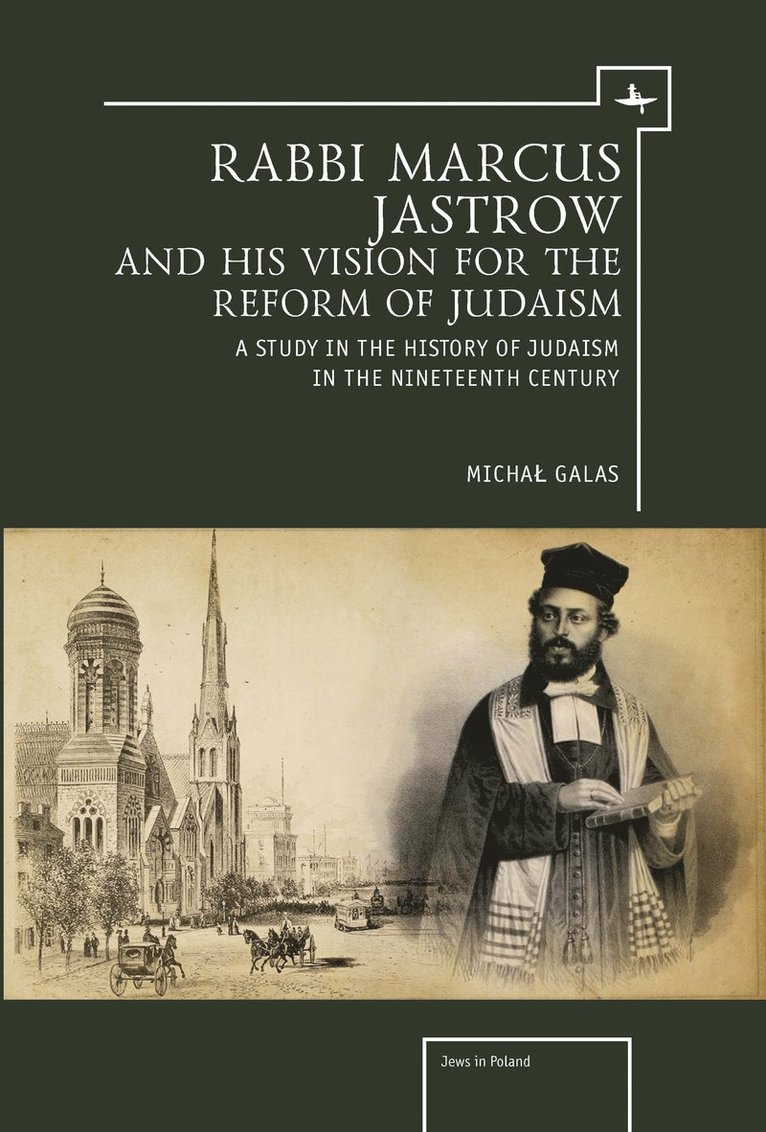
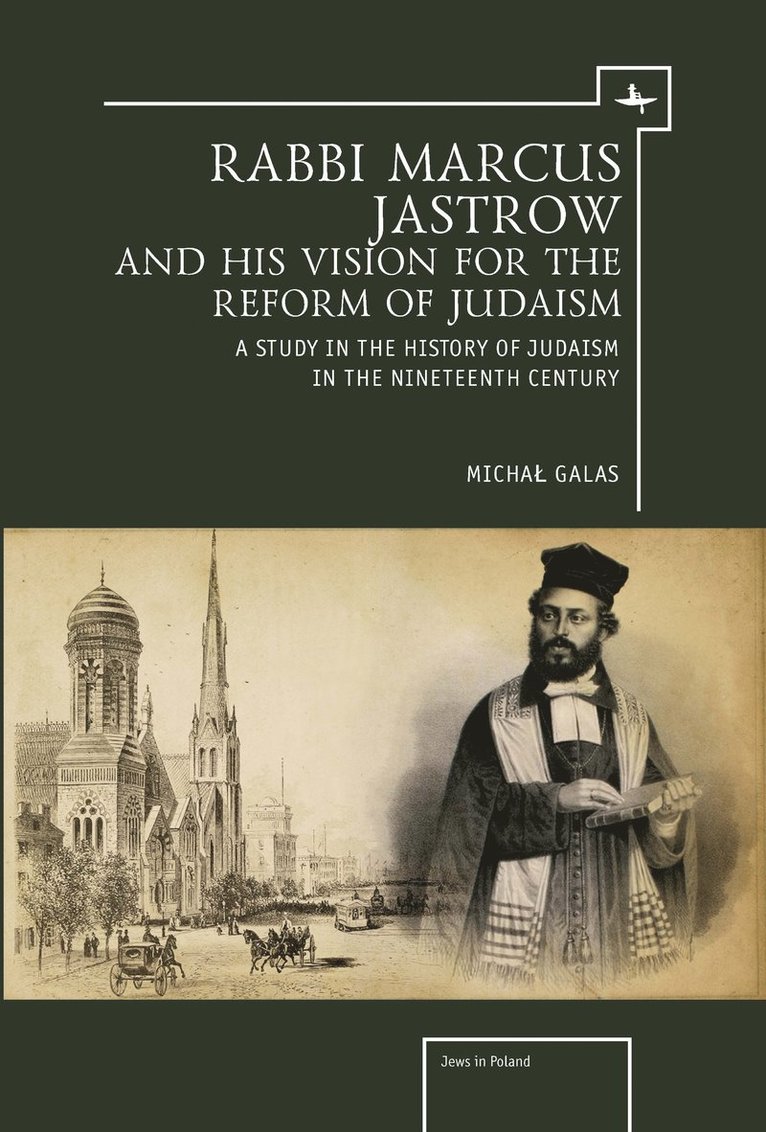
    Michał Galas is Associate Professor in the Department of Jewish Studies of the Jagiellonian University and the Secretary of the Commission on the History and Culture of the Jews at the Polish Academy of Arts and Sciences in Kraków. He is the author of Rabin Markus Jastrow i jego wizja reformy judaizmu: Studium z dziejów judaizmu w XIX wieku (2007) and editor of Duchowość żydowska w Polsce (2000); Żydzi lelowscy: Obecność i ślady (Kraków, 2006); and Światło i słońce: Studia z dziejów chasydyzmu (2006). He has also written numerous articles on the history of the Jewish religion in Poland, particularly on Sabbatianism and Frankism. Author of The Jews in Poland and Russia, 3 vols. (Littman Library, 2010–12), also published in an abridged version: The Jews in Poland and Russia: A Short History (2014). In 2012 The Jews in Poland and Russia was awarded the Pro Historia Polonorum prize of the Polish Senate for the best book on the history of Poland in a non-Polish language written in the previous five years. Holds honorary doctorates from the University of Warsaw (2010) and the Jagiellonian University (2014). In 2011 he was awarded the Officer’s Cross of the Order of Merit of Polonia Restituta and the Officer’s Cross of the Order of Merit of Independent Lithuania.

    Recensioner i media

    'This collection of studies on post-1772 Kraków Jewry is an extremely valuable and very readable contribution to the literature . . . Most are by well-known specialists, but not all of them have been widely published in English, which gives added value to this volume . . . corrects many misconceptions about Judaism in modern Poland. The articles can also stand alone, which adds to the utility of the volume for students. The glossary and fine index help to make this book very accessible to non-experts.' Religious Studies Review

    Innehållsförteckning

    • Note on Place Names Note on TransliterationPART I: JEWS IN KRAKÓW SINCE 1772Introduction MICHAŁ GALAS AND ANTONY POLONSKYJewish Primary and Seconday School Education in the Free City of Kraków (1815–1846) ANNA JAKIMYSZYNChanges in the Jewish Community of Kraków in Autonomous Galicia ŁUKASZ TOMASZ SROKAAmbiguities of Assimilation: The Kraków Conservatives and the Jews PHILIP PAJAKOWSKIThe History of the Jewish Community of Podgórze BARBARA ZBROJAThe Kraków Association of Progressive Jews 1864–1874 HANNA KOZIŃSKA-WITTThe Impact of New Ideologies: The Transformation of Kraków Jewry between 1895 and 1914 ANDRZEJ ŻBIKOWSKIOrthodox Jewry in Kraków at the End of the Nineteenth Century RACHEL MANEKINThe Polonization of Jews: Some Examples from Kraków JACEK PURCHLAJewish Participation in the Elections to Kraków City Council during the Interwar Period (1919–1939) CZESŁAW BRZOZAThe Political Thought of Nowy Dziennik in its Early Period: July 1918–February 1919 JANUSZ FAŁOWSKI Between Politics and Spirituality: The Case of Dr Oziasz Thon (1870–1936), Reform Rabbi of Kraków EMANUEL MELZERSoroh Schenirer (1883–1935), Founder of the Beis Yaakov Movement: Her Vision and her Legacy CAROLINE SCHARFER‘The Borderland’: The Beys Yaakov School in Kraków as a Symbolic Encounter between East and West AGNIESZKA OLESZAKFuture Generations: Associations for Jewish Children in Kraków, 1918–1939 SEAN MARTINJewish Artists in Interwar Kraków NATASZA STYRNAJewish Antiquarian Booksellers in Kraków RYSZARD LÖWThe Ethnic Panorama of Nazi-Occupied Kraków ANDRZEJ CHWALBAThe Jewish Orphanage in Kraków ROMAN ROSDOLSKYThe Image of Post-War Kraków in Jewish Writing, 1945–1950 MONIKA STĘPIEŃ {1 table}‘Kraków was my world. My home was there and my mother; whoever of my family was alive would return to Kraków’ – Kraków in Post-1945 Jewish Literature KATARZYNA ZECHENTER‘A World before a Catastrophe: Krakow Jews between the Wars’: An Exhibition at Kraków’s International Cultural Centre HANNA KOZIŃSKA-WITTSpeech by Rafael Scharf given at the former building of the Jewish High School in KazimierzPART II: NEW VIEWSNotes on Galician Jews MICHAEL C. STEINLAUFJewish Slaves in Forced Labour Camps in Kielce, Radom District, September 1942–August 1944 SARA BENDERThe Myth of Ritual Murder in Post-War Poland: Pathology and Hypotheses MARCIN ZAREMBAA History of Jewish Settlement in Lower Silesia after the Second World War (1945–1950) EWA WASZKIEWICZOBITUARY Abe Brumberg MICHAEL ROSENBUSHGlossary Notes on the Contributors Index