• Fri frakt över 249 kr
  • •
  • Snabba leveranser
  • •
  • Billiga böcker
Kundservice

Du är på sajten för privatpersoner.

Företag, bibliotek eller offentlig verksamhet?

Du handlar på classic.bokus.com, där alla dina funktioner finns intakta.
Till classic.bokus.com
Bokus logotyp. Gå till startsidan.
  • Erbjudanden
  • Nyheter
  • Student
  • Topplistor
  • Barn & ungdom
  • Bokus Play
  • E-böcker
  • Pocketböcker
  • Spel & pussel

10% rabatt på allt med kod: NYSTART10 →

Sidfot

Mina sidor

    Hjälp

    • Kundservice
    • Vanliga frågor och svar
    • Frakt och leverans
    • Retur vid ångerrätt
    • Reklamera vara
    • Betalning
    • Köpvillkor
    • Allmänna villkor
    • Information om webbplatsens tillgänglighet

    Om Bokus

    • Om oss
    • Pressrum
    • För studenter
    • För företag
    • För bibliotek och offentlig verksamhet
    • För leverantörer
    • Hållbarhet

    Populärt

    • Aktuella erbjudanden
    • Presentkort
    • Studentlitteratur
    • Nya böcker
    • Topplistor
    • Signerade böcker
    • Engelska böcker

    Inspiration

    • Boktips
    • BookTok
    • Populära bokserier
    • Barnbokskaraktärer
    • Populära författare
    Logotyp för Bokus
    Följ oss på Facebook (extern länk)Följ oss på Instagram (extern länk)Följ oss på YouTube (extern länk)Följ oss på TikTok (extern länk)
    bokus @ CookiesAnpassa cookiesIntegritetspolicyKöpvillkor
    Till Citymail hemsida (extern länk)Till Budbee hemsida (extern länk)Till Postnord hemsida (extern länk)Till Schenker hemsida (extern länk)Till Early Bird hemsida (extern länk)Till Walleys hemsida (extern länk)
    1. Ekonomi och Ledarskap
    2. Nationalekonomi
    3. Ekonomisk historia

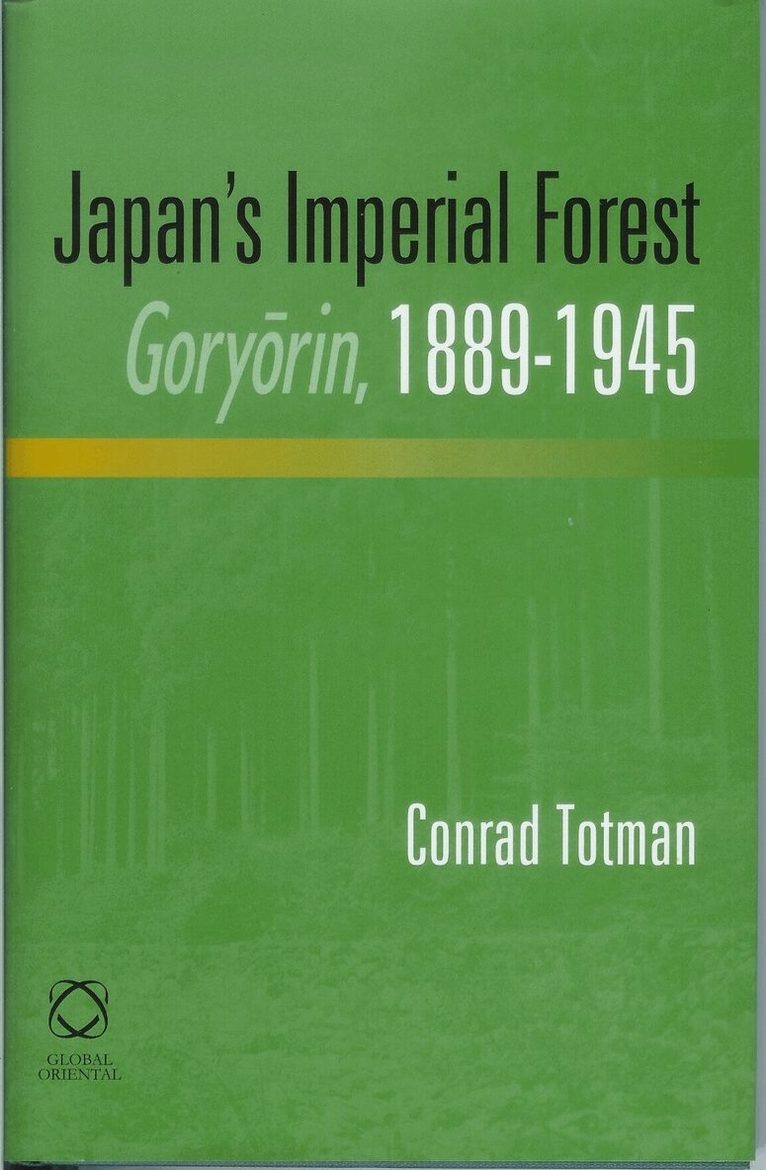
    Japan's Imperial Forest Goryōrin, 1889-1946

    With a Supporting Study of the Kan/Min Division of Woodland in Early Meiji Japan, 1871-76

    AvConrad Totman

    Inbunden, Engelska, 2007

    Del i serien Brill

    1 601 kr

    Beställningsvara. Skickas inom 5-8 vardagar. Fri frakt över 249 kr.

    Beskrivning

    This is the first study of its kind to trace the history of what was to become one of Japan’s major resources and a model of conservation and forestry management. Central to the planning of the Meiji reformers was securing the long-term financial stability of the Imperial household that would not leave it exposed to the whims of future political and economic change. The solution was the goryorin, or imperial forests. Over time, however, the acquired land generated controversy within the framework of law and other imperatives, and was finally abandoned by the Occupation authorities because of the political ideology that was its raison d’être in the first place. In Part II, the author explores the great early Meiji debate between government and people (kan/min) concerning the reorganization of woodland in Japan, which in essence was a contest for control of the realm. By 1889 the Tokyo government, despite having 80 percent of the people (min), then living in villages, against them, completed their programme of forest consolidation, leading the way to their rationale for the goryorin allocation.

    Produktinformation

    • Utgivningsdatum:2007-06-07
    • Mått:138 x 216 x 18 mm
    • Vikt:500 g
    • Format:Inbunden
    • Språk:Engelska
    • Serie:Brill
    • Antal sidor:184
    • Förlag:Brill
    • ISBN:9781905246304

    Utforska kategorier

    • Ekonomisk historia inom Ekonomi och Ledarskap
    • Asiens historia inom Historia och arkeologi

    Mer om författaren

    Conrad Totman, Emeritus Professor, Yale University, is a specialist of premodern Japanese history, particularly the country’s environmental history. Among his nine books are Japan Before Perry: A Short History, The Collapse of the Tokugawa Bakufu, 1862-1868, Tokugawa Ieyasu: Shogun, and Tokugawa Japan. His honors include the American Historical Association’s John King Fairbank Prize for The Collapse of the Tokugawa Bakufu.

    Innehållsförteckning

    • List of Illustrations; List of Appendices; A Chronology Relating to the History of Goryorin; Maps; Preface; Introduction; 1 Historical Background; 2 Establishing Goryorin; 3 Reducing Goryorin; 4 The Case of Yamanashi Goryorin5 Managing Goryorin: Plans and Performance; 6 Managing Goryoring: Aspects of Practice; 7 Goryorin: An Assessment; 8 The Kan/Min Division of Woodland in Early Meiji Japan; Appendices; Notes; Bibliographical Essay; Bibliography of Works Cited; Index